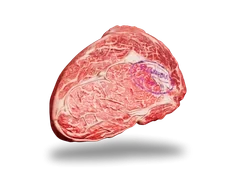
 Ribeye
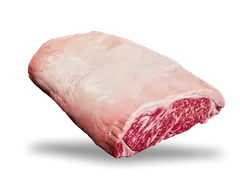 Striploin
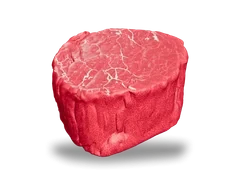 Tenderloin
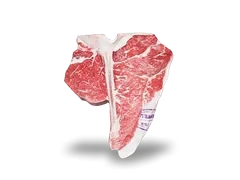 T-bone
 Tomahawk
 New York
 Madrid
 Sydney
 Hanoi
 Tokyo
 Montevideo
 Prime rib
 Beef Wellington
 Asado
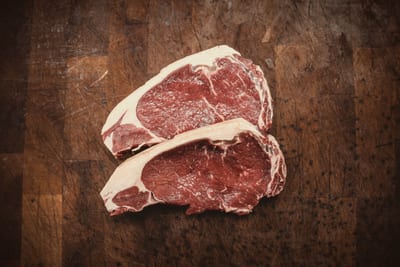 Chuletón
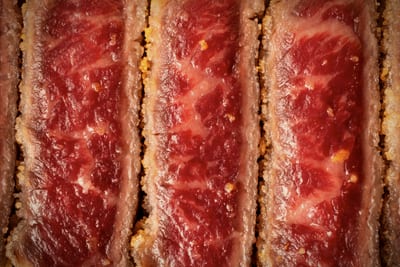 Gyukatsu
 Wagyu
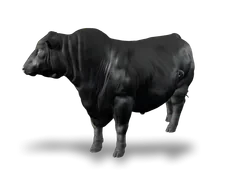 Angus
 Hereford
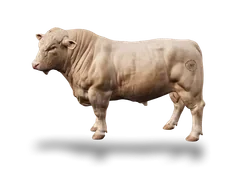 Charolais
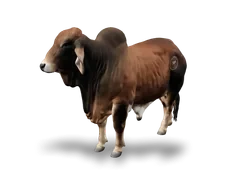 Brahman
News · Markets & exports
US feedlot placements fall 7% to lowest October in USDA’s series
US feedlots took in 1.89 million cattle in October, 7% fewer than a year earlier and the lowest for the month since the series began in 1996, according to the US Department of Agriculture’s monthly Cattle on Feed report, released Nov. 20.
Report · United States · Mexico
At a glance
- October placements
- 1.89 million head, down 7%
- September placements
- 1.78 million head, down 12%
- On feed Nov. 1
- 11.6 million head, down 1%
- October marketings
- 1.62 million head, down 5%
- What is counted
- Feedlots with capacity for 1,000 head or more
- Next report
- Dec. 18, 2026
What the report shows
It was the fourth month in a row that placements, the cattle entering feedlots, were the lowest for their month since 1996, according to the same USDA series. Cattle placed now are the beef of the months ahead: the USDA has already lowered its forecast for 2027 beef production because fewer cattle are entering feedlots.
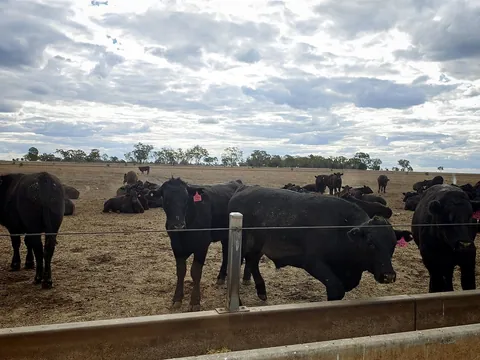
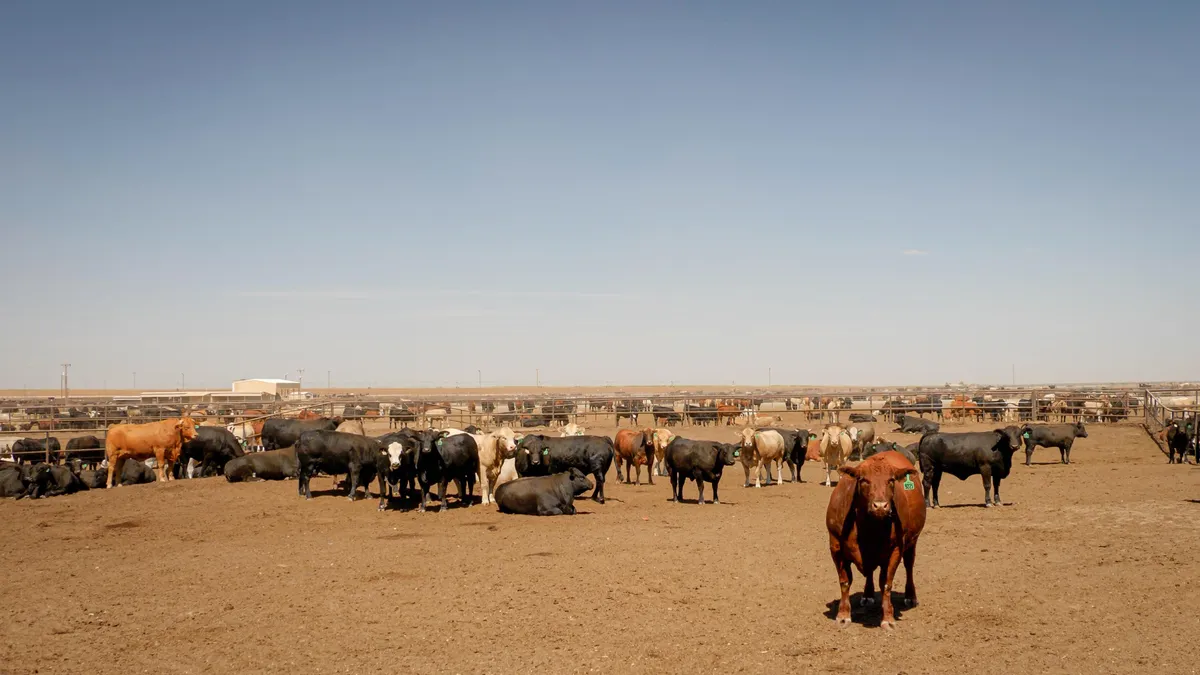 Cattle in feedlot pens in Canyon, Texas. USDA file photo, published in October 2022. Photo: Preston Keres/USDA.
The report counts cattle fed for slaughter in feedlots with capacity for 1,000 head or more. Marketings, fed cattle shipped out to slaughter, were also the lowest for October since 1996: 1.62 million head, down 5%. The number of cattle on feed on Nov. 1 was 11.6 million head, 1% fewer than a year earlier but 2% more than on Oct. 1.
Derrell Peel, livestock marketing specialist at Oklahoma State University Extension, wrote on Oct. 26, before this report: “Feedlot placements are down; but once in the feedlot, cattle are staying more days and being marketed very slowly.”
September placements were 1.78 million head, 12% below a year earlier. The two months brought about 393,000 fewer cattle into feedlots than the same months of 2025, a drop of nearly 10%. October placements have fallen by almost 40% since their 1999 peak of 3.11 million head.

Placements in thousand head. The two-month row is Steakpedia’s calculation. Source: USDA NASS, Cattle on Feed, Nov. 20, 2026.
| Placements | 2025 | 2026 | Change |
|---|---|---|---|
| September | 2,021 | 1,777 | −12% |
| October | 2,040 | 1,891 | −7% |
| Two months | 4,061 | 3,668 | −9.7% |
Why fewer cattle are arriving
The report does not give reasons. USDA figures and the analysts quoted here point to two squeezes on the supply of young cattle: one explains why the level is so low, the other why it fell again this year.
The first is Mexico, and it explains the low level more than this year’s drop. Mexico sent about 1.25 million head to the United States in 2024, according to a report by the USDA’s Foreign Agricultural Service in Mexico City. Nearly all Mexican cattle imports are young, lighter animals sent to US farms that grow them out before the feedlot, according to the Economic Research Service.
New World screwworm is a fly whose larvae feed on the living flesh of animals. After it spread north through Mexico, the USDA suspended imports in November 2024. After two reopenings, it closed the land border to Mexican cattle again on July 9, 2025. The same FAS report, from February, estimates Mexico’s 2025 exports to the US at 230,000 head. The border was already closed in October 2025, so Mexico does not explain the fall from a year earlier. It explains why both years sit far below October 2024, when US feedlots took in 2.27 million head.
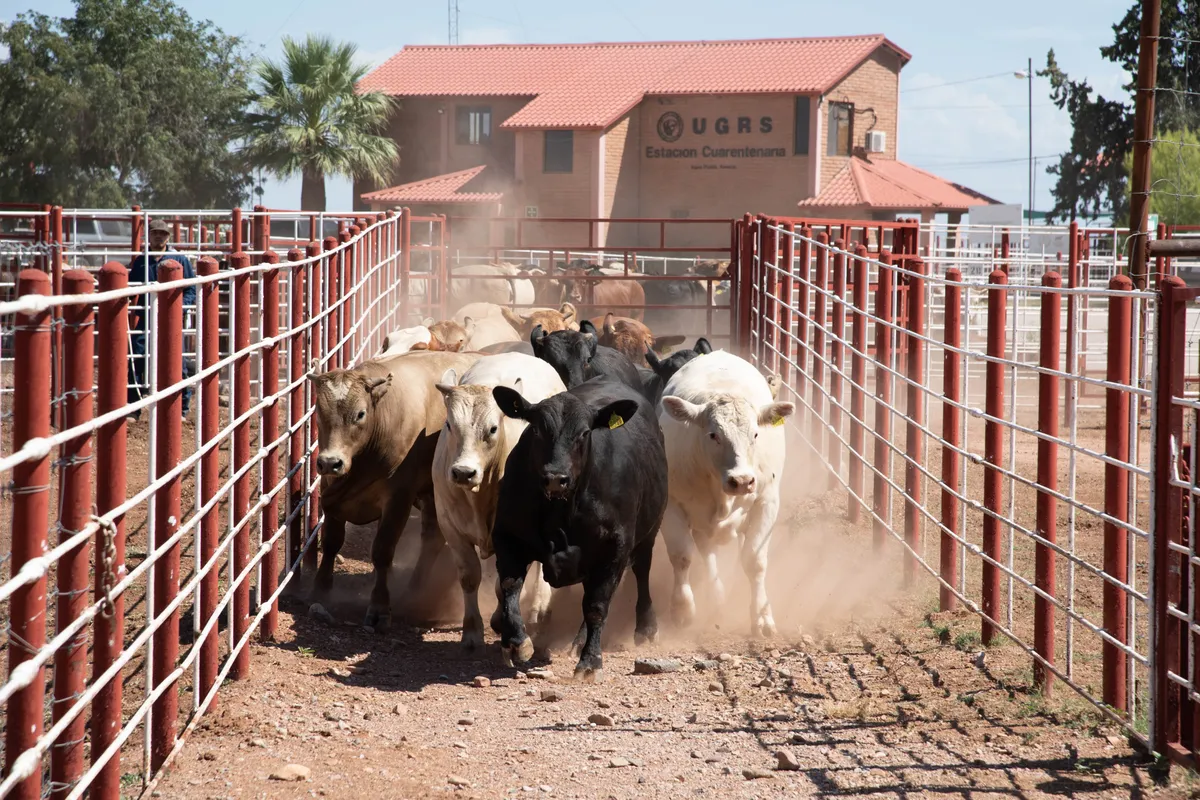 Mexican feeder cattle at the Douglas, Arizona–Agua Prieta, Sonora, port of entry on Aug. 24, 2026, the day it reopened to cattle imports from Mexico. Photo: R. Anson Eaglin/USDA.
The ports are now reopening one at a time: Douglas, Arizona, on Aug. 24 this year; Santa Teresa, New Mexico, on Sept. 24; and Columbus, New Mexico, on Oct. 26. Nogales, Arizona, is scheduled for Nov. 30, according to the USDA’s Animal and Plant Health Inspection Service. In the last week of October, 13,995 head crossed, against 31,007 in the same week of 2024, according to the Economic Research Service. That flow “will add some cattle but is still short of what was typical before the closure,” Josh Maples of Mississippi State University Extension and his co-author, David Anderson, wrote in Southern Ag Today on Nov. 10.
The second squeeze is at home, and it is what changed this year. The 2025 calf crop was 32.9 million head, 2% smaller than the year before, according to the USDA’s National Agricultural Statistics Service, so there were fewer young cattle to place this fall. And more heifers are being kept to rebuild herds instead of being fed: on Jan. 1 there were 4.71 million beef replacement heifers, 1% more than a year earlier, and on Oct. 1 heifers on feed were 4.30 million head, 1% fewer, while steers on feed were slightly up. “There are indications of a modest increase in heifer retention in 2026, perhaps accelerating late in the year,” Peel wrote on Nov. 2.
What it means for US beef
The USDA has drawn the line from feedlot to counter itself. Its Nov. 10 supply and demand estimates lowered the 2027 beef production forecast “on lower-than-expected placements in the second half of 2026 that are expected to reduce marketings in the first half of 2027.”
On Nov. 17 the Economic Research Service forecast US beef production at 24.8 billion pounds (11.2 million metric tons) in 2026, down from 26.0 billion in 2025. It expects 24.5 billion pounds (11.1 million metric tons) in 2027. Beef and veal imports are forecast to rise about 19% in 2026, to 6.4 billion pounds (2.9 million metric tons), but “higher imports are not expected to fully offset the slower pace of cattle placements anticipated next year,” the agency said.
Fed steers, cattle finished and ready for slaughter, are forecast at $236 per hundredweight (100 pounds of live weight) in 2026, 5% above 2025. Beef available per person is forecast at 58.1 pounds (26.4 kg / 58 lb), retail weight, in 2027, down from 59.2 pounds (26.9 kg / 59 lb) in 2025.
Australia is moving the other way. Its feedlots held 1.68 million head in the September quarter, a fourth consecutive record, according to the quarterly survey by the Australian Lot Feeders’ Association and Meat & Livestock Australia, which is not directly comparable with the USDA count.
The next Cattle on Feed report is due Dec. 18.
Based on the USDA reports and the analysts’ published texts listed under Sources; Steakpedia did not interview anyone for this article. The two-month total, the 1999 comparison, the change since Oct. 1 and the percentage changes in the forecasts are Steakpedia’s calculations. Steakpedia has no commercial relationship with any organization named here, and no one paid for this article. To report an error, see our corrections page.
Keep reading
 Production · The final monthsGrass-fed vs grain-fed beefPasture vs feedlot beef: flavor, fat, days on grain, and what the science does and doesn’t say.
 Standards · USDA, A5, MSA, EUROPBeef grading systemsUSDA, A5, MSA stars, Korea’s 1++ and EUROP side by side: what each grade measures and what it doesn’t.
 Breed · Scotland, black or redAngusThe Scottish breed behind much of the world’s steak: why it marbles, black and red, and what “Certified Angus” means.
- News · ReportArgentina’s average beef carcass reaches 241 kg / 531 lb, heaviest since 1921Argentina’s average beef carcass is the heaviest since 1921. The official series back to 1914 shows it is not the record.
- News · ReportArgentina replaces packing-plant rules for EU’s Quota 481 beefArgentina replaces the rules for how plants slaughter, mark and box beef for the EU’s zero-duty quota. What the resolution requires, article by article.
- News · ReportAustralian Cattle Producers Back A$1 Levy Rise With 54% of VotesA proposal to lift Australia’s cattle levy to A$6 a head wins 54% of votes. It depends on reforms by July 2027.
Frequently asked questions
How many cattle were placed in US feedlots in October 2026?
1.89 million head, 7% fewer than in October 2025 and the lowest October since the USDA series began in 1996.
How many cattle are on feed in the United States?
11.6 million head on Nov. 1, 2026, in feedlots with capacity for 1,000 head or more, 1% fewer than a year earlier.
Why are fewer cattle entering US feedlots?
The USDA report gives no reasons. USDA data show two squeezes on young cattle: imports of Mexican feeder cattle, about 1.25 million head in 2024, have been largely blocked since July 2025 because of New World screwworm, and the 2025 calf crop was 2% smaller while more heifers are kept for breeding.
What does placements mean in the Cattle on Feed report?
Cattle that entered feedlots during the month to be fed for slaughter. Marketings are the fed cattle shipped out of feedlots to slaughter.
Sources
19
- US Department of Agriculture, National Agricultural Statistics Service. Cattle on Feed, Nov. 20, 2026. Read Nov. 26, 2026. esmis.nal.usda.gov/sites/default/release-files/796154/cofd1126.txt
- USDA NASS. Cattle on Feed, Oct. 23, 2026 (September placements; heifers on feed Oct. 1). Read Nov. 26, 2026. release.nass.usda.gov/reports/cofd1026.txt
- USDA NASS. Cattle on Feed, Sept. 18, 2026 (August placements). Read Nov. 26, 2026. release.nass.usda.gov/reports/cofd0926.txt
- USDA NASS. Cattle on Feed, Aug. 21, 2026 (July placements). Read Nov. 26, 2026. release.nass.usda.gov/reports/cofd0826.txt
- USDA NASS. Cattle on Feed November reports, 1996–2026, and Cattle Final Estimates (source of the October series in the chart). Read Nov. 26, 2026. esmis.nal.usda.gov/publication/cattle-feed
- USDA NASS. Cattle, Jan. 30, 2026. Read Nov. 26, 2026. esmis.nal.usda.gov/sites/default/release-files/795748/catl0126.txt
- USDA, World Agricultural Outlook Board. World Agricultural Supply and Demand Estimates (WASDE-677), Nov. 10, 2026. Read Nov. 26, 2026. www.usda.gov/oce/commodity/wasde/wasde1126.pdf
- USDA, Economic Research Service. Livestock, Dairy, and Poultry Outlook (LDP-M-389), Nov. 17, 2026. Read Nov. 26, 2026. ers.usda.gov/media/30379/ldp-m-389.pdf
- USDA, Economic Research Service. U.S. red meat and poultry forecasts, Nov. 17, 2026. Read Nov. 24, 2026. www.ers.usda.gov/media/30378/us-red-meat-and-poultry-forecasts.xlsx
- USDA, Economic Research Service. Cattle & Beef: Sector at a Glance. Read Nov. 26, 2026. ers.usda.gov/topics/animal-products/cattle-beef/sector-at-a-glance
- USDA, Foreign Agricultural Service. Mexico: Livestock and Products Semi-annual (MX2026-0012), Feb. 26, 2026. Read Nov. 26, 2026. apps.fas.usda.gov/newgainapi/api/Report/DownloadReportByFileName?fileName=Livestock+and+Products+Semi-annual_Mexico+City_Mexico_MX2026-0012.pdf
- USDA, Animal and Plant Health Inspection Service. Import alert: New World screwworm, Mexico, updated July 9, 2025. Read Nov. 26, 2026. www.aphis.usda.gov/sites/default/files/import-alert-nws-mexico.pdf
- USDA APHIS. Current Status of New World Screwworm, last modified Nov. 25, 2026. Read Nov. 26, 2026. www.aphis.usda.gov/animals/animal-health/livestock-and-poultry-disease/stop-screwworm/current-status
- Derrell Peel, Oklahoma State University Extension. “Feedlot Placements Record Low,” Cow-Calf Corner, Oct. 26, 2026. Read Nov. 26, 2026. extension.okstate.edu/programs/beef-extension/cow-calf-corner-the-newsletter-archives/2026/october-26-2026
- Derrell Peel, Oklahoma State University Extension. “Heifer Dynamics,” Cow-Calf Corner, Nov. 2, 2026. Read Nov. 26, 2026. extension.okstate.edu/programs/beef-extension/cow-calf-corner-the-newsletter-archives/2026/november-2-2026
- Josh Maples and David Anderson. “Fed Cattle Prices Slip Again This Fall,” Southern Ag Today 6(46.2), Nov. 10, 2026. Read Nov. 26, 2026. southernagtoday.org/2026/11/10/fed-cattle-prices-slip-again-this-fall
- Australian Lot Feeders’ Association and Meat & Livestock Australia. Australian feedlot sector continues to break capacity and cattle on feed records, Nov. 19, 2026 (quarterly feedlot survey, September quarter 2026). Read Nov. 22, 2026. www.feedlots.com.au/post/australian-feedlot-sector-continues-to-break-capacity-and-cattle-on-feed-records
- USDA photo by R. Anson Eaglin, Douglas, Arizona–Agua Prieta port of entry, Aug. 24, 2026 (public domain). www.flickr.com/photos/usdagov/55487022955
- USDA photo by Preston Keres, Canyon, Texas, published Oct. 4, 2022 (public domain). www.flickr.com/photos/usdagov/52405023446
Pass it on