Main course · Mexico, mesquite
Carne asada
Carne asada is the grilled beef of northern Mexico: thin cuts such as arrachera (skirt) or flank, salted or marinated in lime and orange juice, eaten sliced in tortillas with salsa, grilled onions and beans. It cooks fast over mesquite, a dense wood that burns hot and leaves aromatic embers.
At a glance
- Origin
- Northern Mexico; also the US Southwest
- Cuts
- Arrachera (skirt), flank, thin-cut chuck (diezmillo)
- Fire
- Mesquite charcoal or wood, hot and direct
- Serves
- 6
- Time
- 45 min active; 2–8 h marinating
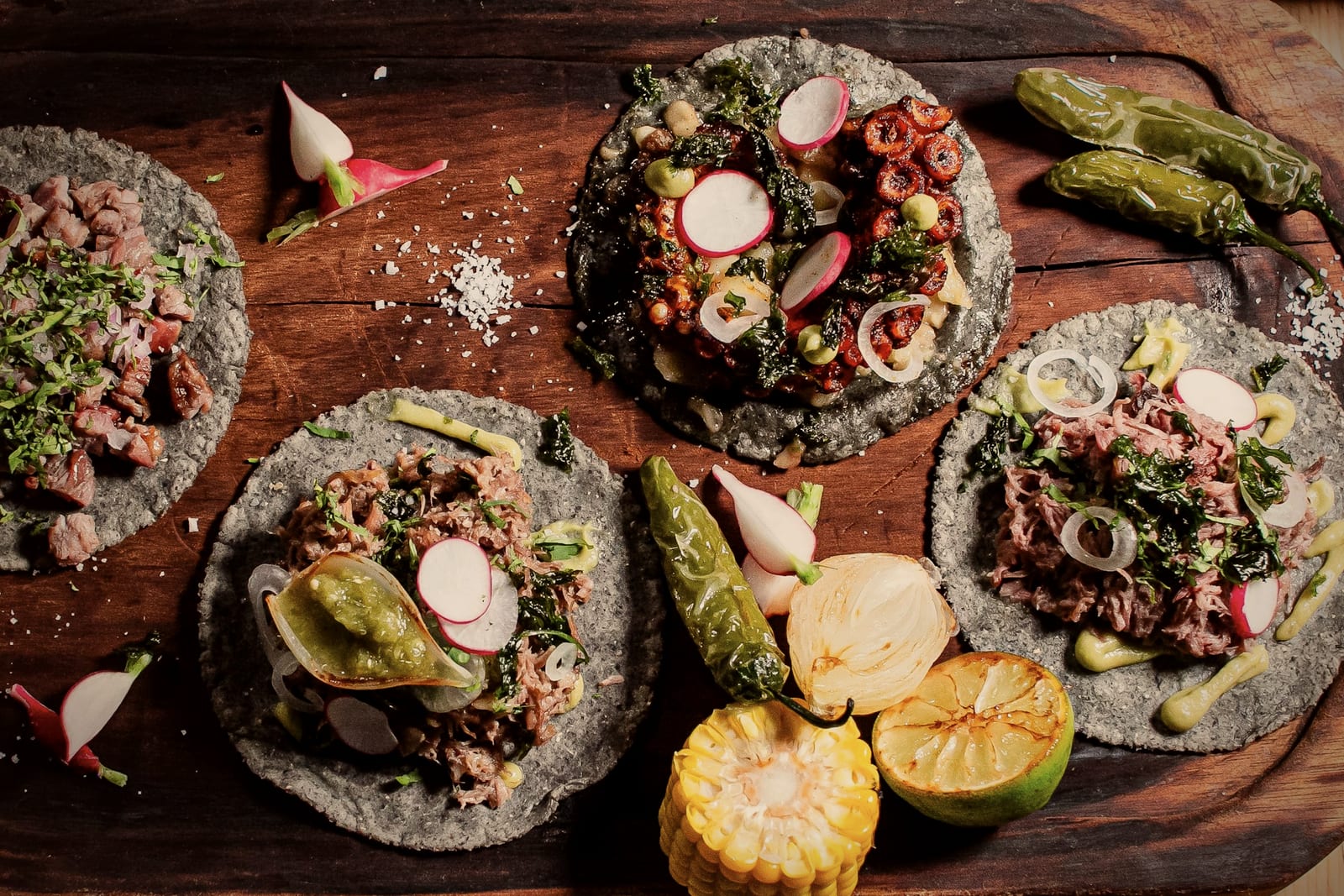
A dish and a weekend gathering
Carne asada means simply "grilled meat", but in Mexico the phrase names both a dish and a social event. In the northern states, a carne asada is a weekend gathering around a charcoal grill, much like the Argentine asado: the host cooks, guests eat as the meat comes off the fire, and the meal stretches through the afternoon.
The meat is thin, lean-to-medium beef cooked quickly over high heat. It is cut into strips or chopped on a board and eaten in tortillas, with salsas, guacamole, grilled spring onions (cebollitas), blistered chiles (chiles toreados) and beans. Outside the gathering, chopped carne asada is one of the standard fillings of taquerías across Mexico and the United States.
Cattle country, mesquite and wheat
Northern Mexico is cattle country. The ranching economy that the Spanish brought to Sonora, Chihuahua, Coahuila and Nuevo León in the colonial period made beef, not pork or poultry, the everyday meat of the region, and the arid scrub supplied mesquite, a dense wood that burns hot and leaves aromatic embers. The north also grew wheat, which is why its tortillas are often made of flour (tortillas de harina) rather than corn.
Two styles dominate. In Sonora, beef is traditionally seasoned with little more than coarse salt and grilled over mesquite. In Monterrey and the north-east, marinated arrachera, the outside skirt, became the signature cut in the second half of the 20th century, and is now sold pre-marinated in supermarkets throughout the country. On the Texas side of the border, Tejano ranch hands grilled the same cut as fajitas, from faja, "belt" or "strip".
Ingredients
| Ingredient | Amount | Note |
|---|---|---|
| Arrachera (skirt) or flank steak | 1.5 kg / 3.3 lb | trimmed of membrane |
| Lime juice | 120 ml / ½ cup | about 6 limes |
| Orange juice | 120 ml / ½ cup | or sour orange; omit for the Sonoran style |
| Garlic | 4 cloves / 15 g / ½ oz | crushed |
| White onion | ½ (100 g / 3.5 oz) | sliced |
| Cilantro | 1 small bunch (30 g / 1 oz) | chopped, stems included |
| Ground cumin and black pepper | 1 tsp each | optional |
| Vegetable oil | 30 ml / 2 tbsp | |
| Coarse salt | about 15 g / ½ oz | added just before grilling |
| Spring onions, jalapeños | 12 and 6 | grilled alongside |
| Tortillas (flour or corn) | 24 / about 900 g / 2 lb | warmed on the grill |
| Mesquite charcoal | 4–5 kg / 9–11 lb | or lump charcoal |
Method
- Trim the silver membrane from the skirt. If the pieces are thick, butterfly or pound them to an even thickness of about 1–1.5 cm / ½ in.
- Mix the lime and orange juice, garlic, onion, cilantro, oil, cumin and pepper. Turn the meat in the marinade and refrigerate for 2 to 8 hours. Longer than overnight, the acid softens the surface and makes it mealy.
- Light the charcoal about 30 minutes ahead and spread the coals for a hot, direct fire: the hand held at grill height should bear only 2–3 seconds. See grilling over fire.
- Lift the meat out, wipe off the onion and garlic so they do not burn, and salt it generously.
- Grill 3–5 minutes per side for skirt, 4–6 for flank, until well browned. In northern Mexico the meat is usually cooked through (bien cocida); for medium, take it off at about 60 °C / 140 °F inside.
- Grill the spring onions and chiles at the edge of the fire and warm the tortillas on the grate for a few seconds per side.
- Rest the meat for 5 minutes, then slice it thinly across the grain — essential with skirt and flank, whose long fibres are chewy if cut along them — or chop it for tacos.
Arrachera, diezmillo, cabrería
Besides arrachera, common cuts are diezmillo (chuck, sliced thin), aguja norteña (thin-cut chuck short rib), falda or vacío (flank) and, in more expensive gatherings, rib-eye and cabrería (a thick rib steak, often from Sonora). Marinades vary by household: beer, Worcestershire sauce (salsa inglesa), soy sauce or Maggi seasoning are common additions, while purists in Sonora use salt only.
Grilled with the beef there are often chorizo, tripitas (small intestine grilled until crisp) and cheese for quesadillas. In California, carne asada fries and the San Diego carne asada burrito are local adaptations; in Texas, fajitas are served sizzling on an iron plate with peppers and onions.
On a board or chopped into tacos
Carne asada is served on a board or chopped into tacos, with lime wedges, salsa roja or salsa verde, pico de gallo, guacamole and frijoles charros (pinto beans cooked with bacon and chile). Beer is the usual drink. Common mistakes: marinating too long in citrus, leaving onion and garlic on the meat over the coals, grilling over a weak fire that steams the meat grey, and slicing skirt or flank with the grain.
Frequently asked questions
What cut of beef is used for carne asada?
Most often arrachera (outside skirt) or flank; in northern Mexico also thin-cut chuck (diezmillo) and chuck short rib (aguja norteña).
How long should carne asada marinate?
Two to eight hours in the refrigerator. Citrus marinades left overnight or longer start to make the surface soft and mealy.
What is the difference between carne asada and fajitas?
Both are usually skirt steak. Carne asada is the Mexican grilled beef eaten in tortillas; fajitas is the Tex-Mex name, typically served sizzling with grilled peppers and onions.
Is carne asada cooked well done?
In northern Mexico it is traditionally cooked through; thin cuts like skirt are also good at medium, about 60 °C / 140 °F.
Sources
3
- McGee, Harold. On Food and Cooking: The Science and Lore of the Kitchen, rev. ed. New York: Scribner, 2004.
- Kennedy, Diana. The Essential Cuisines of Mexico. New York: Clarkson Potter, 2000.
- Bayless, Rick; Bayless, Deann Groen. Authentic Mexican: Regional Cooking from the Heart of Mexico. New York: William Morrow, 1987.
Related