Breed · Scotland, black or red
Angus
Angus, or Aberdeen Angus, is a hornless beef breed from north-east Scotland, black or red in colour, and the most widespread beef breed in the United States, Argentina and other countries. It matures early and marbles readily — the trait that made it the default sire for steak beef.
At a glance
- Origin
- Aberdeenshire and Angus, Scotland
- Colours
- Black or red; naturally polled
- First herd book
- 1862
- Known for
- Marbling, calving ease, early maturity
- Not a breed
- Certified Angus Beef® is a brand
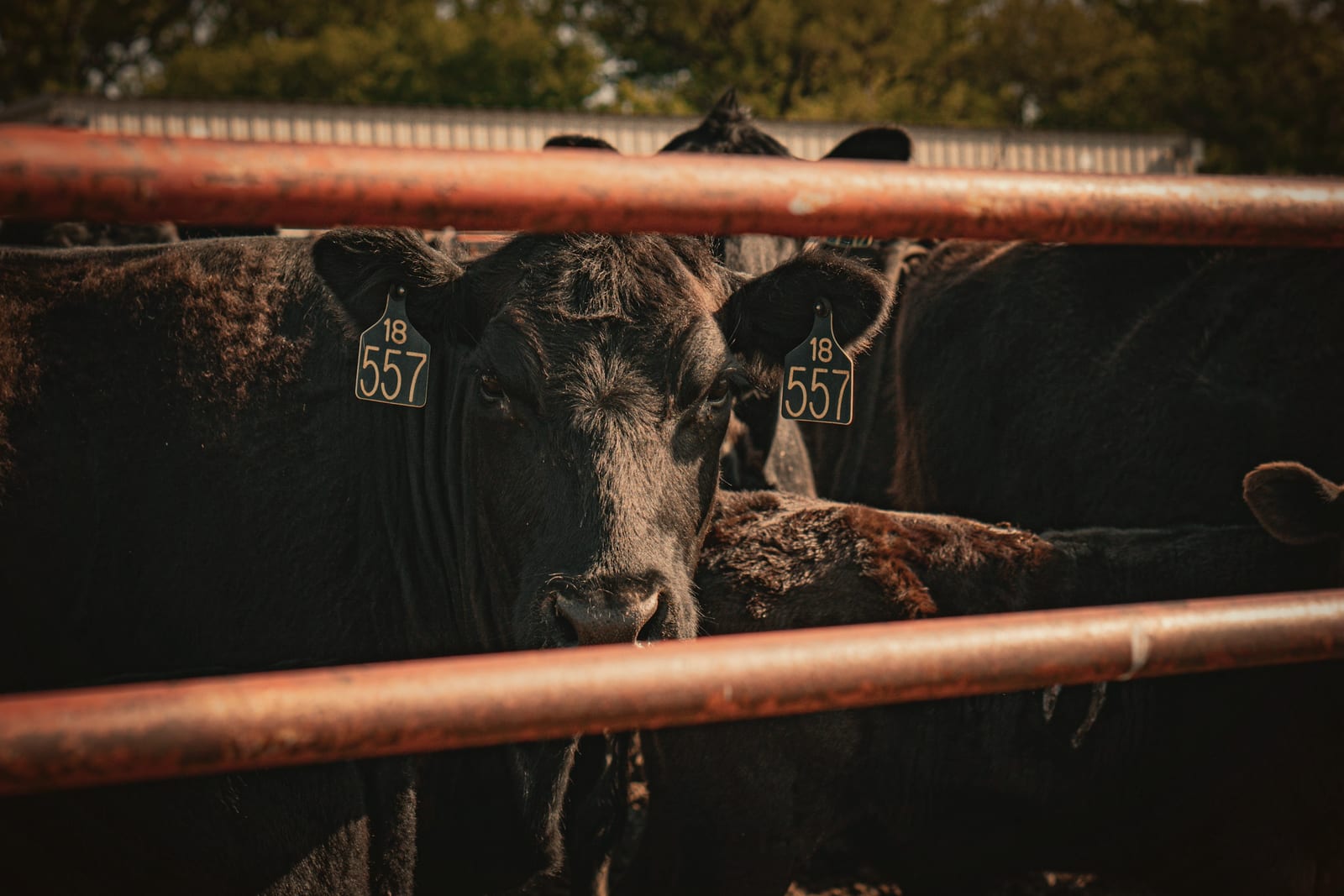
Early to mature, quick to marble
Angus is a medium-sized, naturally polled (hornless) beef breed. Most animals are solid black; a recessive gene gives red animals, known as Red Angus. The breed matures early, finishes well on both pasture and grain, and tends to deposit intramuscular fat readily — the trait that made it the default sire for steak beef in many countries.
Angus cows are known for calving ease and good maternal ability, which is why Angus bulls are widely used on heifers and in crossbreeding. The black, white-faced crossbred calves of Angus with Hereford — the “black baldy” — are a staple of commercial herds in the Americas and Australia.
From Scottish ‘doddies’ to a herd book
The breed descends from the hornless black cattle of the Scottish counties of Aberdeenshire and Angus (formerly Forfarshire), locally called “doddies” and “hummlies”. In the early nineteenth century breeders, above all Hugh Watson of Keillor and later William McCombie of Tillyfour, fixed the type by selection; Watson is generally regarded as the breed’s founder. The first herd book appeared in 1862, and the Polled Cattle Society — today the Aberdeen-Angus Cattle Society — was founded in 1879.
Angus reached the Americas in the 1870s. In 1873 the Scot George Grant brought four bulls to Victoria, Kansas, where they were crossed with Texas Longhorns with notable results; the American Angus Association was founded in 1883. In Argentina the first Aberdeen Angus arrived in 1879, and by the twentieth century the breed had become the backbone of Argentine beef. It spread in the same period to Canada, Australia, New Zealand, Uruguay and Brazil’s southern states.
Black and Red
In Britain and in most of the world, black and red animals are registered in the same herd book as one breed. In the United States the American Angus Association registers only black animals; red animals have been registered separately by the Red Angus Association of America since 1954. The difference is a single colour gene: Red Angus and Black Angus are otherwise the same breed, and there is no consistent difference in eating quality between them.
Certified Angus: a brand, not a breed
“Angus” on a menu or label can mean very different things, and the word alone guarantees little about the steak.
Certified Angus Beef® is a brand, not a breed. It was created in 1978 by the American Angus Association to reward high-quality Angus-type cattle. To qualify, an animal must be predominantly black-hided — a visual test, so many qualifying animals are crossbred — and the carcass must pass ten specifications set by the brand. These include marbling of “modest” or higher (the upper part of USDA Choice and Prime), medium to fine marbling texture, and limits on carcass weight, ribeye area and external fat. Only a minority of the black-hided cattle presented qualify.
Other labels — “Angus beef”, “Black Angus”, “100 % Angus” — are regulated differently from country to country. In the United States, a breed claim on a USDA-graded product requires an approved certification programme, but the claim typically rests on the black hide rather than on pedigree. In many other markets the term is not verified at all. A USDA grade (see Grading systems) or an MSA score says more about eating quality than the breed name does.
Breed is one factor among many
Angus is always better. Breed is one factor among many. Age, sex, feeding, handling before slaughter, chilling and ageing affect tenderness and flavour as much as, or more than, breed; a well-raised steer of another breed can outscore a poorly raised Angus.
Black Angus is a different breed from Angus. “Black Angus” is simply the usual colour; in the United States it is also the name used to distinguish the American Angus Association’s black cattle from Red Angus.
Frequently asked questions
What is Angus beef?
Beef from cattle of the Angus (Aberdeen Angus) breed or, more often in practice, from black-hided cattle with substantial Angus ancestry; the breed is known for marbling and early maturity.
Is Certified Angus Beef a breed?
No. It is a brand created in 1978 by the American Angus Association; carcasses from mostly black-hided cattle must pass ten quality specifications, including modest or higher marbling.
What is the difference between Black Angus and Red Angus?
Only coat colour, caused by one gene. In most countries both are one breed; in the United States they are registered by separate associations.
Is Angus beef better than other beef?
Not automatically. Angus marbles easily, but feeding, age, handling and ageing matter as much; a grade such as USDA Prime or an MSA score is a better guide to eating quality.
Sources
4
- American Angus Association. Angus history. Saint Joseph, Missouri. www.angus.org
- Certified Angus Beef LLC. The brand’s 10 quality standards. Wooster, Ohio. www.certifiedangusbeef.com
- Aberdeen-Angus Cattle Society. History of the breed. Perth, Scotland. www.aberdeen-angus.co.uk
- USDA Agricultural Marketing Service. United States Standards for Grades of Carcass Beef. 2017. www.ams.usda.gov/grades-standards/carcass-beef-grades-and-standards
Related