
Breed · South Korea
Hanwoo
Hanwoo (한우, “Korean cattle”) is the native beef breed of South Korea, a brown cattle that served as a draft animal for centuries and is now raised almost entirely for meat. Its beef is graded under Korea’s own KAPE system, and it is a different breed from Japanese Wagyu.
At a glance
- Origin
- Korean Peninsula
- Name
- 한우 (hanu), “Korean cattle”
- Color
- Brown (hwangu); also brindle, black
- Herd book
- 1968
- Grading
- KAPE: 1++, 1+, 1, 2, 3
What Hanwoo is
Hanwoo is the name for the native cattle of the Korean Peninsula; the word combines han (Korean) and woo (cow or ox). It is a comparatively small, hardy breed with a brown coat and is kept for beef rather than dairy.
Where the breed came from is not settled. Published reviews describe Hanwoo as an ancient local cattle, with a history of at least several thousand years on the peninsula, and genetic studies disagree on how much its ancestry draws on taurine and indicine cattle. What is documented is its use: plowing, hauling and ritual sacrifice long before it became a beef animal.
From plow animal to beef breed
Through the Joseon era and into the twentieth century, Korean farmers valued cattle mainly for work, and beef was a secondary product. Wars cut the herd sharply: published estimates put it at about 0.4 million head in South Korea around 1950, after the Second World War and the Korean War; counts for earlier years differ by source and by geographic scope.
Modern breeding began later. A herd book was established in 1968, and a government program, the Hanwoo improvement village program (Hanwoo-Gaeryang-Danji), began in 1979 to breed the cattle in a regulated way. As tractors replaced oxen, selection turned toward meat quality, and published herd counts rose to roughly 2.6 million head by 2015. These are dated figures; current counts come from the Ministry of Agriculture, Food and Rural Affairs (MAFRA).
The strains: brown, brindle, black
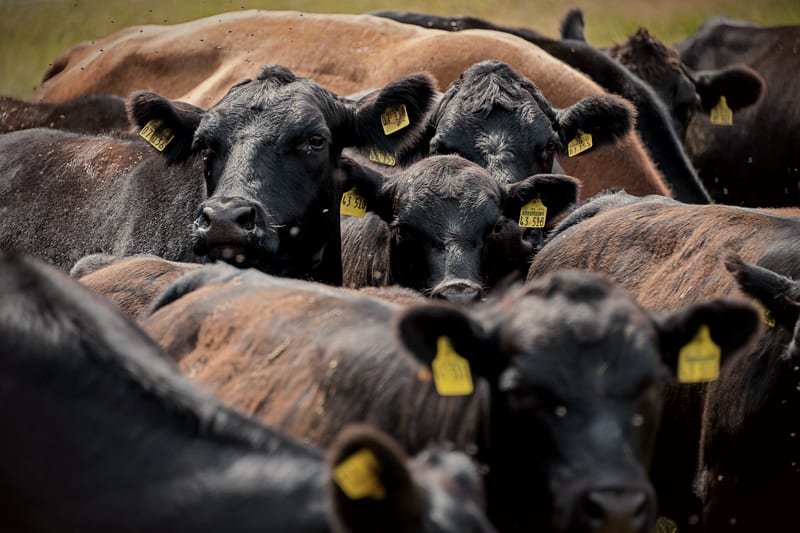
The brown type, hwangu (황우), is by far the most common and is what the market usually means by Hanwoo; in everyday Korean it is also called nureongso (누렁소), “yellow cattle”, after its tawny-brown hide. Reviews also describe two much smaller strains: chikso (칡소), the brindle or tiger-striped type, and heugu (흑우), the black type, with the black cattle of Jeju Island (Jeju black) kept as a separate conserved line.
The minor strains have small breeding populations, and genetic studies report low effective population sizes in them. When a label or menu says only “Hanwoo”, it normally refers to the brown cattle unless it names another type.
How Hanwoo is graded: KAPE
Beef in Korea is graded by the Korea Institute for Animal Products Quality Evaluation (KAPE). The quality grades are 1++, 1+, 1, 2 and 3 (1++ is the highest). They rest mainly on marbling, scored on KAPE's marbling scale, together with meat color, fat color, texture and maturity. A separate yield grade, A, B or C, estimates how much saleable meat the carcass gives.
The grade applies to the carcass, not to the breed. Korea revised the standard in December 2019, and analyses of the change report that beef with a lower marbling score can now earn a higher quality grade than before. KAPE’s 1++ is therefore not the same bar as a decade earlier, and it does not convert to Japan’s A5 or BMS numbers or to USDA Prime; see Grading systems for why those scales cannot be matched one-to-one.
Cuts and how Hanwoo is eaten
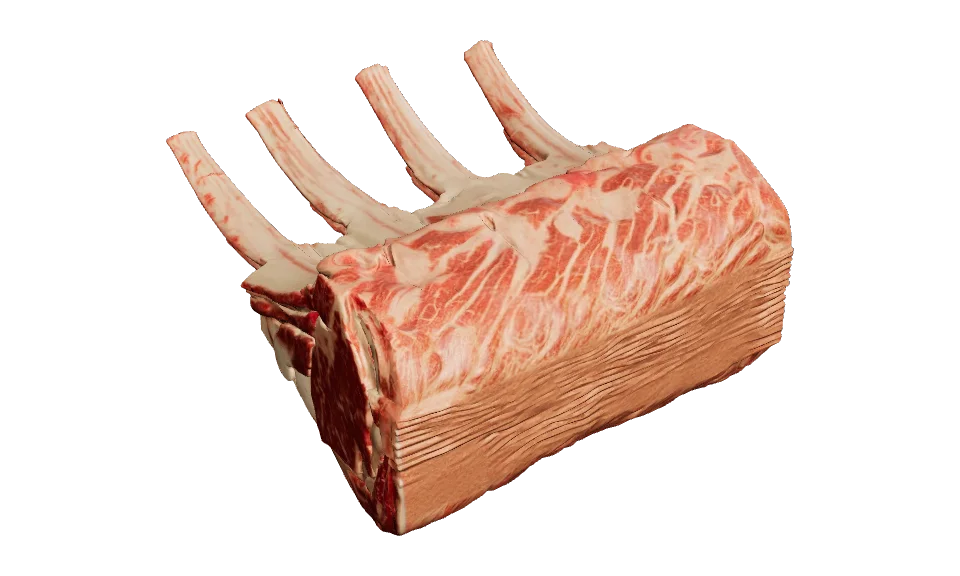
Korean butchery names cuts differently from American or Argentine practice. Common ones are galbi (갈비), the rib and short-rib section; deungsim (등심), the loin and rib-eye region; chaekkeut (채끝), the striploin; ansim (안심), the tenderloin; chadolbaegi (차돌박이), thinly sliced brisket; and anchangsal (안창살), a skirt-type diaphragm cut. For the nearest equivalents see short ribs, ribeye, striploin, tenderloin and skirt; the cut boundaries are not identical, so these are approximate matches.
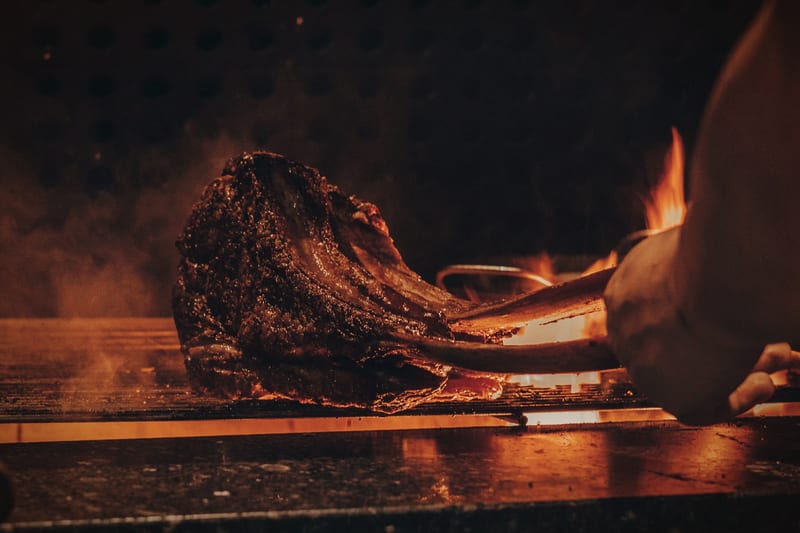
The typical Korean way to eat Hanwoo is gui (구이), grilling at the table over charcoal or a gas burner, usually in thin slices or cut ribs, often with lettuce wraps (ssam) and dipping sauces. Marinated preparations include galbi and bulgogi, though many Korean restaurants serve premium cuts unmarinated. The Japanese table-grilling tradition is covered under yakiniku.
Hanwoo and Wagyu are different breeds
Myth: Hanwoo is a type of Wagyu. In fact it is a separate breed. Wagyu (和牛) means Japanese cattle breeds, chiefly Japanese Black, graded in Japan under the JMGA scale with its A and BMS values (see Wagyu and Kobe beef). Hanwoo is a Korean native breed with its own herd book, grading system and supply chain. Both are East Asian cattle once used for draft work, but they were developed separately.
Myth: a 1++ Hanwoo equals A5 Wagyu. In fact the two grades are not equivalent. Korea’s KAPE grade and Japan’s A–C and BMS scales measure different things on different scales, and carcasses cannot be converted between them. A grade names how one carcass scored in one country, not the quality of the breed.
“Korean beef” and imported beef
Korea imports a large share of the beef it eats, mostly from the United States and Australia. Trade and news reports put domestic beef at roughly 35 to 40 percent of what Korea eats in recent years, and Korean policy has aimed to hold it near 40 percent. The figure varies by year and source; treat it as approximate.
In Korean retail, the word 한우 refers to beef from Hanwoo cattle, and an animal-history number printed on the package lets the buyer look up where it was raised and slaughtered. Beef sold as “Korean beef” in other countries may be a different matter: look for the breed name and the country of birth and slaughter, since export of fresh Hanwoo is limited and labels abroad are not always specific. A brand or farm claim about feeding, age or marbling is the producer’s own statement unless it carries a grade or certification that can be checked.
Keep reading
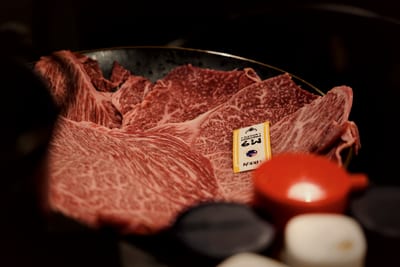
 Breed group · Japan, BMS 1–12WagyuThe four Japanese breeds, BMS 1–12, what A5 really means, and how Kobe and Australian Wagyu fit in.
 Regional brand · Tajima, HyōgoKobe beefWhat makes beef “Kobe”, the certification rules, and why most “Kobe” sold abroad never was.
 Standards · USDA, A5, MSA, EUROPBeef grading systemsUSDA, A5, MSA stars, Korea’s 1++ and EUROP side by side: what each grade measures and what it doesn’t.
 Cut · Plate, chuck & ribShort ribsThe lower ends of the ribs: asado de tira across the bones, English cut between them, galbi in thin strips.
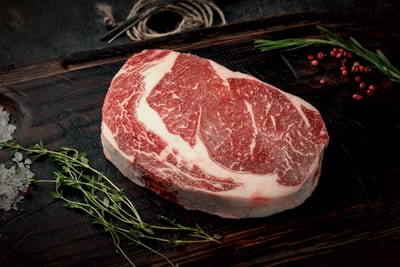 Cut · Rib, the marbled steakRibeyeEye, cap and fat seam from the rib — the marbled steak used to grade the carcass.
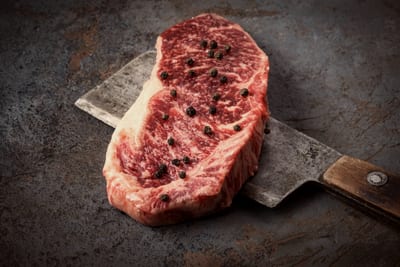 Cut · Short loin, one muscleStriploinOne muscle, one grain, one strip of fat — the New York strip, UK sirloin and bife de chorizo.
Frequently asked questions
What is Hanwoo?
Hanwoo (한우) is the native beef cattle of South Korea, usually brown and long used as a draft animal. Today it is raised for meat and graded under Korea’s KAPE system, from 1++ (highest) to 3.
Is Hanwoo the same as Wagyu?
No. Wagyu refers to Japanese cattle breeds, mainly Japanese Black, graded under Japan’s own scale; Hanwoo is a separate Korean breed with its own grades, and the two grading systems cannot be converted.
What does Hanwoo 1++ mean?
It is the top quality grade of Korea’s KAPE system, based mainly on marbling plus meat color, fat color, texture and maturity. It is a carcass grade, not a breed, and does not equal A5 or USDA Prime.
What are the main Hanwoo cuts?
Common cuts are galbi (ribs), deungsim (loin and rib-eye area), chaekkeut (striploin), ansim (tenderloin) and chadolbaegi (thin-sliced brisket). They match American cuts only approximately.
What is Hanwoo beef?
Beef from Hanwoo cattle, South Korea’s native breed. In Korea it is sold under the label 한우, usually graded by KAPE and traceable by a number on the pack.
Sources
2
- Korea Institute for Animal Products Quality Evaluation (KAPE). Beef cuts and grading. www.ekape.or.kr
- Lee, D. Y., et al. A Comprehensive Review of the History and Breed Characteristics of Hanwoo Cattle. Food Science of Animal Resources 2025. doi.org/10.5851/kosfa.2025.e35