Main course · Brazil, on the skewer
Churrasco
Churrasco is the Brazilian way of grilling beef on long skewers (espetos) over embers, seasoned with coarse salt; born among the gaúcho cattlemen of Rio Grande do Sul, it is served in churrascarias by waiters who carve at the table. Picanha goes on folded, fat side out, so the fat bastes the meat as it renders.
At a glance
- Origin
- Southern Brazil (Rio Grande do Sul), gaúcho tradition
- Fire
- Embers of wood or lump charcoal, skewers above
- Seasoning
- Coarse salt (sal grosso)
- Serves
- 8, about 400–500 g / 14–18 oz raw meat each
- Time
- About 2.5 h, 1 h of it at the fire
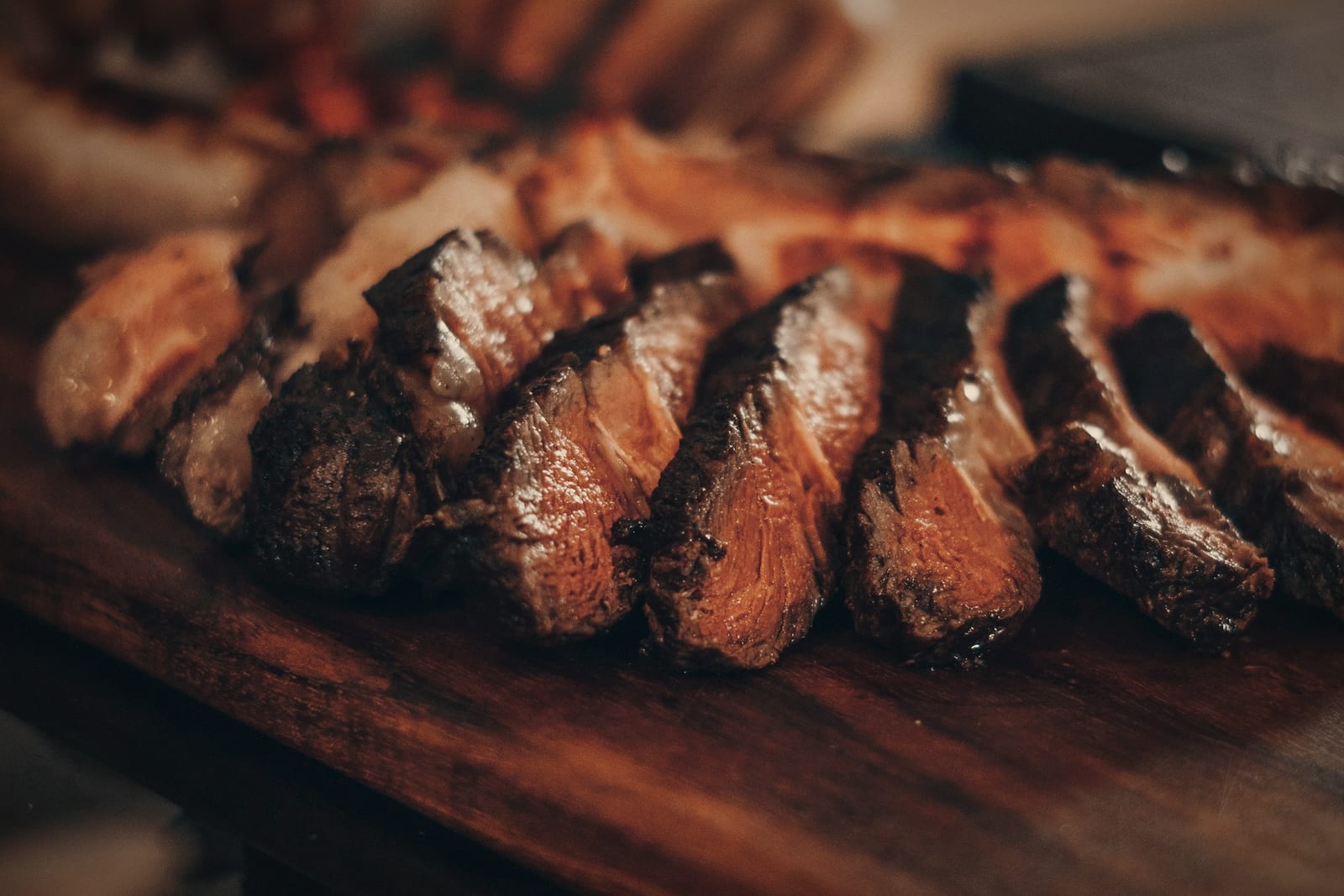
The skewer, the salt, the fat outside
In Brazil, churrasco is the general word for meat grilled over embers, and also the meal built around it. Its defining tool is the espeto, a long iron or steel skewer, flat or with a double prong, which holds large pieces of beef above the fire. The skewers rest on the edge of the grill (churrasqueira) or, in the older style called fogo de chão, are driven into the ground leaning over a fire pit.
The meat is seasoned with sal grosso, coarse rock salt, and little else. The signature cut is picanha, the rump cap, cut into thick pieces and folded on the skewer with its fat on the outside, so that the fat bastes the meat as it renders. The outer layer is carved off as it browns and the skewer goes back to the fire, so each guest receives a freshly seared slice.
From the pampa to the highway
The churrasco comes from the gaúchos, the horsemen and cattle hands of the southern plains (pampa) of Rio Grande do Sul, who shared a way of life with the gauchos of Argentina and Uruguay from the 18th century onwards. On the cattle ranches (estâncias) and on cattle drives, beef was roasted on sticks or iron spits by an open fire and seasoned with salt. Luís da Câmara Cascudo's História da Alimentação no Brasil records the gaúcho roast among the regional foods of the country.
In the 20th century, migrants from the south carried the churrasco north along the highways, and roadside grills for truck drivers grew into restaurants. The rodízio (also espeto corrido), in which waiters circulate with skewers of different meats and carve them at each table for a fixed price, became the typical service of the churrascaria; accounts of where and when it began differ, and no single founding restaurant is established. The state of Rio Grande do Sul declared churrasco its typical dish by law in 2003.
Ingredients
| Ingredient | Amount (for 8) | Note |
|---|---|---|
| Picanha (rump cap), with fat cap | 2 pieces, about 2.4 kg / 5.3 lb | fat 1–2 cm / ½–¾ in, left on |
| Maminha (tri-tip) | 1 piece, about 1 kg / 2.2 lb | whole on the skewer |
| Costela (beef short ribs) | 1.5 kg / 3.3 lb | slow; optional |
| Linguiça (fresh pork sausage) | 600 g / 1.3 lb | served first |
| Sal grosso (coarse rock salt) | about 150 g / ⅔ cup | rubbed on before grilling |
| Lump charcoal or hardwood | 6–8 kg / 13–18 lb | for about 2 hours of fire |
| Farofa, vinaigrette, rice | to serve | see Serving |
Method
- Light the charcoal or wood about 40 minutes before cooking and let it burn down to an even bed of glowing embers, with no flame.
- Cut each picanha with the grain into 3–4 steaks about 3–4 cm / 1¼–1½ in thick. Bend each steak into a C shape, fat on the outside, and thread two or three on a skewer through both ends. Thread the tri-tip whole.
- Roll the meat in sal grosso, or press the salt on all sides, just before it goes to the fire. Shake off the excess.
- Set the skewers about 25–30 cm / 10–12 in above the embers: closer for sausages and picanha, higher for the short ribs, which need 3–4 hours over low heat if included. Start the picanha fat side down so the fat renders and browns.
- Turn the skewers every few minutes. After 15–20 minutes, when the fat is golden and the outside is browned, the outer layer of picanha is usually medium-rare (about 55 °C / 131 °F near the surface). Slice thin pieces off the outside onto each plate, against the grain.
- Return the skewer to the fire and repeat, carving each new browned layer. Tri-tip takes 30–40 minutes in total and is carved the same way.
- Before carving, many cooks knock the skewer on a board to shake off the loose salt crystals.
Fraldinha, cupim, costela
Other common cuts are fraldinha (the flap of the flank), contrafilé (striploin), cupim (the hump of zebu cattle, slow-cooked until soft), costela cooked for hours at a distance from the fire, chicken hearts (coração de frango) and pork. In Rio Grande do Sul some cooks brush the meat with salmoura, a brine, during cooking, and the costela fogo de chão roasts whole racks of ribs beside a fire pit for many hours.
The Argentine asado shares the same roots but differs in method: it is cooked mostly on a flat grill (parrilla) with embers shovelled beneath, in courses from sausages and offal to large cuts. The churrasco favours skewers, carving in layers and a continuous service. The Spanish word churrasco in other countries usually names a single grilled steak, not the Brazilian meal.
Green card for more, red to stop
At home the churrasco is served in rounds, sliced on a board. In a churrascaria rodízio each table has a two-sided card, green to ask for more meat and red to stop. Typical side dishes are farofa (toasted cassava flour), a vinaigrette of tomato, onion and pepper (vinagrete), white rice, potato salad, grilled pineapple with cinnamon and pão de queijo. Common mistakes: cooking over flame, so fat flares up and blackens the meat; cutting picanha steaks against the grain before skewering, which leaves the carved slices with the grain; trimming off the fat; and salting with fine salt, which dissolves and over-salts the surface.
Frequently asked questions
What is the difference between churrasco and asado?
Both come from the cattle culture of the southern plains. Churrasco grills meat on skewers and carves it in layers; the Argentine asado cooks on a flat grill over embers and serves whole cuts in courses.
Why is picanha folded on the skewer?
Bending the steak into a C with the fat outside keeps the fat facing the heat, where it renders and bastes the meat, and holds the piece firmly on the skewer.
What salt is used for churrasco?
Sal grosso, coarse rock salt. The large crystals season the surface without dissolving too fast; the excess is knocked off before carving.
What is rodízio?
A churrascaria service in which waiters bring skewers of different meats to the table and carve slices for each diner, for a fixed price, until the diner signals to stop.
Sources
4
- Brasil, Ministério da Agricultura, SIPA. Portaria nº 5, de 8 de novembro de 1988 — Padronização de cortes de carne bovina.
- McGee, Harold. On Food and Cooking: The Science and Lore of the Kitchen, rev. ed. New York: Scribner, 2004.
- Câmara Cascudo, Luís da. História da Alimentação no Brasil. São Paulo: Companhia Editora Nacional, 1967.
- Raichlen, Steven. Planet Barbecue! New York: Workman, 2010.
Related