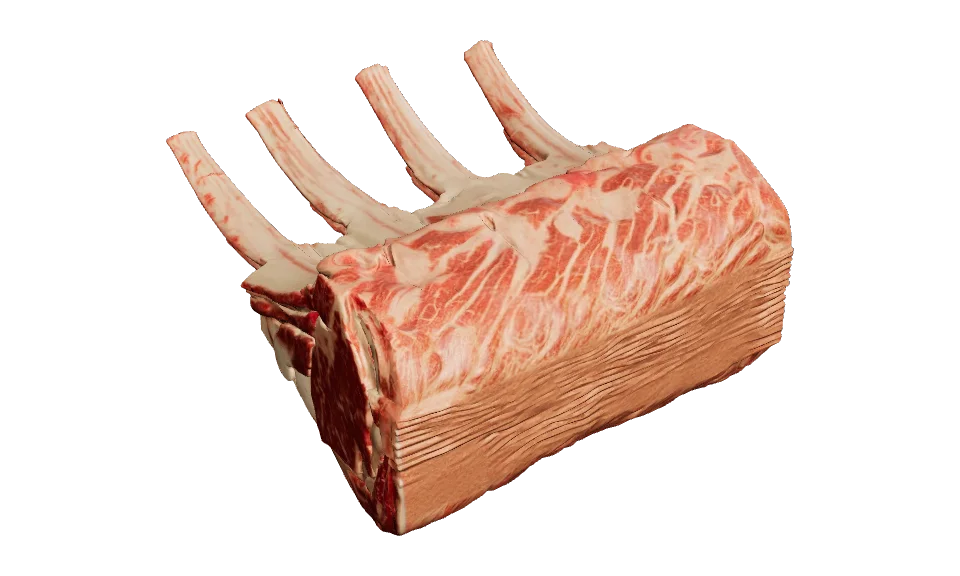
 Ribeye
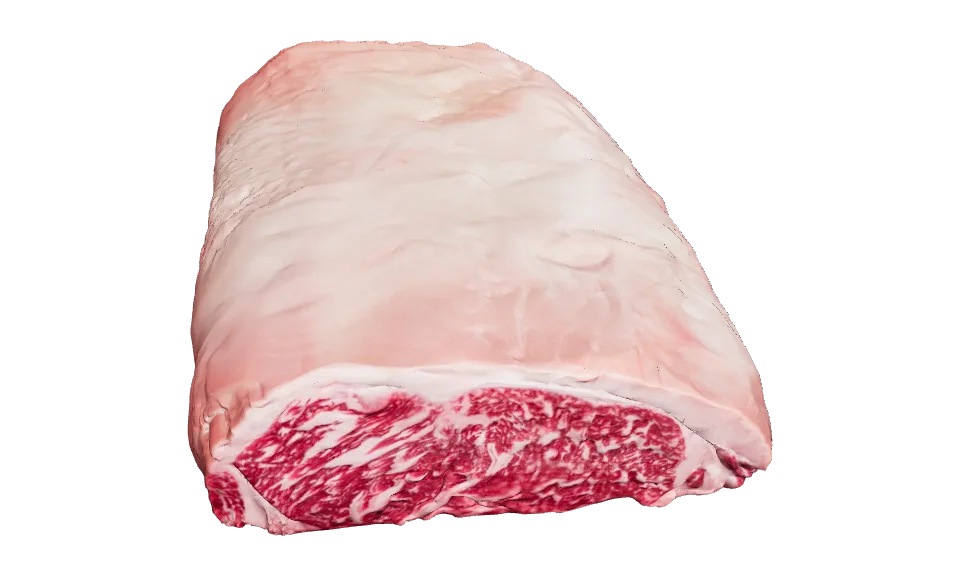 Striploin
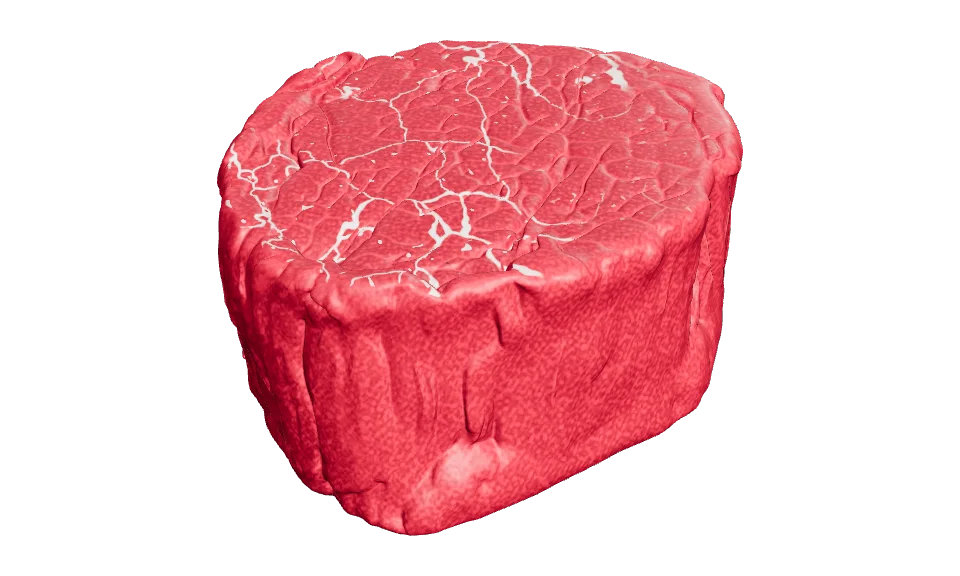 Tenderloin
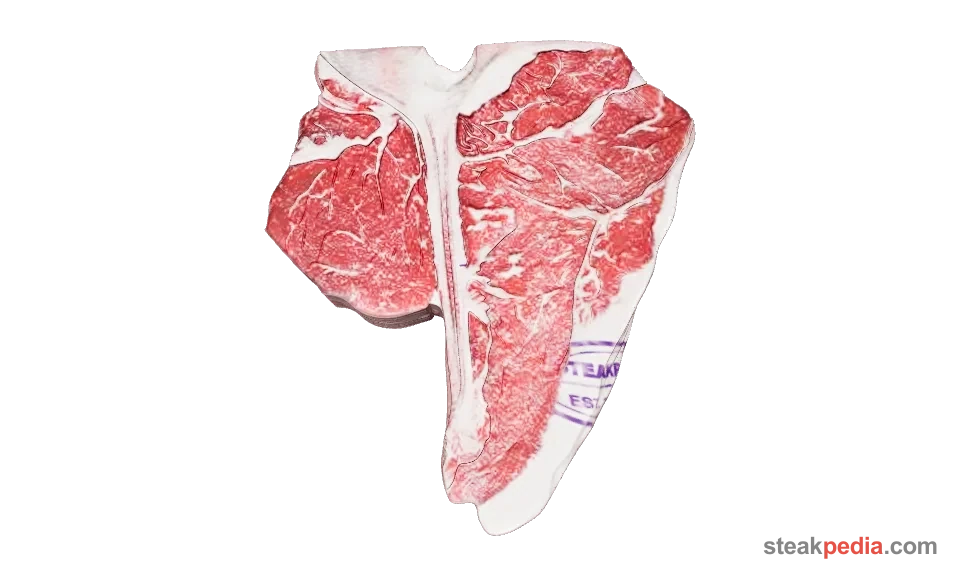 T-bone
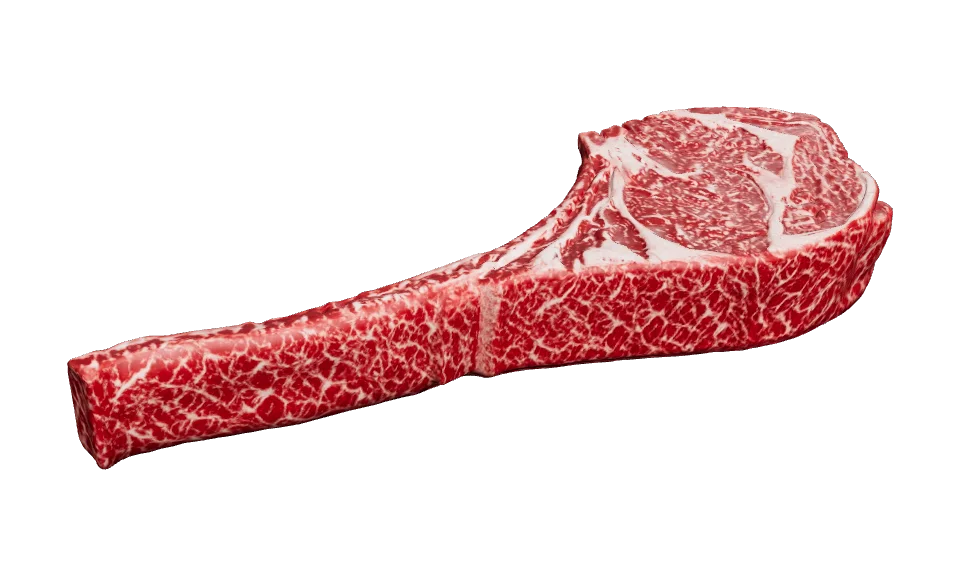 Tomahawk
 New York
 Madrid
 Sydney
 Hanoi
 Tokyo
 Montevideo
 Prime rib
 Beef Wellington
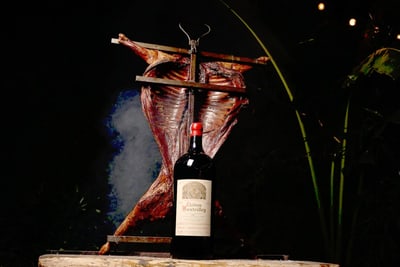 Asado
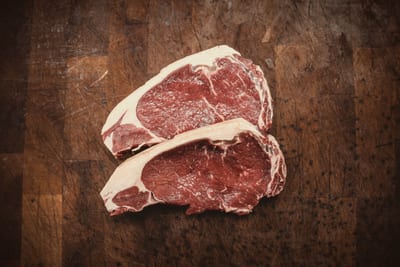 Chuletón
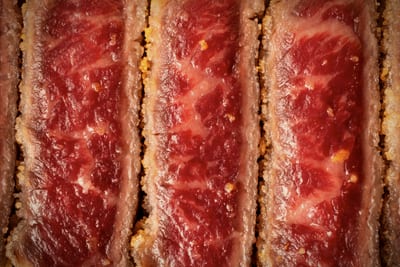 Gyukatsu
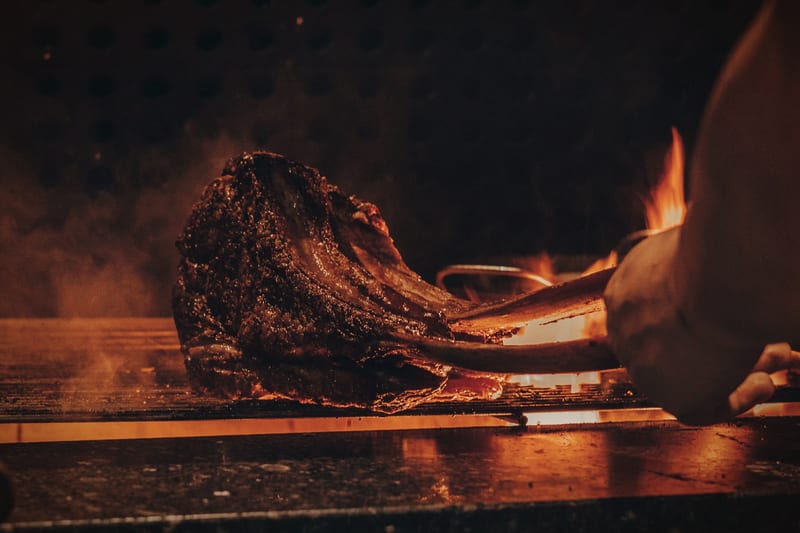
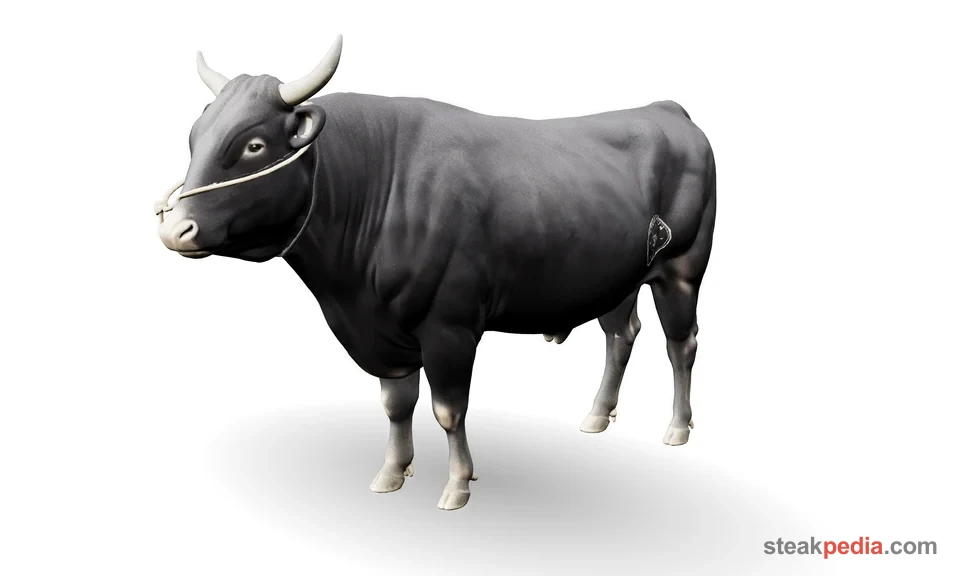 Wagyu
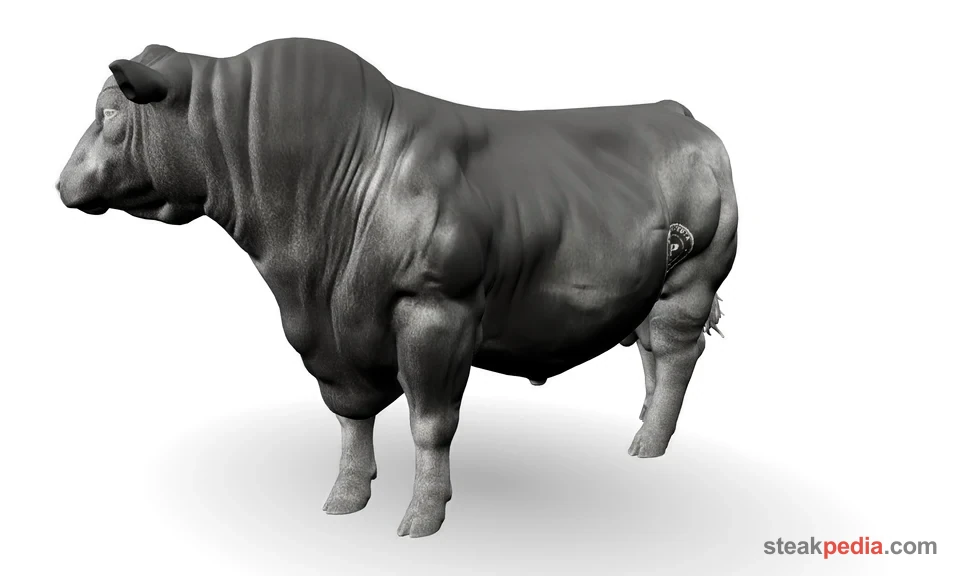 Angus
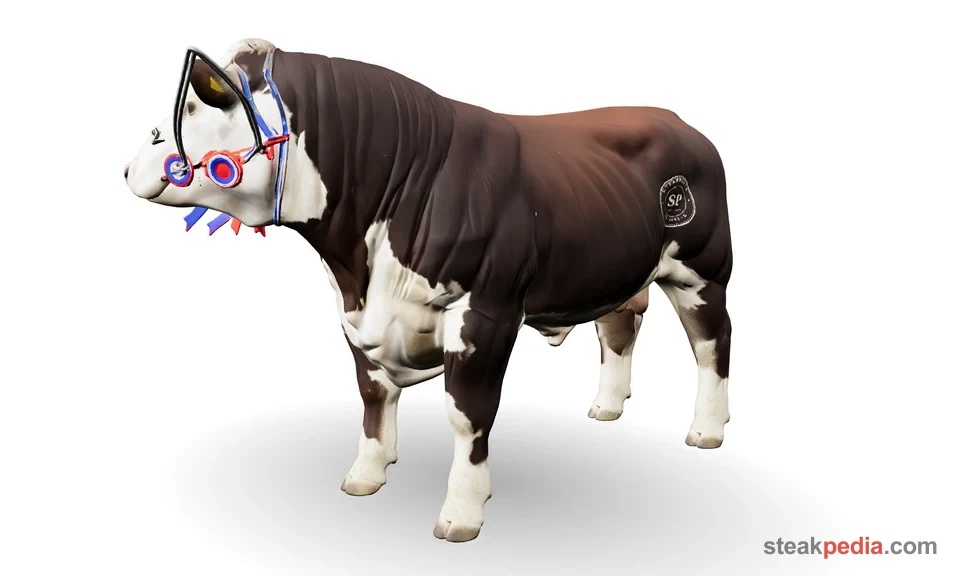 Hereford
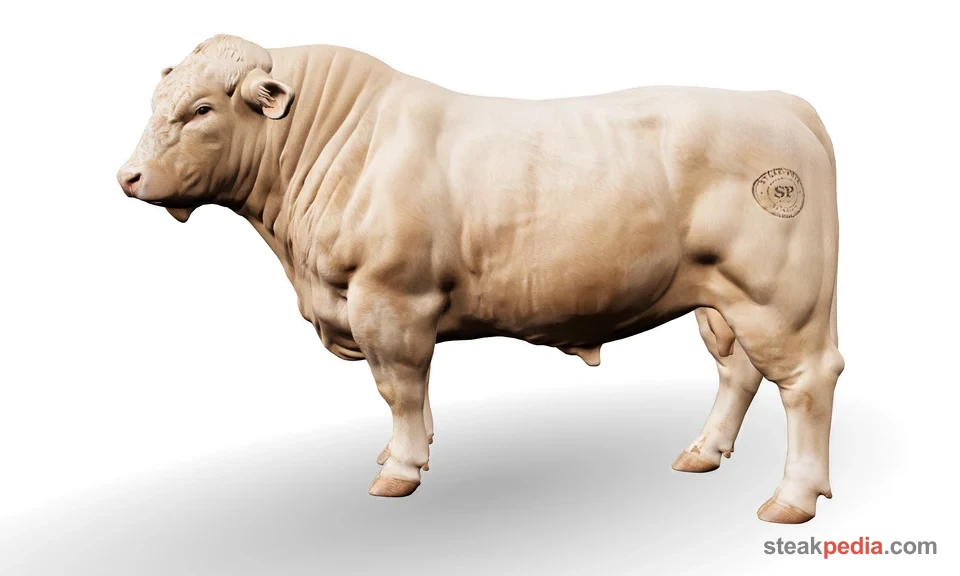 Charolais
 Brahman


News · Producers
Argentina’s average beef carcass reaches 241 kg / 531 lb, heaviest since 1921
Argentina’s average beef carcass weighed 241 kg / 531 lb between January and October 2026, the highest level in more than a century, the country’s Secretariat of Agriculture, Livestock and Fisheries said Nov. 20. The Secretariat’s own series, which starts in 1914, makes it more precise: this is the heaviest average since 1921, not the heaviest on record.
Report · Argentina
At a glance
- Average carcass
- 241 kg / 531 lb, January–October 2026
- Last heavier year
- 1921, at 244 kg / 538 lb
- Highest in the series
- 259 kg / 571 lb, 1914–1916
- Lowest in the series
- 194 kg / 428 lb, 1978
- Declared for export
- 274 kg / 604 lb on average
- Domestic market
- 216 kg / 476 lb on average
What the series since 1914 shows
Steakpedia opened the Secretariat’s historical spreadsheet. The last year with a heavier average was 1921, at 244 kg / 538 lb. All eight years from 1914 to 1921 were heavier, and the series opens at 259 kg / 571 lb in 1914, 1915 and 1916.
From there the average fell, unevenly, to a low of 194 kg / 428 lb in 1978, the year Argentina slaughtered 16.25 million head, the most in the series. It has climbed since, also unevenly, reaching 231 kg / 509 lb in 2025.

The comparison has limits. The 2026 figure covers ten months and the others full years. Figures up to 1991 come from the former Junta Nacional de Carnes, those before 1935 are in whole kilos, and the Secretariat does not say how the earliest were compiled.
Selected years. Source: Secretariat of Agriculture, Livestock and Fisheries; table by Steakpedia.
| Year | Average carcass | In the series |
|---|---|---|
| 1914–1916 | 259 kg / 571 lb | Highest |
| 1921 | 244 kg / 538 lb | Last year heavier than 2026 |
| 1932 | 235 kg / 518 lb | Highest between 1922 and 2025, level with 1922 |
| 1978 | 194 kg / 428 lb | Lowest; 16.25 million head slaughtered |
| 2016 | 226 kg / 498 lb | |
| 2022 | 232 kg / 511 lb | |
| 2023 | 226 kg / 498 lb | Lightest of the past five years |
| 2025 | 231 kg / 509 lb | |
| 2026, January–October | 241 kg / 531 lb |
Export carcasses average 274 kg / 604 lb, domestic ones 216 kg / 476 lb
The ten months add up to 10.24 million head and 2.47 million metric tons of carcass-weight beef, which the Secretariat splits by the destination declared at slaughter. Carcasses declared for export were 43% of the head and averaged 274 kg / 604 lb; those for the domestic market, 57%, averaged 216 kg / 476 lb. The export carcass is 58 kg / 128 lb, or 27%, heavier, so that side supplied 49% of the tonnage. Declared destination is not beef shipped: exports were 27% of production in 2025.
Category mix does not explain all of the gap. Seven in ten domestic-market carcasses were heifers or young steers with up to two permanent incisors, averaging 190 kg / 419 lb and 221 kg / 487 lb. Declared for export, animals of the same two classes, which the Secretariat treats as the same age, were much heavier: 234 kg / 516 lb for heifers and 285 kg / 628 lb for young steers.

Why the carcass is heavier, and what it adds up to
The Secretariat attributes the rise to export demand for heavier cattle, weather that favored forage and producers’ efficiency. It describes a year of holding back females, which are lighter: they were 45.7% of slaughter, against 47.3% in the same months of 2025. Valor Carne, a trade publication, put October at 247 kg / 545 lb, 15 kg / 33 lb more than a year earlier and half a kilo less than in September.
The heavier carcass is why beef output fell less than slaughter. Against the same months of 2025, the number of head fell 10.2% and tonnage 6.5%, with the average carcass about 9 kg / 20 lb heavier.
Against 2023, the lightest of the past five years at 226 kg / 498 lb, this year’s carcass is 14.3 kg / 32 lb heavier. Over 10.24 million head, that is roughly 146,000 metric tons of carcass-weight beef, bone and fat included.
What a heavier carcass means for a steak
A heavier carcass of the same kind of animal has, on average, bigger muscles. The eye of a striploin steak (New York strip; bife de chorizo in Argentina) or a ribeye (ojo de bife) is larger. Cut to the same thickness, the steak weighs more; a kitchen that sells a fixed weight has to cut it thinner. How much larger also depends on breed, sex and finish.
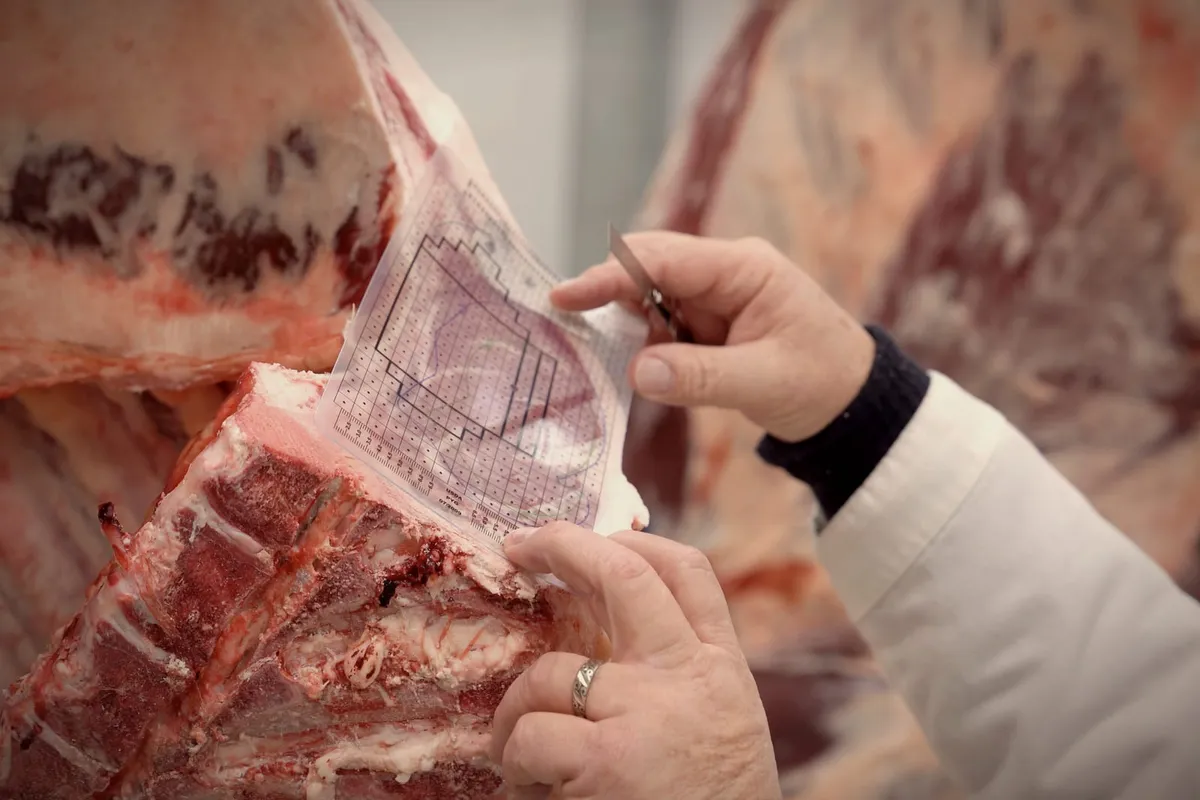 A U.S. Department of Agriculture grader measures the ribeye of a beef carcass with a grid at a plant in West Virginia. The photo shows how ribeye area is measured in the United States; it is not from Argentina. Photo: USDAgov / Wikimedia Commons, public domain.
Two feeding trials at INTA, Argentina’s agricultural research institute, reported by Valor Carne, show the scale. In one, ribeye area went from 62.5 to 66.3 cm / 25 to 26 in², or 6%, as crossbred steers were fed to carcasses of 320 kg / 705 lb instead of 251 kg / 553 lb. In the other, it went from 61.5 to 69.4 cm / 24 to 27 in², or 13%, in steers finished about 100 kg / 220 lb heavier in live weight. Neither trial measures this year’s slaughter, and the 58 kg / 128 lb gap is between two mixes of animals: a third of the carcasses declared for export were cows.
Based on public documents from Argentina’s Secretariat of Agriculture, Livestock and Fisheries (its Nov. 20, 2026 release, its November report by destination, its series since 1914 and its classification rules) and three Valor Carne articles. The comparisons with 1921 and 2023, the 58 kg / 128 lb gap, the seven-in-ten and one-third shares and the ribeye percentages are Steakpedia’s calculations; the other figures are the Secretariat’s. Steakpedia did not contact the Secretariat or INTA. Nobody paid for this article.
Keep reading
- News · ReportArgentina replaces packing-plant rules for EU’s Quota 481 beefArgentina replaces the rules for how plants slaughter, mark and box beef for the EU’s zero-duty quota. What the resolution requires, article by article.
- News · ReportAustralia’s Feedlots Set a Record, but Ended the Quarter Less FullA record 1.68 million cattle on feed, pens 91.5% full, and what 100, 200 and 400 days on feed mean for the steak.
 News · ReportBasque grill Asador Etxebarri tops The 50 Best Restaurants 2026A Basque grill that cooks over wood embers is No. 1 on The 50 Best 2026. How it cooks, and how to book.
- News · Report · Field visits 2026Thai Wagyu on the plate: flap and striploin from Nguadoi, Chiang MaiFlap and striploin from a Thai Wagyu farm near Chiang Mai: the crosses, the fattening the farm reports, and where to try it.
 News · Report · Field visits 2026Visiting Stanbroke, Gold at the World Steak Challenge in Three CutsGold in three cuts, two feedlots in a day and eight beef categories: a visit to Stanbroke.
- News · AnnouncementSteakpedia opens News: every story says how we know itSteakpedia opens News: three visits and one desk report, each labeled by how we know it.
Frequently asked questions
What is the average beef carcass weight in Argentina?
Argentina’s average beef carcass weighed 241 kg / 531 lb between January and October 2026, the country’s Secretariat of Agriculture, Livestock and Fisheries said Nov. 20.
Is 241 kg / 531 lb a record for Argentina?
No. It is the heaviest average since 1921, not the heaviest on record. All eight years from 1914 to 1921 were heavier, and the series opens at 259 kg / 571 lb in 1914, 1915 and 1916.
Why is Argentina’s beef carcass heavier?
The Secretariat attributes the rise to export demand for heavier cattle, weather that favored forage and producers’ efficiency.
Sources
8
- Secretaría de Agricultura, Ganadería y Pesca (Argentina). Hito después de 100 años: el peso de faena de la res bovina supera los 240 kg / 529 lb, Nov. 20, 2026. www.argentina.gob.ar/noticias/hito-despues-de-100-anos-el-peso-de-faena-de-la-res-bovina-supera-los-240-kg
- Secretaría de Agricultura, Ganadería y Pesca (Argentina). Evolución del peso promedio de la res bovina y de la faena según destino comercial declarado, enero–octubre 2016–2026, November 2026 (PDF). Opened Nov. 22, 2026. www.magyp.gob.ar/sitio/areas/bovinos/informacion_interes/informes/_archivos//000010=Faena%20y%20Producci%C3%B3n/000009_Evoluci%C3%B3n_peso_faena_OCTUBRE_2026.pdf
- Secretaría de Agricultura, Ganadería y Pesca (Argentina). Principales indicadores del sector bovino 1914–2025 (PDF), which links the spreadsheet Indicadores históricos del sector bovino 1914-2025. Opened Nov. 22, 2026. www.magyp.gob.ar/sitio/areas/bovinos/informacion_sectorial/_archivos/000030_Indicadores/000003-Indicadores%20bovinos%20anuales%201914-2025.pdf
- Secretaría de Agricultura, Ganadería y Pesca (Argentina). Indicadores históricos del sector bovino 1914-2025 (spreadsheet): carcass weight per head, slaughter, production and exports by year. Opened Nov. 22, 2026. www.magyp.gob.ar/sitio/areas/ss_ganaderia/archivos/Indicadores%20hist%C3%B3ricos%20del%20sector%20bovino%201914-2025.xlsx
- Secretaría de Agricultura, Ganadería y Pesca (Argentina). Sistema de clasificación oficial bovina (PDF): categories by sex and number of permanent incisors. Opened Nov. 22, 2026. www.magyp.gob.ar/sitio/areas/tipificacion/informes/_archivos/000000_Sistema%20de%20clasificaci%C3%B3n%20oficial%20bovina.pdf
- Valor Carne. El peso medio de faena siguió subiendo en octubre, Nov. 19, 2026. www.valorcarne.com.ar/el-peso-medio-de-faena-siguio-subiendo-en-octubre
- Valor Carne. Novillos 420-500 kg / 926–1,102 lb: ¿marmoreo sin sobre engrasarse?, Aug. 20, 2026 (INTA Anguil feeding trial). www.valorcarne.com.ar/novillos-420-500-kg-marmoreo-sin-sobre-engrasarse
- Valor Carne. Destete pesado: ¿el bife tiene memoria?, Sept. 24, 2026 (INTA Anguil feeding trial). www.valorcarne.com.ar/destete-pesado-el-bife-tiene-memoria