News · Report · Field visits 2026
Thai Wagyu on the plate: flap and striploin from Nguadoi, Chiang Mai
Nguadoi, a family farm near Chiang Mai, crosses Japanese Wagyu semen with small native Thai cattle and, according to the farm, feeds them for more than 400 days. At its tasting room, on a recent visit (November 2026), Steakpedia’s editor tried the flap and striploin: tender and juicy, with a clear beef flavor.
Report
At a glance
- Cuts on the platter
- Flap and striploin
- Crosses
- Japanese Wagyu semen over Thai native cattle (F1); Wagyu over Holstein Friesian; full-blood Wagyu
- Native cattle, mature
- 250–300 kg / 551–661 lb
- F1 cattle, live weight
- 450–500 kg / 992–1,102 lb
- Pasture
- More than 900 rai (144 ha)
- Silage grass
- 400 rai (64 ha)
- Fattening
- More than 400 days of feeding, on longan, according to the farm
- Visit
- November 2026, at the host’s invitation
- Recognition
- Silver, 2020 “Wagyu – Champion of Asia/Africa” (bull Tajimadoi)
- Farm
- Doi Tao district, Chiang Mai, about 90 km from the city
- Tasting room
- 152 San Pa Pao, San Sai District, Chiang Mai · 087-179-0003
The steaks
Premium beef is a small niche in Thailand: a 2018 review found that only about 1 percent of the country’s beef cattle are for the premium market, which it bases on marbling score; it does not name Wagyu. Nguadoi is one attempt to build the product locally, with Japanese genetics on native cattle, silage for the dry season and a long fattening, as the farm describes it.
The tasting platter held two cuts of the farm’s Wagyu: flap (also called bavette) and striploin (New York strip in the US). Both were tender and juicy, with a clear beef flavor and a slight sweetness. By eye and taste, the editor found the marbling comparable to the high-marbled Japanese and Australian Wagyu the editor has eaten; no grade was published for these cuts, so this is the editor’s impression, not a grade.
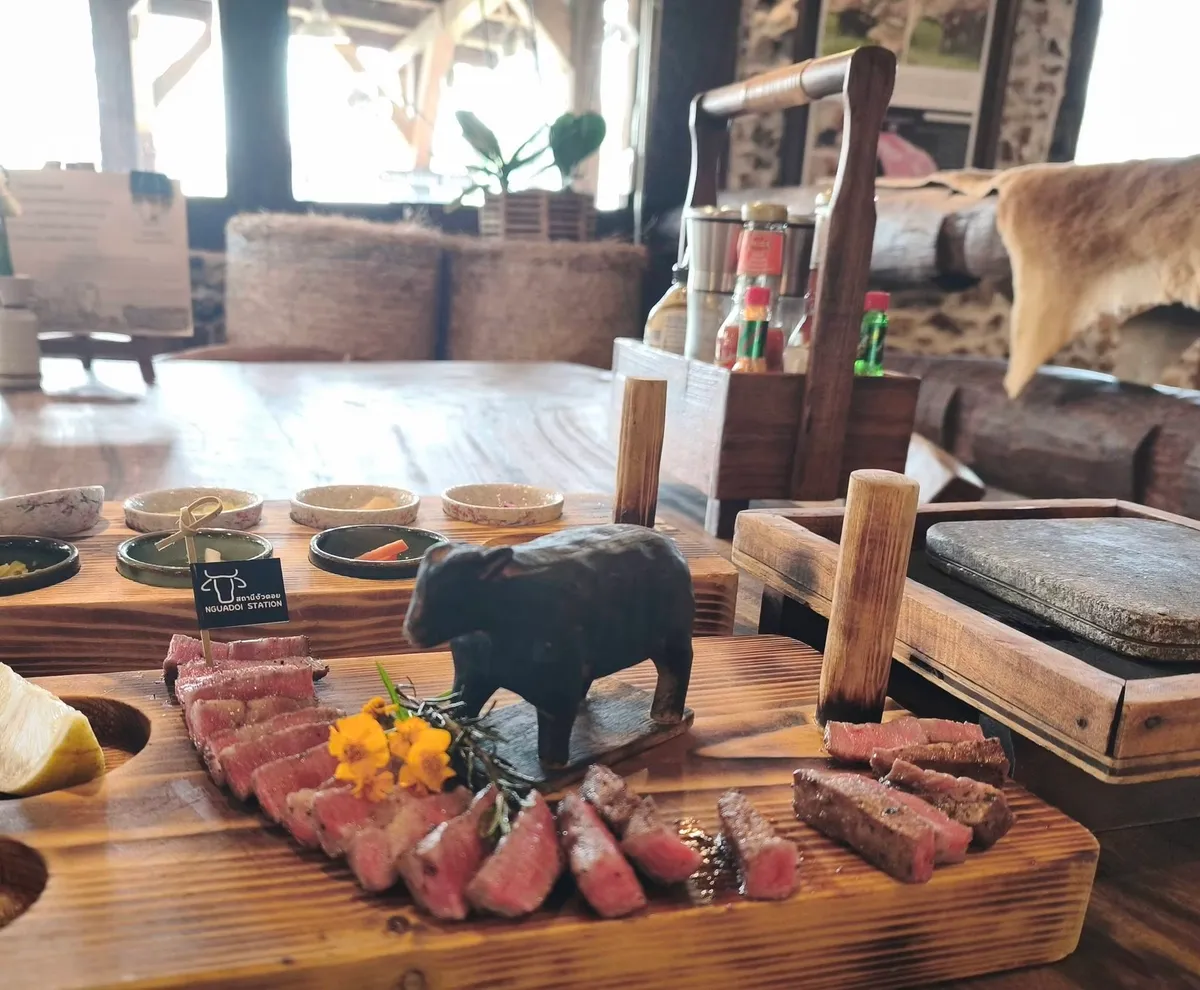 The tasting platter: flap and striploin. The marbling is hard to see at this distance. Photo: Emilio Fusé.
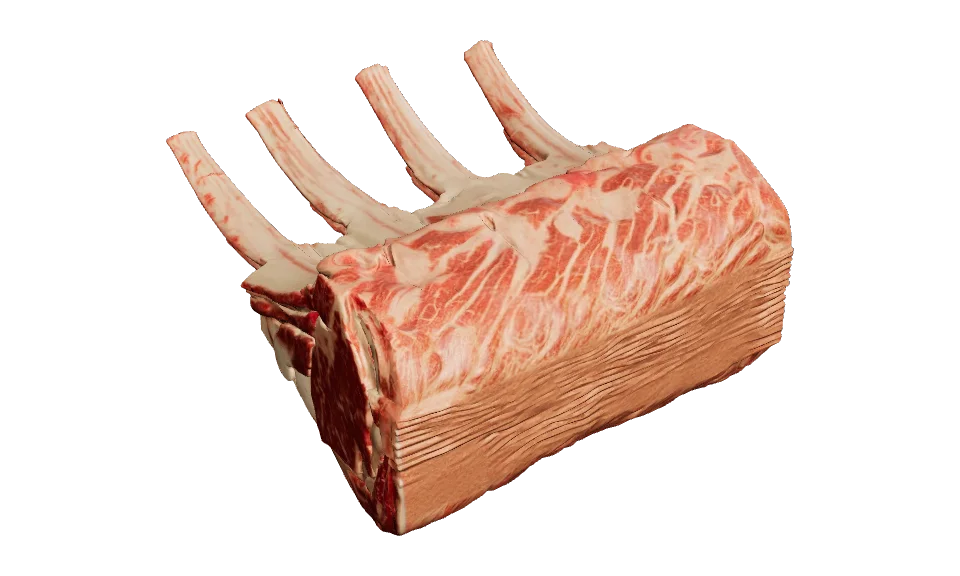
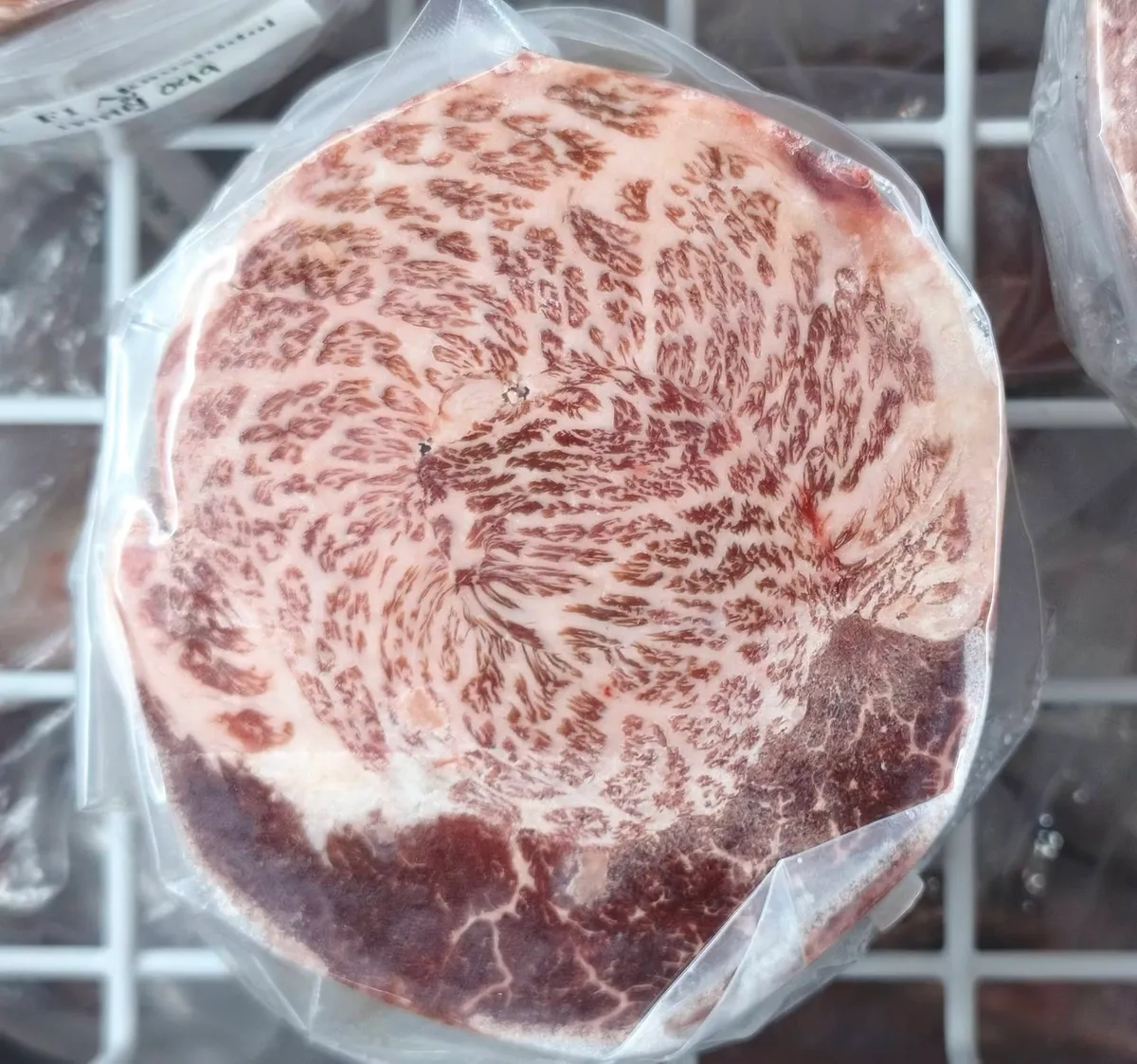 A raw, vacuum-packed cut seen at the tasting room. Not the piece on the platter. Photo: Emilio Fusé.
On the walk around the ranch grounds the host also gave the editor jerky. Sliced so thin it cracks like a potato chip, it had a strong beef flavor.
How Nguadoi makes Wagyu
Unless noted, the figures in this section come from the farm’s information panels and tasting-room menu. Nguadoi was founded by Chang Rung, an architect; today his son, a veterinarian, works on the genetics, with more than 30 years of farming experience in the family. The farm lies in the Doi Tao district, about 90 kilometers from the city of Chiang Mai. The tasting room, where the editor ate, is in San Pa Pao, in the San Sai district, on RJ Ranch grounds with cattle pens and goats. The beef is sold as Nguadoi and the ranch brand “RJ Ranch Wagyu Beef” is on the gate; both belong to the same owner.
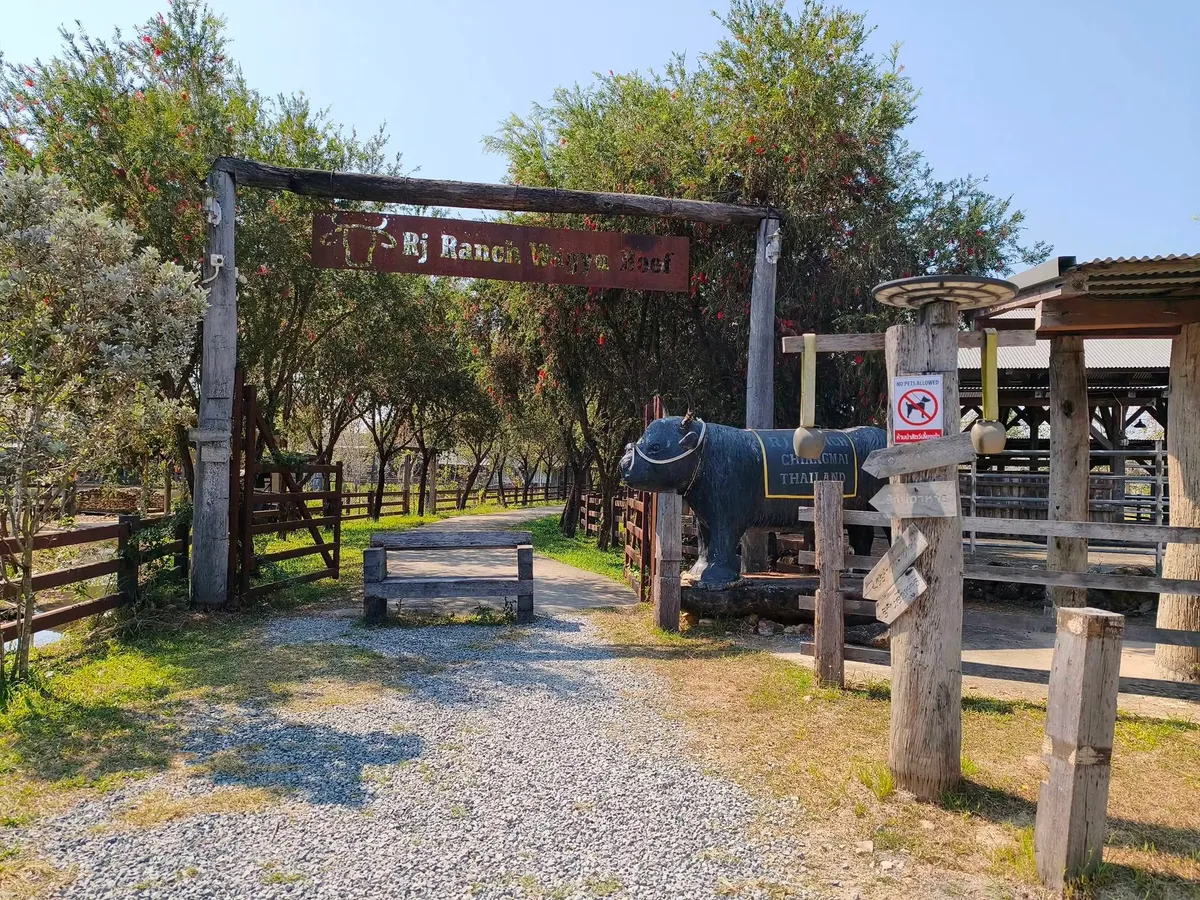 The ranch gate: “RJ Ranch Wagyu Beef”. Photo: Emilio Fusé.
It starts from small native Thai cattle, 250 to 300 kg / 551 to 661 lb when mature, and crosses them with Japanese Wagyu semen. The first-generation animals (F1) reach 450 to 500 kg / 992 to 1,102 lb live weight. Other lines run beside them: the farm’s own bulls Kitayamadoi and Imanaka paired with Holstein Friesian, and full-blood Wagyu calves.
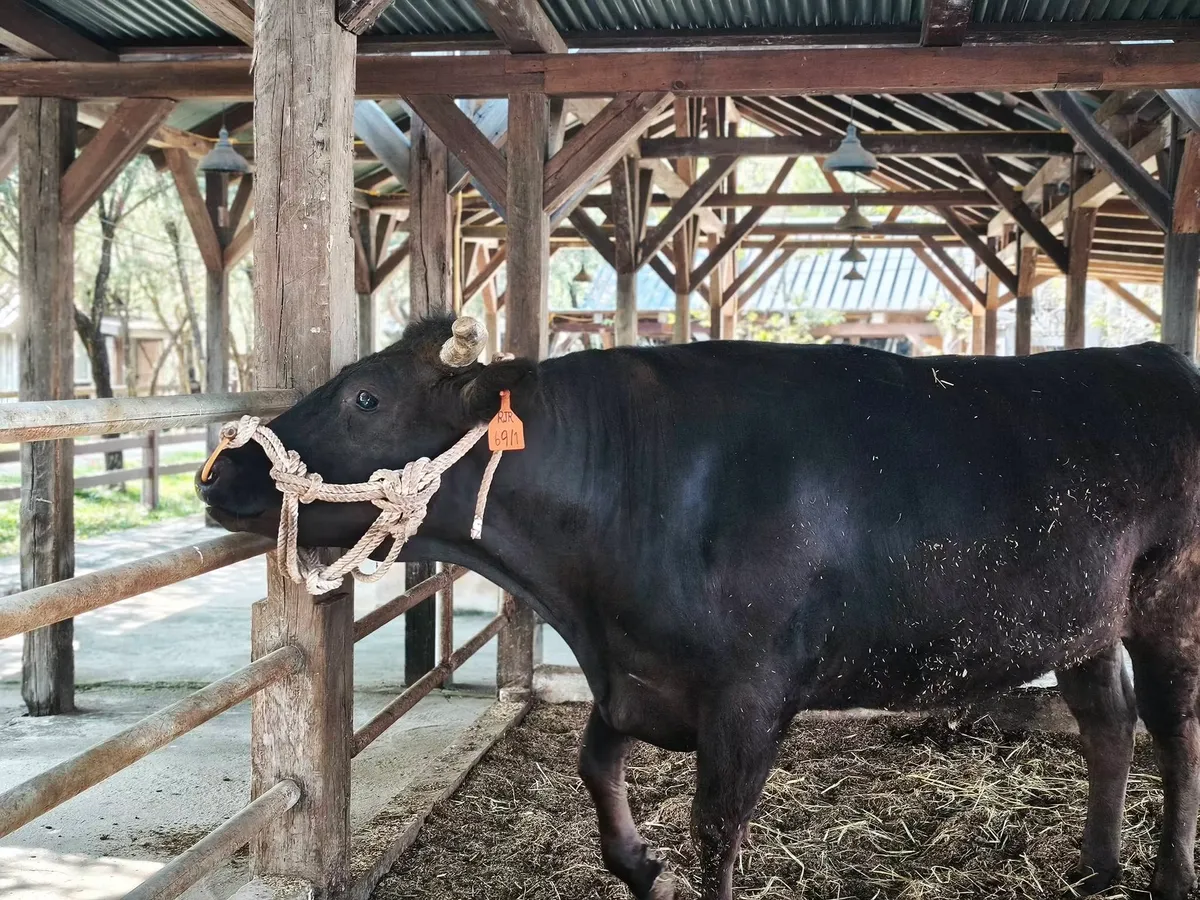 An animal in a covered pen on the ranch grounds. Photo: Emilio Fusé.
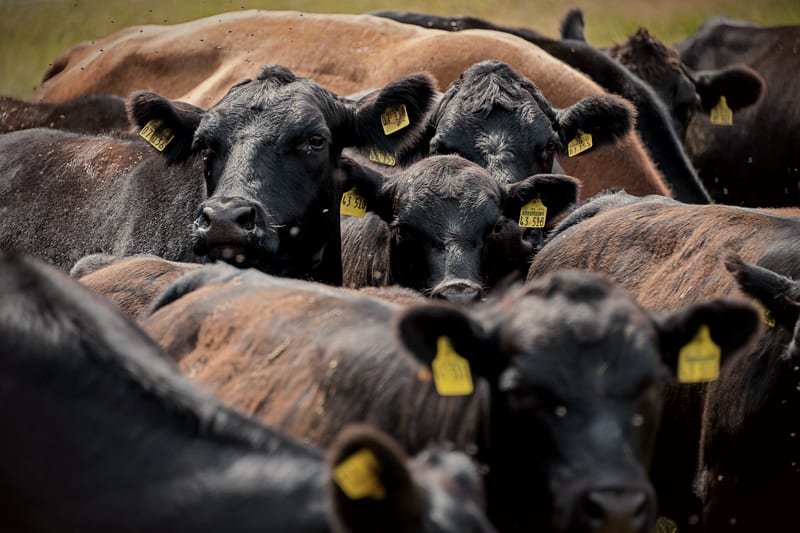
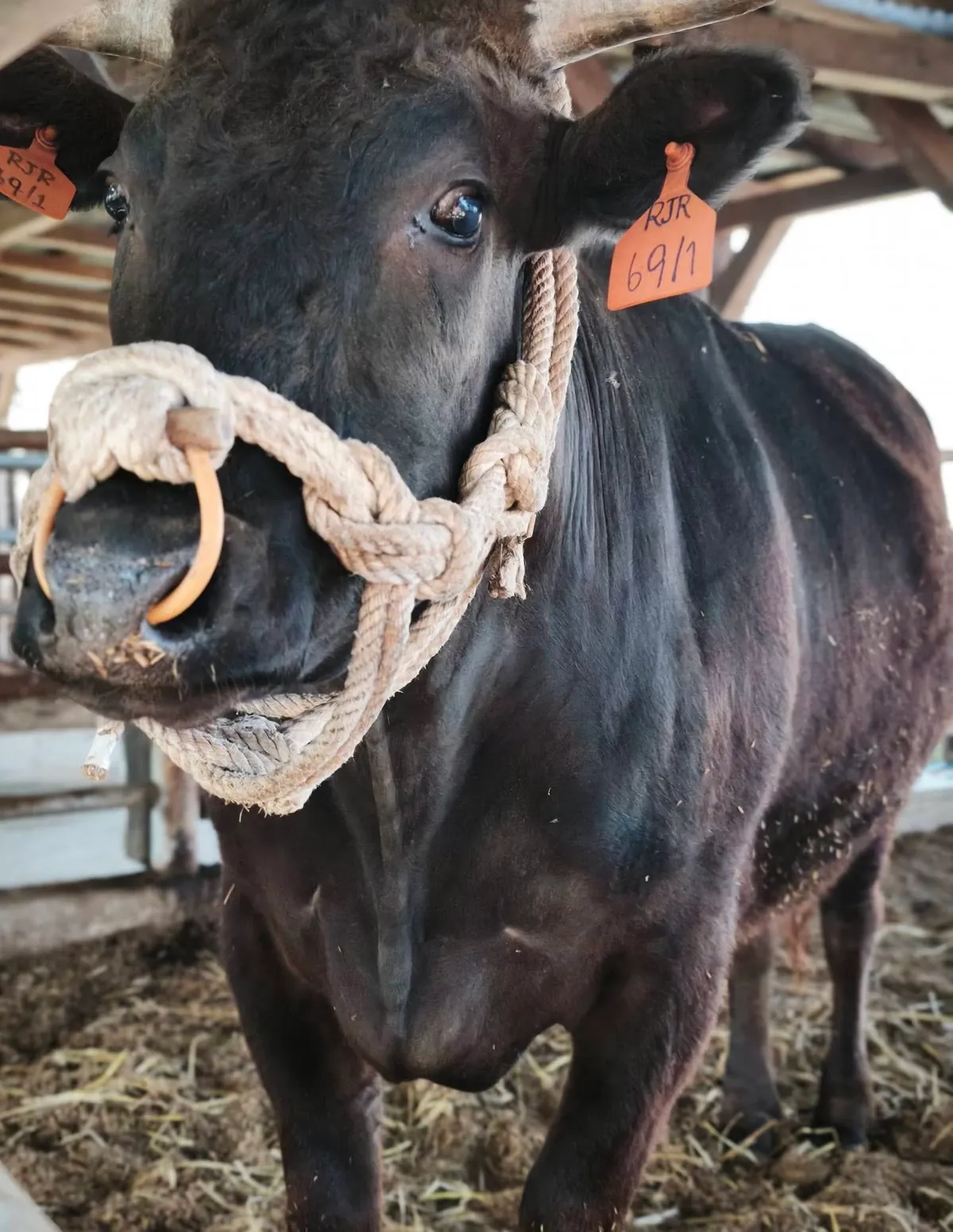 An animal with an ear tag at the ranch. Photo: Emilio Fusé.
The cattle graze rotated paddocks across more than 900 rai (over 144 hectares, about 356 acres). Another 400 rai (64 hectares) near Doi Tao Lake grow grass for silage for the dry season. The last stage, the farm told Steakpedia, is more than 400 days of feeding, on longan. The “Fattening” panel lists local grains, and a resort press release also mentions a diet enriched with local longan fruit.
What the framed 2020 results show
A framed copy of a Wagyu Breeder post in the tasting room lists the results of the 2020 “Wagyu – Champion of Asia/Africa” as the post presents them; Steakpedia found no public results page. Australia took gold with 10 points, Thailand silver with 8, with Nguadoi’s own bull Tajimadoi, and South Africa bronze with 6. Two of the four judges chose Thailand for gold. The Thai entry was Nguadoi’s own bull, Tajimadoi, so the silver is attached to an animal, not to a cut on a plate.
The tasting-room menu also lists the 2023 “Wagyu – Champion of the World” among the competitions Nguadoi has taken part in. No placing is printed there. A resort press release says the beef earned the title of Wagyu Champion of the World 2023; a search of public sources on Nov. 17, 2026 found no results page for that title.
Wagyu across Southeast Asia
“Thai Wagyu” is a young category. A 2017 BK Magazine article describes it as crosses between Australian or Japanese Wagyu and Charolais, Brahman or Holstein cattle. A 2026 Roads & Kingdoms profile of Jasmine Wagyu, a farm in Khon Kaen, reports that its farm processes no more than four animals a month and that some of the top chefs in Bangkok, Chiang Mai, Phuket and Pattaya regularly try to procure the beef.
Vietnam. Kobe VN Beef began importing Japanese Wagyu cattle in 2011 for its farm in Lam Dong, according to Vietnam Agriculture, and in 2017 a company in Long An signed an agreement with Japan’s Sawai Farm to produce Wagyu under Japanese supervision.
Malaysia. Colla Cattle Farm in Kuala Selangor reports that its MyGyu has 87.5 percent Wagyu genetics after three generations of crossing, and the state of Kelantan launched Kelgyu, a project to breed Wagyu locally.
Indonesia. Santori began a Wagyu breeding and fattening trial in 2007, and in 2020 the Ministry of Agriculture approved importing young Wagyu from Japan for breeding.
What Nguadoi shows
Nguadoi sells close to home: the same family runs the tasting room, and its beef has appeared, by those venues’ own announcements, at a hotel and a Bangkok food hall. What the visit did not turn up is a shared yardstick. No grade came with the platter, so a diner can compare it with Japanese or Australian Wagyu by eye and taste, as the editor did, but not on a common scale.
For the Australian side of the same question, see our visits to Stockyard and Stanbroke.
Try it: read a Thai Wagyu
Pick one of the farm’s three lines to see what it is, then open the four tabs to learn how to read what is on the plate.
F1 on native cattle · Japanese Wagyu semen on small native Thai cattle. F1 is the first generation of the cross.Native cattle, mature: 250–300 kg / 551–661 lb0200400600 kg / 1,323 lbF1 animals, live weight: 450–500 kg / 992–1,102 lb0200400600 kg / 1,323 lbWagyu × Holstein Friesian · the farm’s own bulls Kitayamadoi and Imanaka over Holstein Friesian, a dairy breed.Steakpedia recorded no weights, fattening time or Wagyu percentage for this line.Full-blood Wagyu · calves listed on the farm’s panels. Full-blood means 100 percent Wagyu, with a pedigree traced back to Japanese-bred ancestors.Steakpedia did not record which of the three lines the platter’s flap and striploin came from.Scale: 0 to 600 kg / 0 to 1,323 lb. Weights are as printed on the farm’s panels; the outlined band marks the range given. Steakpedia recorded no age or sex for these weights, so the bars do not show what the cross adds.
The platter held two different muscles. Flap (flap meat or sirloin flap in the US; bavette d’aloyau in France, though on some menus bavette means the flank; fraldinha in Brazil; in Argentina it is part of the vacío, not sold on its own) is a loose, coarse-grained muscle of the bottom sirloin, usually seared and sliced across the grain.Striploin (bife de chorizo in Argentina, New York strip in the US) is the boneless loin muscle behind the ribs (longissimus lumborum, not the tenderloin), with one firm grain and a strip of fat along one edge; it is rested, then sliced across the grain.Careful: “sirloin” on a menu in the UK, Australia or Japan is this cut, but in the US it is a different cut from the hip.Marbling shows differently in each, so compare like with like: flap with flap, striploin with striploin.A Wagyu label can carry four separate facts: the cut, the line (full-blood, F1 or another cross), the time of fattening and a grade.Japan’s grade (a letter for yield, a number for quality, with a separate BMS marbling number), Australia’s MB and MSA marble score, and the USDA quality grades (such as Prime and Choice) have their own rules and are not interchangeable, so Steakpedia does not convert one into another.No grade was published for Nguadoi’s platter, which is why this note gives an impression, not a grade.When a menu shows a number, ask which scale it is and for which cut.Assuming a full-blood Wagyu sire each time and a dam with no Wagyu blood, each cross raises the share of Wagyu genetics by half of what is missing. The series approaches 100 percent but never reaches it: full-blood is defined by pedigree. Nguadoi’s panels say Japanese Wagyu semen; Steakpedia did not see the sires’ registry papers, so 50 percent for its F1 animals is the expected figure, not a tested one. Colla Cattle Farm in Malaysia reports its MyGyu at 87.5 percent after three generations. See the Australian Wagyu generation table.F1 (first cross) · 50 %050100 %Second cross · 75 %050100 %Third cross · 87.5 %050100 %Fourth cross (called “purebred” by the Australian Wagyu Association) · 93.75 %050100 %Full-blood: a pedigree category, not the next cross · 100 %050100 %Nguadoi, fed on longan, per the farm: more than 400 days0150300450 daysStockyard, Wagyu brands, days on feed: 4000150300450 daysStanbroke, Pure Wagyu, days on feed: 4000150300450 daysStanbroke, Wagyu, days on feed: 3200150300450 daysStanbroke, Heritage Wagyu, days on feed: 1000150300450 daysFattening time in days. Nguadoi’s figure is the farm’s own, more than 400 days of feeding; the Australian figures are brand-stated days on feed in a feedlot. For context, the ALFA and MLA survey puts the average for all Australian grainfed cattle at 155 days at the end of 2025; that covers every breed, so it is not a Wagyu benchmark. The outlined bar for Nguadoi is a floor, not a measured value. Compare the order of magnitude, not the numbers. See the notes on Stockyard and Stanbroke.
Where to eat Nguadoi Wagyu
In Chiang Mai. The tasting room, at 152 San Pa Pao, San Sai District, works as a restaurant. A sign inside, headed “Nguadoi Station”, lists the phone number 087-179-0003 and a map QR code; call ahead to confirm hours, and ask about visiting the farm. The sign also advertises a Wagyu burger. A resort press release from April 2025 lists Nguadoi Wagyu in the beef selection at The Service at 1921 House, Anantara Chiang Mai Resort. Time Out Thailand highlights a 1 kg / 2.2 lb Nguadoi Wagyu tomahawk at that restaurant.
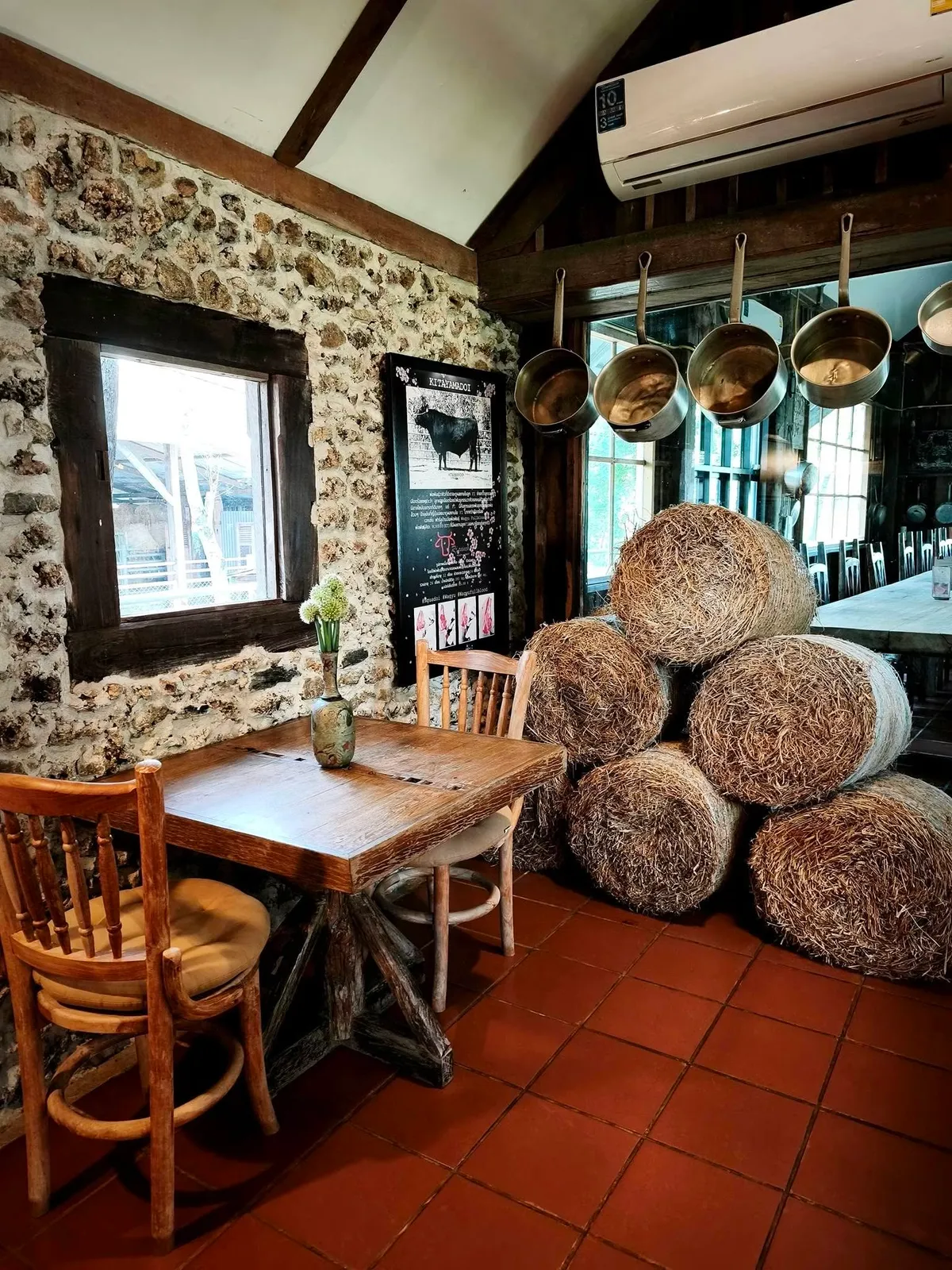 Inside the tasting room. Photo: Emilio Fusé.
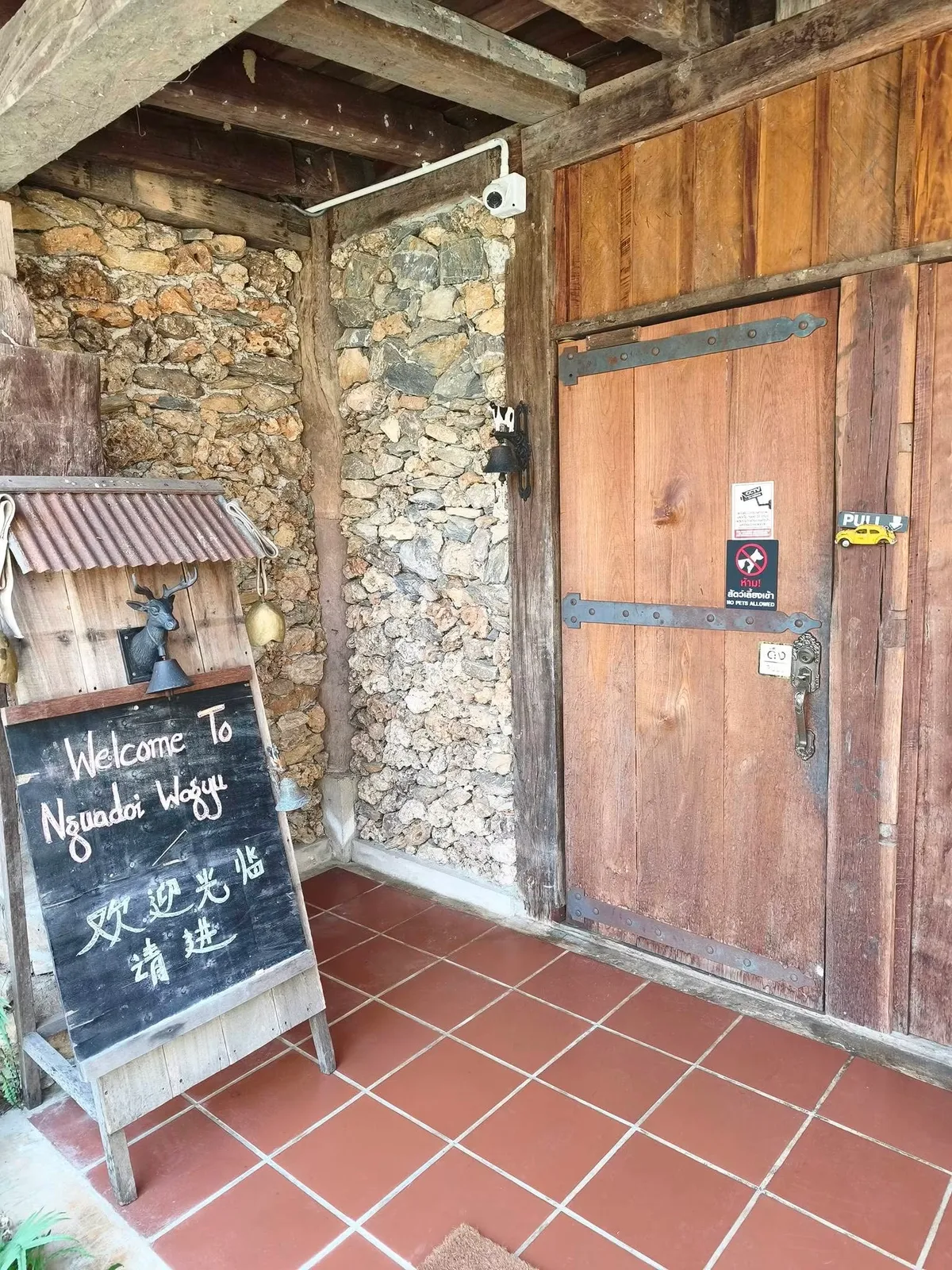 The entrance to the tasting room. Photo: Emilio Fusé.
In Bangkok. One Bangkok’s promotion page says Nguadoi debuted as a local specialty at the Mitsukoshi Depachika food hall, on the B1 floor of Parade, in its first appearance in a supermarket.
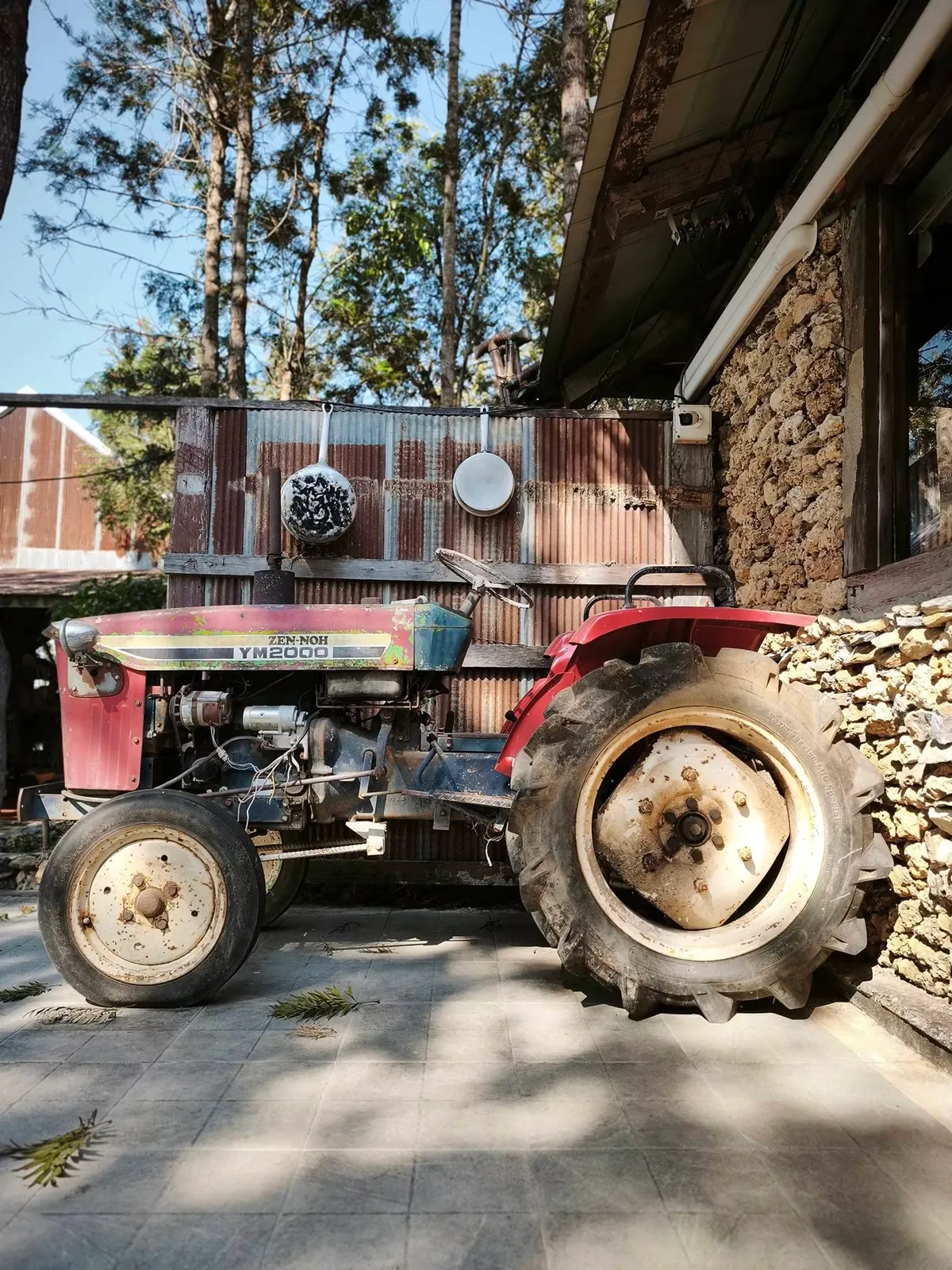 The ranch grounds around the tasting room. Photo: Emilio Fusé.
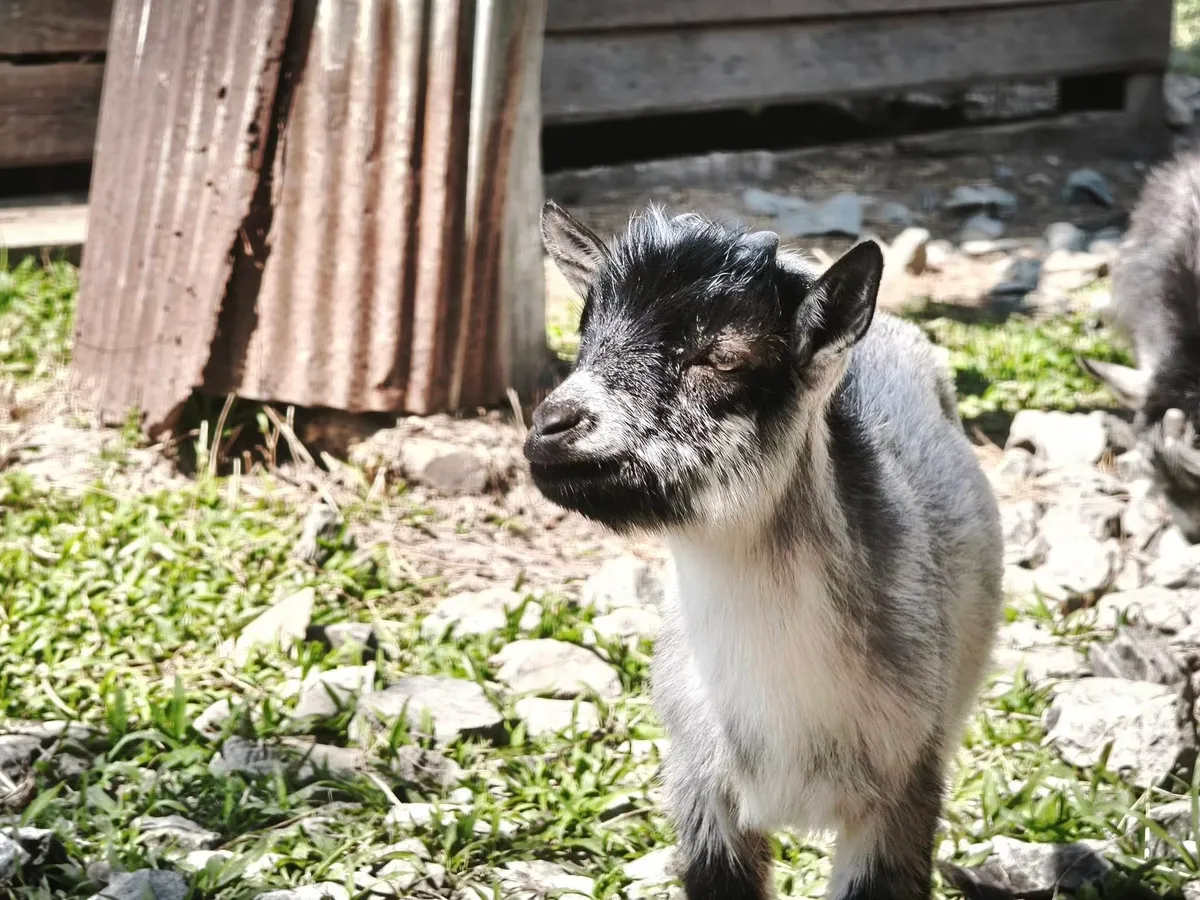 A kid goat on the grounds. Photo: Emilio Fusé.
About this visit
This visit was made at the host’s invitation; costs were shared between Steakpedia and the host. The host gave the editor jerky. Nobody paid for this note. To report an error, see the corrections page.
Keep reading
 Breed group · Japan, BMS 1–12WagyuThe four Japanese breeds, BMS 1–12, what A5 really means, and how Kobe and Australian Wagyu fit in.
 Origin · Australia, marble score 0–9+Australian WagyuFullblood, purebred and F1, the AUS-MEAT marble score and the 9+, 300–500 days on grain, the producers on the menus, and where to buy it in Australia.
- Standards · USDA, A5, MSA, EUROPBeef grading systemsUSDA, A5, MSA stars, Korea’s 1++ and EUROP side by side: what each grade measures and what it doesn’t.
 Buying guide · Pure Japanese vs crossbredAmerican Wagyu vs Japanese WagyuBorn in Japan or raised in the US: genetics, fullblood vs F1, BMS vs USDA grades, portions, labels.
 Cut · Bottom sirloin, the flapBavetteThe sirloin flap, coarse and beefy: bavette d'aloyau in France, not the flank.
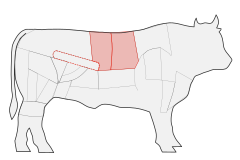
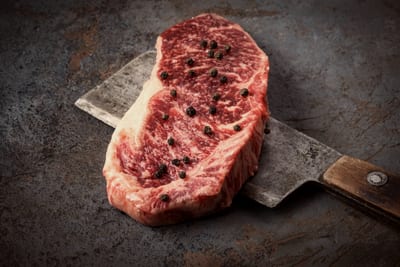 Cut · Short loin, one muscleStriploinOne muscle, one grain, one strip of fat — the New York strip, UK sirloin and bife de chorizo.
Frequently asked questions
How does Nguadoi Wagyu taste?
At the editor’s tasting, both cuts on the platter were tender and juicy, with a clear beef flavor and a slight sweetness. See “The steaks” for how the marbling compared with Japanese and Australian Wagyu.
Where can you eat or buy Nguadoi beef?
At the Nguadoi tasting room (152 San Pa Pao, San Sai District; 087-179-0003). The beef has also appeared at The Service at 1921 House in Anantara Chiang Mai Resort and, according to One Bangkok, it debuted at the Mitsukoshi Depachika food hall.
Can you visit the farm or only the tasting room?
The tasting room works as a restaurant. The farm is a separate place in Doi Tao, about 90 kilometers from Chiang Mai; a sign in the tasting room lists a phone number (087-179-0003), so call ahead and ask about visiting the farm.
Sources
17
- Nguadoi Wagyu. Information panels and tasting-room menu (“NGUADOI Crossbred”, “Feeding Programs”, “Fattening”, “The History”, “Wagyu Breeding”). Photographed by the author.
- Wagyu Breeder. Results: 2020 “Wagyu – Champion of Asia/Africa”. Facebook post, framed copy displayed in Nguadoi’s tasting room.
- One Bangkok. Bangkok’s Newest Premium Beef Destination (Mitsukoshi Depachika promotion). www.onebangkok.com/en/promotion-list/bangkok-s-newest-premium-beef-destination
- Time Out Thailand. Chiang Mai restaurants with a western edge (The Service at 1921 House, Nguadoi Wagyu tomahawk). In Thai. www.timeout.com/bangkok/th/restaurants/chiang-mai-restaurants-with-western-edge
- Minor Hotels. This Songkran, Anantara Chiang Mai Resort Unveils a Sophisticated New Menu at The Service at 1921 House, April 10, 2025. media.minorhotels.com/en-GLO/248786-this-songkran-anantara-chiang-mai-resort-unveils-a-sophisticated-new-menu-at-the-service-at-1921-house
- BK Magazine. Everything you need to know about ‘Thai wagyu’ beef, Feb. 21, 2017. www.bkmagazine.com/food/thai-wagyu-beef-bangkok
- Bunmee T., Chaiwang N., Kaewkot C., Jaturasitha S. “Current situation and future prospects for beef production in Thailand: a review.” Asian-Australasian Journal of Animal Sciences 31, no. 7 (2018): 968–975. pmc.ncbi.nlm.nih.gov/articles/PMC6039331
- Roads & Kingdoms. The Most Coveted Beef in Thailand (2026). roadsandkingdoms.com/2026/the-most-coveted-beef-in-thailand
- Vietnam Agriculture. Wagyu cattle in Vietnam: high economic value on the plateau. vietnamagriculture.nongnghiep.vn/wagyu-cattle-in-vietnam-high-economic-value-on-the-plateau-d355612.html
- Vietnam News Agency. Vietnamese, Japanese firms partner up to produce Wagyu beef (December 2017). vietnam.vnanet.vn/english/print/vietnamese-japanese-firms-partner-up-to-produce-wagyu-beef-166380.html
- Asia News Network. MyGyu: Malaysia’s locally bred Wagyu (Sept. 28, 2026). asianews.network/?p=304123
- Seth Lui. Kelgyu: locally bred Wagyu project in Kelantan, Malaysia (May 2025). sethlui.com/kelgyu-locally-bred-wagyu-project-kelantan-malaysia-may-2025
- Beef Central. Wagyu: a lesson in survival in the Indonesian feedlot sector. www.beefcentral.com/news/wagyu-a-lesson-in-survival-in-the-indonesian-feedlot-sector
- Tridge. The government’s effort to breed and produce Wagyu beef nationally in Indonesia (December 2020). www.tridge.com/insights/the-governments-effort-to-breed-and-produce-wagyu-beef-nationally
- Google Maps. NGUADOI Wagyu Beef Tasting Room, 152 San Pa Pao, San Sai District, Chiang Mai 50210 (listing, consulted Nov. 16, 2026). www.google.com/maps/search/Nguadoi+Wagyu+Beef+Tasting+Room+Chiang+Mai
- Love Thailand. Doi Tao Lake. www.lovethailand.org/travel/en/1-Chiang-Mai/169-Doi-Tao-Lake.html
- Auctions Plus Pulse (Matt Dalgleish, Episode3). Wagyu on feed declines during 2025, April 14, 2026: grainfed average days on feed 164 in 2024 and 155 at the end of 2025, from the ALFA and MLA feedlot survey for the December quarter. pulse.auctionsplus.com.au/aplus-news/insights/wagyu-on-feed-declines-during-2025