
Main course · Oven braise, bone-in
Braised short ribs
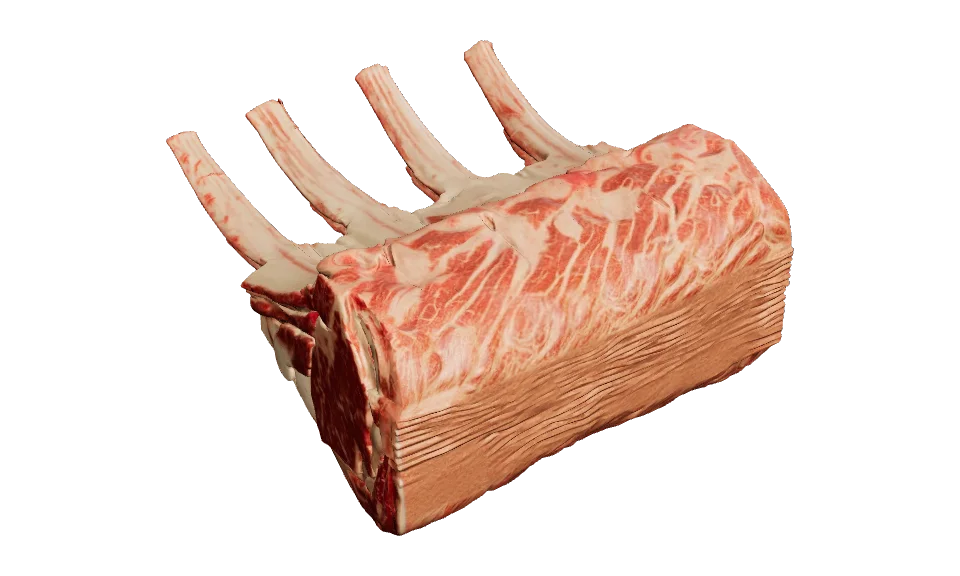
Braised short ribs are English-cut beef short ribs, one thick bone per piece, browned hard and then cooked covered in red wine and stock at 150–160 °C / 300–320 °F for three to four hours. They are done when a probe slides in with no resistance, at about 90–95 °C / 194–203 °F inside: by then the collagen has turned to gelatin and the meat comes away from the bone but still holds its shape. Allow 400–500 g / 14–18 oz / about 1 lb of bone-in ribs per person, and if you can, braise them a day ahead.
At a glance
- Cut
- English-cut short ribs, one bone per piece (plate or chuck)
- Per person
- 400–500 g / 14–18 oz / about 1 lb raw, bone-in
- Oven
- 150–160 °C / 300–320 °F, covered, 3–4 hours
- Done
- 90–95 °C / 194–203 °F inside; a probe slides in
- Liquid
- One-third to halfway up the meat, never boiling
English cut, flanken or asado de tira: buy the right short ribs
Short ribs are sold in three forms, and only one is meant for this recipe. English cut runs between the bones: each piece is a thick block of meat on one long bone, the form used for braising and smoking. Flanken runs across the bones in thin strips, 0.5–1 cm / ¼–⅜ in, with several small bone sections; it cooks through in minutes, which is why it is marinated and grilled fast as Korean galbi rather than braised. Asado de tira, the Argentine strip sawn across the bones 3–5 cm / 1¼–2 in wide, goes on the parrilla. All three are described in the short ribs cut guide.
Among English-cut ribs, plate short ribs (ribs six to eight, IMPS 123A) are the largest and meatiest; chuck short ribs (ribs two to five, IMPS 130) are smaller, a little leaner and easier to find. Either works here. Look for a layer of meat at least 2–3 cm / ¾–1¼ in thick over the bone, with fine marbling rather than one thick cap of hard fat. Boneless chuck short ribs (IMPS 130A) braise the same way; judge them by tenderness, not by the clock.
Why three to four hours
Short ribs are rich in fat and in collagen, the connective tissue that makes them chewy when cooked fast. Collagen begins to turn to gelatin slowly at around 60–70 °C / 140–160 °F and much faster above about 80 °C / 175 °F, while the muscle fibers themselves tighten and lose moisture above 60–70 °C / 140–160 °F. A covered pot in an oven at 150–160 °C / 300–320 °F holds the liquid at a gentle simmer, 85–95 °C / 185–203 °F: hot enough to dissolve the collagen in hours, but below the boil that dries the fibers and clouds the sauce.
The ribs are cooked through long before they are tender. The last hour is what turns them from chewy to soft, so a braise is judged by texture, not by time. The full explanation is in braising.
Ingredients
| Ingredient | Amount | Note |
|---|---|---|
| English-cut beef short ribs | 1.6–2 kg / 3.5–4.4 lb, bone-in | plate or chuck, one bone per piece; serves 4 |
| Coarse salt | about 1 % of the weight (16–20 g) | a few hours ahead, or the day before |
| Black pepper | to taste | |
| Refined oil | 2 tbsp | for browning |
| Onions | 2, about 300 g / 10 oz | chopped |
| Carrots | 2, about 200 g / 7 oz | chopped |
| Celery | 2 stalks, about 100 g / 3½ oz | chopped |
| Garlic | 4 cloves | crushed |
| Tomato paste | 2 tbsp | |
| Dry red wine | 750 ml / 3 cups | one bottle |
| Beef stock | 250–500 ml / 1–2 cups | enough to come halfway up the ribs |
| Thyme and bay leaves | a few sprigs, 2 leaves | |
| Chopped parsley | to finish | optional |
Method
- A few hours ahead, or the day before, pat the ribs dry and salt them on all sides with about 1 % of their weight. Leave them uncovered in the refrigerator. See salting.
- Heat the oven to 150–160 °C / 300–320 °F. In a heavy ovenproof pot that holds the ribs in one layer, heat the oil over medium-high heat and brown the ribs on all their meaty sides, in batches so they do not steam, 8–10 minutes per batch. Set them aside and pour off all but about 2 tablespoons of fat.
- Lower the heat to medium, add the onion, carrot and celery and cook until soft and lightly browned, about 10 minutes. Add the garlic and tomato paste and stir for 2 minutes.
- Pour in the wine, scrape up the brown residue (the fond) from the bottom and boil until reduced by about half, 10–15 minutes.
- Return the ribs to the pot in one layer, bone side up, with the thyme and bay. Add stock until the liquid comes halfway up the meat, no higher, and bring it to a bare simmer on the stove.
- Cover with a tight lid and braise in the oven for 3–4 hours, turning the ribs once or twice. A few lazy bubbles are right; if the liquid boils, lower the oven to 140 °C / 285 °F.
- Start checking at 3 hours. The ribs are done when a probe or skewer slides into the thickest part with no resistance, at about 90–95 °C / 194–203 °F inside, and the meat is pulling back from the bone without falling apart. If the probe still catches, give them more time and check every 30 minutes.
- Lift out the ribs. Strain the liquid, let it settle and skim off the fat (or chill it overnight and lift the fat off), then boil it down until it coats a spoon. Season the sauce now, not before. Return the ribs to it to rewarm.
- Serve one rib per person, whole or with the bone slipped out, with the sauce spooned over and something to soak it up: mashed potatoes, polenta or egg noodles. Finish with parsley.
Times and temperatures
| What | Temperature | Time or sign |
|---|---|---|
| Oven, covered pot | 150–160 °C / 320 °F 300–320 °F | 3–4 hours |
| Braising liquid | 85–95 °C / 203 °F 185–203 °F | a few lazy bubbles, never a boil |
| Inside the ribs, when tender | 90–95 °C / 203 °F 194–203 °F | a probe meets no resistance |
| USDA safe minimum (whole cuts) | 63 °C / 145 °F 145 °F | reached long before the ribs are tender |
| Reheating leftovers (USDA) | 74 °C / 165 °F 165 °F | until the sauce simmers |
| Smoked plate ribs | pit at 120–135 °C / 275 °F 250–275 °F | pulled at about 93–96 °C / 205 °F 200–205 °F |
| Sous vide | 55–60 °C / 140 °F 131–140 °F | 24–72 hours, then seared |
Common mistakes
Flanken in a braise: the thin slices fall apart and the small bone pieces end up loose in the sauce; use English cut. A crowded pot: the ribs steam gray instead of browning, and the sauce loses its depth. Too much liquid: with the ribs submerged, the sauce is thin and the meat tastes boiled. A boiling braise: the fibers tighten and dry, and the fat emulsifies into a greasy, cloudy sauce. Stopping at a time instead of a texture: ribs that are cooked through but still chewy simply need longer. Salting the liquid at the start: it concentrates as it reduces; season the finished sauce.
Ahead of time, storing and reheating
Braised short ribs are better the next day. Let them cool in their liquid and refrigerate them within 2 hours, the USDA limit for perishable food at room temperature. Overnight the fat sets on top and lifts off in one piece, and the meat reabsorbs some of the liquid. Reheat the ribs covered in their sauce, over low heat or in a 150 °C / 300 °F oven, until the sauce simmers and the meat reaches 74 °C / 165 °F, the USDA figure for leftovers.
Other ways with short ribs
Korean galbi-jjim braises short ribs with soy, radish, chestnuts and jujubes (see galbi); the French plat de côtes goes into a pot-au-feu; short ribs can also replace shoulder in bœuf bourguignon. Texas pitmasters smoke whole plate ribs at 120–135 °C / 250–275 °F and pull them at about 93–96 °C / 200–205 °F. Sous vide, 24–72 hours at 55–60 °C / 131–140 °F softens the collagen while keeping the meat pink, and the ribs are seared before serving.
Keep reading
 Cut · Plate, chuck & ribShort ribsThe lower ends of the ribs: asado de tira across the bones, English cut between them, galbi in thin strips.
 Cooking · Collagen to gelatinBraisingBrown, cover with a little liquid, simmer for hours: collagen turns to gelatin, fastest above 80 °C / 175 °F.
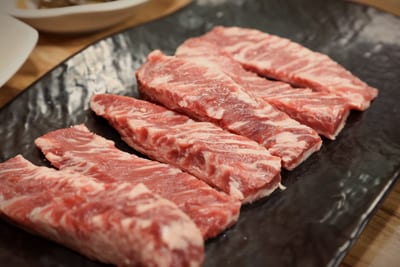 Main course · Korea, table grillGalbiKorean grilled short ribs: flanken LA galbi or butterflied wang-galbi, cut thin so the heat crosses them in minutes.
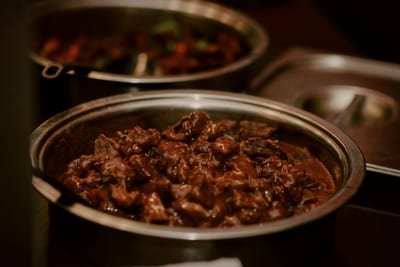 Stew · Burgundy, Pinot NoirBoeuf bourguignonBeef shoulder braised in Pinot Noir until its collagen turns to gelatin, with lardons, mushrooms and onions.
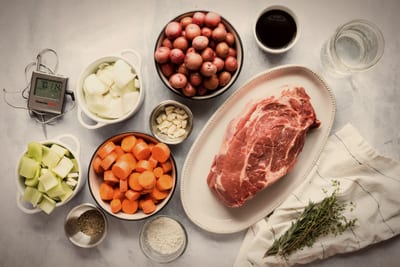 Main course · Chuck, covered potPot roastNot roasted but braised: a whole chuck, seared, then cooked covered below the boil with onions, carrots and potatoes.
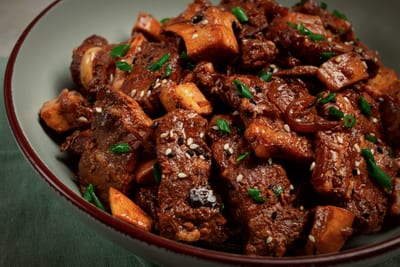 Main course · Korea, sliced thinBulgogiKorea's "fire meat": beef sliced 2–3 mm in soy, pear and sesame; the sugar caramelizes in a minute or two.
Frequently asked questions
How long do you cook beef short ribs in the oven?
About 3–4 hours, covered, at 150–160 °C / 300–320 °F after browning. Start checking at 3 hours: they are done when a probe slides in with no resistance, not at a set time.
What temperature are braised short ribs done?
About 90–95 °C / 194–203 °F inside, when the collagen has turned to gelatin. They are safe long before that (the USDA minimum for whole cuts is 63 °C / 145 °F); the higher number is about tenderness.
Should short ribs be covered in liquid when braising?
No. The liquid should come one-third to halfway up the meat. The top cooks in steam inside the covered pot, and the smaller amount of liquid reduces into a richer sauce.
English cut or flanken short ribs for braising?
English cut: thick blocks on one bone hold together through hours of braising. Flanken is sliced thin across the bones, 0.5–1 cm / ¼–⅜ in, and is meant to be marinated and grilled fast, as in galbi.
Why are my short ribs tough?
They need more time: meat can be cooked through but still tough until the collagen dissolves. If they are tender but dry and stringy, the liquid boiled; keep it at a lazy simmer.
How many short ribs per person?
About 400–500 g / 1 lb of raw, bone-in English-cut ribs per person; roughly half the weight is bone and fat. One large plate-rib bone feeds one to two.
Sources
4
- McGee, Harold. On Food and Cooking: The Science and Lore of the Kitchen, rev. ed. New York: Scribner, 2004.
- USDA Agricultural Marketing Service. Institutional Meat Purchase Specifications: Fresh Beef Series 100. Washington, DC, 2014. www.ams.usda.gov/sites/default/files/media/IMPS_100_Fresh_Beef%5B1%5D.pdf
- Toldrá, Fidel (ed.). Lawrie's Meat Science, 8th ed. Duxford: Woodhead, 2017.
- USDA Food Safety and Inspection Service. Safe Minimum Internal Temperature Chart. 2023. www.fsis.usda.gov/food-safety/safe-food-handling-and-preparation/food-safety-basics/safe-temperature-chart