
Main course · French bistro, hot and fast
Bavette steak recipe
Bavette steak is the French bistro way with a flat, open-grained cut: salted, seared hard for 3–5 minutes a side over high heat, pulled at 51–52 °C / 124–126 °F for medium-rare and sliced across the fibers. In the classic bavette à l'échalote, the steak is served with shallots softened in the same pan, deglazed with red wine and a little vinegar, and finished with stock and butter. One piece of 600–750 g / 21–26 oz, about 2–3 cm / ¾–1¼ in thick, serves three.
At a glance
- Cut
- Bavette (flap) or flank, 600–750 g / 21–26 oz, 2–3 cm / ¾–1¼ in thick
- Heat
- High, in a pan or on a grill: 3–5 min a side
- Medium-rare
- Pull at 51–52 °C / 124–126 °F; final 52–56 °C / 126–133 °F
- Sauce
- Shallots, red wine, vinegar, stock and butter, in the same pan
- Key
- Slice across the fibers, 5 mm / ¼ in thick
Bavette à l'échalote: the bistro steak
Bavette à l'échalote is a standard of French bistros and brasseries: a thin steak seared hard in a pan, and a sauce made straight afterward in the same pan from sliced shallots, red wine, a little vinegar, stock and butter. It rests on the same pan-sauce logic as steak au poivre: whatever the steak leaves in the pan goes into the sauce. It is usually served with fries, the plate described in steak frites.
The cut is the bavette. In France that is the bavette d'aloyau, the flap; the bavette de flanchet is the flank, and the same recipe works for it (see bavette). Both are coarse-grained muscles that stay tender only when they are cooked hot and fast to no more than medium-rare and sliced across the fibers. Past about 60 °C / 140 °F the loose fibers tighten and the meat turns dry and chewy.
Which cut to buy
Ask which muscle the label means. A piece sold as bavette in France, Belgium or a French-leaning restaurant is usually the flap, from the bottom sirloin (IMPS 185A) and known in the United States as flap meat or sirloin flap; in Britain the word can mean the flap or the thin flank. The flap is thicker and looser than the flank, with more fat between its fibers, so it is juicier and often uneven in thickness. The flank is flatter and leaner.
Buy one piece of 600–750 g / 21–26 oz (the flap is often sold whole, from 500 g / 18 oz to 1 kg / 2.2 lb or more), deep red, with fine white fat between the fibers and a thickness that does not vary much from end to end. This recipe is written for a piece 2–3 cm / ¾–1¼ in thick, and a flank of that thickness is cooked the same way. Skip pre-marinated packs: they hide the color of the meat, and a wet surface does not brown.
Ingredients
| Ingredient | Amount | Note |
|---|---|---|
| Bavette steak (flap or flank) | 1 piece, 2–3 cm / ¾–1¼ in thick (600–750 g / 21–26 oz) | serves 3 |
| Coarse salt | about 1 % of the weight (6–8 g) | right before cooking, or at least 40 minutes ahead |
| Black pepper | to taste | coarsely ground |
| Neutral oil | 1 tbsp | for the sear |
| Shallots | 4 medium (about 120 g / 4 oz) | sliced thin |
| Butter | 45 g / 1½ oz | 30 g / 1 oz for the shallots, 15 g / ½ oz cold to finish |
| Dry red wine | 60 ml / 2 fl oz | |
| Red-wine vinegar | 15 ml / 1 tbsp | |
| Beef stock | 120 ml / 4 fl oz | unsalted if you can |
| Flat-leaf parsley | 1 tbsp | chopped |
Method
- Pat the steak dry and look at it: the coarse fibers show as bundles of muscle, and their direction decides how it is sliced later. Trim any loose membrane. If one end is much thinner, cut it off and cook it separately: it is done minutes before the thick part.
- Salt it with about 1 % of its weight, either right before it goes in the pan or at least 40 minutes ahead, uncovered in the refrigerator. Avoid salting 3 to 40 minutes ahead: the surface is wet then. See salting steak. Add coarse pepper.
- Slice the shallots and measure the wine, vinegar and stock beside the stove. The sauce comes together in 8–10 minutes, and the pan should not wait.
- Heat a large cast-iron or heavy pan over high heat for several minutes, until it smokes, and add the oil. Cook the steak alone in the pan; if it does not fit, cut it in two rather than crowd it.
- Sear 3–5 minutes a side, turning once, until deeply browned and the thickest part reads 51–52 °C / 124–126 °F for medium-rare. Insert the thermometer from the side, into the middle of the thickness. Add no butter yet: at this heat it burns.
- Move the steak to a board and rest it 5–10 minutes while you make the sauce. At this thickness it rises a further 2–4 °C / 4–7 °F, to a final 52–56 °C / 126–133 °F.
- Pour off all but about 1 tablespoon of the fat and lower the heat to medium. Add 30 g / 1 oz of the butter and the shallots and cook 3–4 minutes, stirring, until soft and golden at the edges. If the browned bits in the pan have turned black, wipe the pan out and start with fresh butter.
- Pour in the wine and vinegar and scrape up the browned bits; boil 1–2 minutes, until reduced by about two thirds. Add the stock and simmer 3–4 minutes, until reduced by half and glossy. Taste before adding salt: the stock and the browned bits are already salty.
- Off the heat, swirl in the remaining 15 g / ½ oz of cold butter and the parsley, and stir in the juices that collected on the board. Slice the steak as described below and spoon the sauce over the slices.
Temperatures
| Doneness | Pull from the heat | Final, after resting |
|---|---|---|
| Rare | 47–48 °C / 118 °F 117–118 °F | 48–52 °C / 126 °F 118–126 °F |
| Medium-rare (recommended) | 51–52 °C / 126 °F 124–126 °F | 52–56 °C / 133 °F 126–133 °F |
| Medium (firmer; past about 60 °C / 140 °F the fibers tighten) | 56–57 °C / 135 °F 133–135 °F | 57–62 °C / 144 °F 135–144 °F |
| USDA safe minimum (whole cuts) | — | 63 °C / 145 °F 145 °F with a 3-minute rest |
Times by thickness
| Thickness | Medium-rare, high direct heat (pan or grill) | Note |
|---|---|---|
| 1.5 cm / ½ in (a thin flank, or the thin end) | 3–5 min in total | turn once |
| 2.5 cm / 1 in (the usual bavette) | 6–10 min in total (3–5 min a side) | pull at 51–52 °C / 126 °F 124–126 °F |
| 4 cm / 1½ in (a thick flap) | 10–14 min in total (grill only) | grill only: sear 2–3 min a side, then finish over indirect heat |
Slicing across the grain
The fibers of a bavette are coarse and open. They are visible as bundles of muscle, and their direction varies from piece to piece, often twisting toward the ends: find it on the raw meat first. Cut the rested steak into sections where the fibers run one way, and turn each section so the knife crosses the fibers; slice about 5 mm / ¼ in thick, at a slight angle. Cut along the fibers and the same steak is chewy at any temperature; see why steak is tough.
Do not skip the rest. Five to ten minutes on the board lets the juices settle; the sauce takes 8–10, so the steak waits on the board until it is ready. Pour whatever collects on the board into the pan before serving. Resting is covered in resting steak.
On the grill, with the sauce in a pan
Bavette is as good on a grill. Light it for high, direct heat: a hand held 10–12 cm / 4–5 in above the grate should last only 2–3 seconds. Cook 3–5 minutes a side for a piece 2–3 cm / ¾–1¼ in thick; a flap thicker than 3 cm / 1¼ in is seared 2–3 minutes a side and then moved to indirect heat with the lid closed (see how long to grill steak). Make the sauce in a skillet on the grill's side burner or on the stove, with no browned bits to start from. The butter is the same as in the main recipe: 30 g / 1 oz at the start with the shallots, 15 g / ½ oz cold to finish, and the resting juices stirred in at the end.
Bavette, flank or skirt
Three pages on this site cook neighboring cuts. The flank steak recipe marinates a lean, whole flank in soy and slices it thin; the skirt steak recipe cooks a very thin diaphragm steak 2–3 minutes a side. This page is for the thicker, juicier flap, seasoned with salt alone and finished with a pan sauce; it takes a marinade, but does not need one. The temperatures are the same for all three.
Common mistakes
Slicing with the grain. Cooking past medium-rare. A pan that is not hot enough, so the center is done before the surface browns, or one so crowded that it cools. Adding the butter before the steak is out, where it burns. Leaving the thin end in as long as the thick one. Making the sauce in a pan whose browned bits have gone black: it will be bitter. And cutting the steak straight from the pan without a rest. Pull temperatures for every cut are in the steak temperature chart; pans and heat, in cast-iron steak.
Serving
Serve at once, with the sauce spooned over the slices, with frites, boiled potatoes or a green salad. For a richer plate, béarnaise is the other classic. Cold slices keep well for a salad; to warm them without cooking them further, see reheating steak.
Keep reading
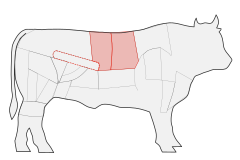 Cut · Bottom sirloin, the flapBavetteThe sirloin flap, coarse and beefy: bavette d'aloyau in France, not the flank.
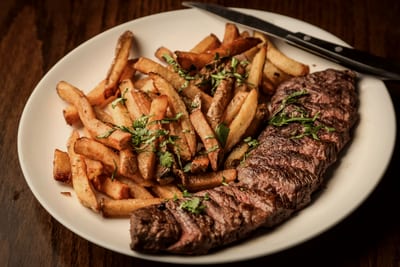 Main course · The bistro plateSteak fritesA steak cooked fast in a hot pan, fries fried twice for a crisp shell: the bistro plate, cut by cut and sauce by sauce.
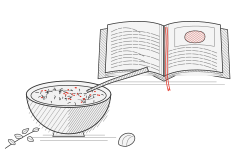 Main course · Marinated, seared, slicedFlank steak recipeA whole flank steak, marinated, seared hard and sliced thin across the grain: marinating times, cooking times by thickness, pull temperatures and how to slice it.
- Main course · Diaphragm, very hot and fastSkirt steak recipeOutside or inside skirt, salted or marinated, cooked over the hottest fire for 2–3 minutes a side: pull temperatures, the two-step slice and the mistakes that make it chewy.
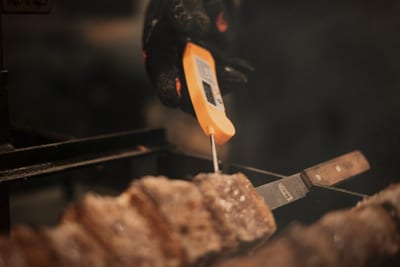 Cooking · Pull early, then restSteak temperature & doneness chartSix levels from blue to well done in °C and °F: when to pull, carryover by thickness, safety, and a printable chart.
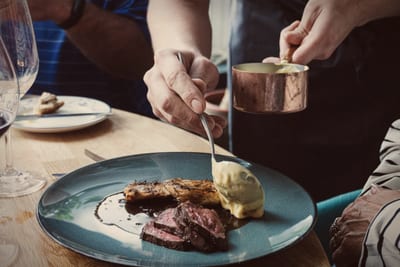 Sauce · France, tarragonBéarnaise sauceYolks, butter and a tarragon-shallot reduction, kept below 70 °C / 158 °F so it does not split.
Frequently asked questions
How long do you cook a bavette steak?
A bavette 2–3 cm / ¾–1¼ in thick takes 3–5 minutes a side over high heat, in a smoking cast-iron pan or on a grill, until the thickest part reads 51–52 °C / 124–126 °F for medium-rare. Rest it 5–10 minutes. On a grill, a thick flap, 4 cm / 1½ in, takes 10–14 minutes in total, finished over indirect heat.
What temperature should bavette be cooked to?
Pull it at 51–52 °C / 124–126 °F and let it rest into 52–56 °C / 126–133 °F, medium-rare. Past about 60 °C / 140 °F the loose fibers tighten and it turns dry and chewy. The USDA safe minimum for whole cuts is 63 °C / 145 °F with a 3-minute rest.
How do you cut bavette against the grain?
Find the direction of the coarse fibers on the raw meat; it varies from piece to piece and often twists toward the ends. Cut the steak into sections where the fibers run one way, turn each so the knife crosses the fibers and slice about 5 mm / ¼ in thick, at a slight angle.
What does bavette à l'échalote mean?
Bavette with shallots: the steak served with sliced shallots softened in butter in the same pan, deglazed with red wine and a little vinegar, and finished with stock and butter.
Can you use flank steak instead of bavette?
Yes. In France the bavette de flanchet is the flank. It is flatter and leaner than the flap, so watch it closely and do not take it past medium-rare; see the flank steak recipe for a marinated version.
Sources
4
- USDA Agricultural Marketing Service. Institutional Meat Purchase Specifications: Fresh Beef Series 100. Washington, DC, 2014. www.ams.usda.gov/sites/default/files/media/IMPS_100_Fresh_Beef%5B1%5D.pdf
- USDA Food Safety and Inspection Service. Safe Minimum Internal Temperature Chart. 2023. www.fsis.usda.gov/food-safety/safe-food-handling-and-preparation/food-safety-basics/safe-temperature-chart
- Larousse Gastronomique, rev. ed. London: Hamlyn, 2009.
- McGee, Harold. On Food and Cooking: The Science and Lore of the Kitchen, rev. ed. New York: Scribner, 2004.