
Main course · Diaphragm, very hot and fast
Skirt steak recipe
Skirt steak is a thin steak, 1–2 cm / ⅜–¾ in thick, with the most open grain of any cut, and it is cooked as hot and as fast as the fire allows: 2–3 minutes a side, off the heat at 51–52 °C / 124–126 °F for medium-rare. Two muscles are sold under the name. The outside skirt, part of the diaphragm (600–900 g / 21–32 oz), is thicker, more marbled and more expensive; the inside skirt, a belly-wall muscle, is wider, thinner and leaner, and gains more from a marinade. Either way, the steak is cut into short lengths and then sliced across the grain.
At a glance
- Cut
- Outside skirt 600–900 g / 21–32 oz · inside skirt 900–1,300 g / 32–46 oz
- Thickness
- 1–2 cm / ⅜–¾ in
- Heat
- The hottest fire or a smoking pan, 2–3 min a side
- Medium-rare
- Pull at 51–52 °C / 124–126 °F; final 52–56 °C / 126–133 °F
- Key
- Cut into 10–15 cm / 4–6 in lengths, then slice thin across the grain
Outside or inside skirt
Butchers sell two different muscles as skirt. The outside skirt (IMPS 121C) is the costal part of the diaphragm, attached to the inside of the ribs: narrower, about 2 cm / ¾ in thick at its center, with visible fat between its fiber bundles. It is the Argentine entraña and the Japanese harami, and the one most cooks prefer. The inside skirt (IMPS 121D) is the transversus abdominis: wider, thinner, leaner and slightly chewier. Without the word "outside" on the label, a skirt is often the inside one. Both cook the same way; the inside skirt is usually ready a little sooner and benefits more from a marinade. Names by country are in skirt steak; the cut most often mistaken for it is in hanger vs skirt.
| Feature | Outside skirt | Inside skirt |
|---|---|---|
| Muscle | Diaphragm, costal part | Transversus abdominis (belly wall) |
| Weight per piece | 600–900 g / 21–32 oz | 900–1,300 g / 32–46 oz |
| Shape | Narrower, thicker, marbled | Wider, thinner, leaner |
| Price | Higher | Usually lower |
| Best with | Salt only, or a short marinade | A marinade, and thin slicing |
Skirt, entraña or carne asada?
Three pages on this site cook the same muscle in different ways. The entraña article covers the Río de la Plata method: the whole outside skirt, membrane on, coarse salt only, 3–4 minutes a side over strong embers on a parrilla, taken off around 54 °C / 129 °F. Carne asada is the northern Mexican dish: skirt or flank, salted or marinated 2–8 hours in lime and orange juice, grilled over mesquite, usually cooked through and chopped for tacos. This recipe is the general method for either skirt, on a grill or in a pan, to medium-rare, with or without a marinade, for slicing at the table.
Ingredients
| Ingredient | Amount | Note |
|---|---|---|
| Skirt steak | 600–900 g / 21–32 oz | one outside skirt, or part of an inside skirt; serves 3 |
| Coarse salt | about 1 % of the weight (6–9 g) | or the marinade below |
| Black pepper | to taste | coarsely ground |
| Refined oil with a high smoke point | 1 tbsp | for a pan |
| Optional marinade | 60 ml / 2 fl oz each of oil and soy sauce, 30 ml / 1 fl oz lime juice, 3 cloves garlic, 15 g / ½ oz sugar | replaces the salt; see steak marinade |
| To serve | Chimichurri, lime wedges or flaky salt |
Method
- Decide on the membrane. Skirt is sold with its thin membrane on or peeled: for the grill it can stay on, and it crisps; for a pan or a marinade, peel it, sliding a knife under one end and pulling it away. Pat the steak dry. A long strip can be cut into lengths that fit the pan.
- Season it. With salt alone, use about 1 % of its weight, right before it goes on the heat or at least 40 minutes ahead in the refrigerator (see salting steak). With a marinade, 30 minutes is enough for skirt's open grain; a soy marinade can stay up to 12 hours and a citrus one up to 8, always in the refrigerator. Then lift it out, discard the marinade and pat it very dry.
- Get the fire as hot as it will go: a hand held 10–12 cm / 4–5 in above the grate should last only 2–3 seconds. Indoors, heat a cast-iron pan until it smokes and add the oil just before the steak.
- Lay the steak on the hottest part, membrane side down first if it has one. Cook 2–3 minutes a side, turning once, until the outside is deeply browned and the thickest part reads 51–52 °C / 124–126 °F for medium-rare. The thinner inside skirt is usually ready first. In a pan, cook one piece at a time rather than crowding it.
- Rest it 3–5 minutes. At this thickness it rises only 1–2 °C / 2–4 °F, and finishes in the medium-rare range of 52–56 °C / 126–133 °F.
- Slice in two steps. A skirt's grain runs across the width of the strip, not along it. First cut the steak into pieces 10–15 cm / 4–6 in long; then turn each piece and slice it thin across its fibers, about 5 mm / ¼ in, with the knife at a slight angle.
- Serve at once with chimichurri, lime or flaky salt.
Temperatures
| Doneness | Pull from the heat | Final, after resting |
|---|---|---|
| Rare | 47–48 °C / 118 °F 117–118 °F | 48–52 °C / 126 °F 118–126 °F |
| Medium-rare (recommended) | 51–52 °C / 126 °F 124–126 °F | 52–56 °C / 133 °F 126–133 °F |
| Medium (the limit for skirt) | 56–57 °C / 135 °F 133–135 °F | 57–62 °C / 144 °F 135–144 °F |
| USDA safe minimum (whole cuts) | — | 63 °C / 145 °F 145 °F with a 3-minute rest |
Why it has to be so hot
A skirt is so thin that its center reaches medium-rare within minutes, so the crust has to form in those same minutes. Over a weak fire or in a pan that is not hot enough, the center is done before the outside browns, and the steak comes off gray and steamed. That is why skirt is never finished over indirect heat or in the oven, as thick steaks are: steaks up to about 3 cm / 1¼ in cook entirely over direct heat.
Cooked much past medium, its thin fibers tighten and turn to leather; the leaner inside skirt dries out first. On an Argentine parrilla, where the grate sits higher above the embers, a whole outside skirt takes 3–4 minutes a side, as described in entraña. Times for every thickness are in how long to grill steak; pans and heat, in cast-iron steak.
Salted or marinated
Skirt has enough flavor to need nothing but salt, which is how it is grilled in Argentina and Uruguay. Its open grain also takes a marinade in minutes rather than hours, which is why it is the cut of Mexican arrachera, Tex-Mex fajitas and the Korean and Japanese grill. A marinade flavors only the surface, a few millimeters deep; on a steak this thin, that is a large part of every bite. The inside skirt, leaner and slightly tougher, is the one that benefits most. Dry the steak well either way: sugar and liquid on the surface burn or steam before the meat browns.
Common mistakes
Buying inside skirt for a recipe that wants outside, without checking the label. A fire or a pan that is not hot enough. Putting a wet or marinade-coated steak on the heat. Cooking it past medium. And slicing it along its length: a skirt's fibers run across the strip, so the obvious long cut is the wrong one. More on the causes in why steak is tough.
Keep reading
 Cut · Diaphragm, open grainSkirt steakThe diaphragm: thin, coarse-grained and deeply flavored. Cooked hot and fast, sliced across the grain.
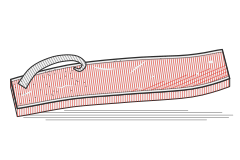 Cut · Outside skirt, membrane onEntrañaThe outside skirt on the Argentine parrilla: whole, membrane on, coarse salt, 3–4 minutes a side.
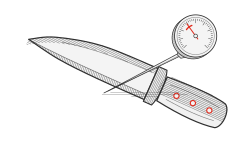 Buying guide · Pillar vs sheetHanger steak vs skirt steakThe diaphragm's thick pillar against its thin sheet: one per animal vs one per side, sinew, names, cooking.
- Buying guide · Diaphragm vs bellySkirt steak vs flank steakDiaphragm against belly wall: thickness, grain, fat, names by country, cooking times and how each is sliced.
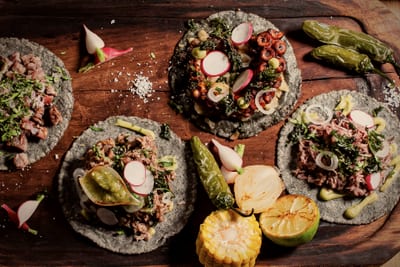 Main course · Mexico, mesquiteCarne asadaNorthern Mexico's grilled beef: skirt or flank, lime and orange, cooked fast over hot mesquite, in flour tortillas.
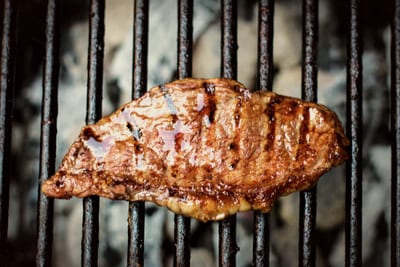 Sauce · Marinade for grill and panSteak marinadeOil, soy, lime, garlic and sugar: the basic marinade, how long each kind needs, and why it only reaches the surface.
Frequently asked questions
How long do you cook skirt steak?
2–3 minutes a side over the hottest fire or in a smoking cast-iron pan, until the thickest part reads 51–52 °C / 124–126 °F for medium-rare. On an Argentine parrilla, with the embers further away, a whole outside skirt takes 3–4 minutes a side.
Inside or outside skirt: which is better?
Most cooks prefer the outside skirt: it is thicker, more marbled and juicier, and stays tender with salt alone. Inside skirt works well marinated and sliced thin across the grain, and cooks slightly faster.
Should skirt steak be marinated?
It does not need to be. Its open grain absorbs a marinade in 30 minutes to a few hours; a soy marinade can stay up to 12 hours and a citrus one up to 8, in the refrigerator. Plain salt is the Argentine and Uruguayan way.
How do you cut skirt steak against the grain?
The fibers run across the width of the strip. Cut the steak into pieces 10–15 cm / 4–6 in long, then turn each piece and slice it thin across its fibers.
What temperature should skirt steak be cooked to?
Pull it at 51–52 °C / 124–126 °F for medium-rare; it finishes at 52–56 °C / 126–133 °F. Past medium it turns chewy. The USDA safe minimum for whole cuts is 63 °C / 145 °F with a 3-minute rest.
Can I use flank instead of skirt?
Yes. Flank is thicker and leaner, so it needs 3–5 minutes a side and gives neater slices; skirt is juicier. See skirt vs flank.
Sources
3
- USDA Agricultural Marketing Service. Institutional Meat Purchase Specifications: Fresh Beef Series 100. Washington, DC, 2014. www.ams.usda.gov/sites/default/files/media/IMPS_100_Fresh_Beef%5B1%5D.pdf
- USDA Food Safety and Inspection Service. Safe Minimum Internal Temperature Chart. 2023. www.fsis.usda.gov/food-safety/safe-food-handling-and-preparation/food-safety-basics/safe-temperature-chart
- McGee, Harold. On Food and Cooking: The Science and Lore of the Kitchen, rev. ed. New York: Scribner, 2004.