
Main course · Marinated, seared, sliced
Flank steak recipe
Flank steak is a lean, flat belly muscle 2–3 cm / ¾–1¼ in thick, with long, coarse fibers running its full length. It is tender only when two rules are kept: it is cooked hot and fast to no more than medium-rare, and it is sliced thin across the grain. A soy-based marinade of 2–12 hours seasons the surface; 3–5 minutes a side over high, direct heat brings the center to 51–52 °C / 124–126 °F, the pull temperature for medium-rare. Rested and cut about 5 mm / ¼ in thick at a low angle, one flank (700 g / 25 oz–1.2 kg / 1.5–2.6 lb) serves three to five.
At a glance
- Cut
- Flank (rectus abdominis), 700 g / 25 oz–1.2 kg / 1.5–2.6 lb
- Thickness
- 2–3 cm / ¾–1¼ in
- Marinade
- 2–12 h in the refrigerator (soy-based)
- Medium-rare
- 3–5 min a side; pull at 51–52 °C / 124–126 °F
- Key
- Slice across the grain, at a low angle, 5 mm / ¼ in
What this recipe is for
The flank is the rectus abdominis, a flat muscle from the lower belly with little fat between its fibers and none of the connective tissue that would call for slow cooking. Its toughness lies in the length of its fibers. Cooked past medium, they tighten and push out their water; cut with the grain, every bite is a bundle of long strands. Seared fast and sliced across, the same steak is tender and full of beef flavor. See why steak is tough.
This page cooks a whole flank as a steak: marinated, seared hard and sliced for the table, for rice, salads or tortillas. Two related pages use the same cut differently. Carne asada is the northern Mexican dish, with lime and orange juice and mesquite, usually cooked through and chopped for tacos. The steak marinade page explains the marinade used here, what it can and cannot do, and its variations. For the thinner, fattier cut often sold beside flank, see skirt vs flank.
Ingredients
| Ingredient | Amount | Note |
|---|---|---|
| Flank steak | 1 whole flank, 2–3 cm / ¾–1¼ in thick (700 g / 25 oz–1.2 kg / 1.5–2.6 lb) | membrane removed; serves 3–5 |
| Neutral oil | 60 ml / 2 fl oz | or olive oil |
| Soy sauce | 60 ml / 2 fl oz | supplies the salt: no more is added |
| Lime juice or red-wine vinegar | 30 ml / 1 fl oz | 2 tbsp |
| Garlic | 3 cloves | grated or crushed |
| Brown sugar or honey | 15 g / ½ oz | 1 tbsp |
| Black pepper | 2 g / 1 tsp | coarsely ground |
| Chili flakes | to taste | optional |
| Flaky salt | to finish | after slicing |
Method
- Look at the steak before anything else: the fibers run the length of the piece, and at the end it will be sliced across them. Trim any membrane left on the surface. If one end tapers sharply, fold it under or cut it off and cook it separately: it will be done minutes before the thick end.
- Whisk the oil, soy sauce, lime juice or vinegar, garlic, sugar, pepper and chili. For a flank over 1 kg / 2.2 lb, make half as much again. If you want some as a sauce, set it aside now, before it touches raw meat.
- Put the flank in a zip-top bag or a glass or stainless-steel dish (acid reacts with aluminum), pour in the marinade, press out the air and refrigerate for 2–12 hours, turning it once. Never marinate at room temperature.
- Light the grill for high, direct heat: a hand held 10–12 cm / 4–5 in above the grate should last only 2–3 seconds. Indoors, heat a large cast-iron pan until it smokes.
- Lift the steak out, discard the used marinade and pat the meat very dry with paper towels: a wet surface steams instead of browning, and sugar left on it burns. Do not add salt; the soy sauce has seasoned it.
- Cook 3–5 minutes a side for a flank 2–3 cm / ¾–1¼ in thick, turning once, until the thickest part reads 51–52 °C / 124–126 °F for medium-rare. Insert the thermometer from the side, into the middle of the thickness.
- Rest the steak 3–5 minutes on a board. At this thickness it rises a further 2–4 °C / 4–7 °F, into the medium-rare range of 52–56 °C / 126–133 °F.
- Slice it across the grain, with the knife at a low angle, about 5 mm / ¼ in thick. Finish with flaky salt and, if you kept some, a spoonful of the reserved marinade.
Temperatures
| Doneness | Pull from the heat | Final, after resting |
|---|---|---|
| Rare | 47–48 °C / 118 °F 117–118 °F | 48–52 °C / 126 °F 118–126 °F |
| Medium-rare (recommended) | 51–52 °C / 126 °F 124–126 °F | 52–56 °C / 133 °F 126–133 °F |
| Medium (firmer; past the limit for flank) | 56–57 °C / 135 °F 133–135 °F | 57–62 °C / 144 °F 135–144 °F |
| USDA safe minimum (whole cuts) | — | 63 °C / 145 °F 145 °F with a 3-minute rest |
Times by thickness
| Thickness | Method | Medium-rare |
|---|---|---|
| 1.5 cm / ½ in (a thin flank, or the tapered end) | Grill or pan, high direct heat | 3–5 min in total |
| 2.5 cm / 1 in | Grill or pan, high direct heat | 6–10 min in total (3–5 min a side) |
| 2.5 cm / 1 in | Broiler, rack 8–10 cm / 3–4 in below the element | 4–6 min a side |
Slicing across the grain
On a flank the grain is easy to read: the fibers run the length of the steak, from one end to the other. Slicing across them means cutting across the steak's width, the short way. Hold the knife at a low angle, almost flat, so each slice is wider and its fibers shorter still, and cut about 5 mm / ¼ in thick. A very long flank is easier to handle if it is first cut in two, crosswise.
The slice shows whether it was cut right: across the grain, its face shows short fiber ends and it pulls apart easily; along the grain, it shows long strands running its length and stays chewy at any temperature.
Under the broiler: London broil
The name London broil first belonged to flank cooked this way: marinated, broiled and sliced thin. Set the rack so the steak sits 8–10 cm / 3–4 in below a fully heated broiler; a flank 2.5 cm / 1 in thick takes about 4–6 minutes a side, to the same 51–52 °C / 124–126 °F. Home broilers vary widely in power, so the thermometer matters more here than anywhere else. In American shops a package labeled London broil is now usually top round; see London broil vs flank steak and steak in the oven.
Without a marinade
Flank does not need one. Salted with about 1 % of its weight (7–12 g for a whole flank), either right before cooking or at least 40 minutes ahead, it browns well and tastes of beef; see salting steak. A marinade flavors the surface, reaching only a few millimeters, and does little for tenderness, which comes from the heat and the knife. Strong citrus or vinegar marinades should stay on no more than 8 hours, and those with fresh pineapple, papaya, kiwi or ginger no more than 2: left longer, they turn the surface pale and mealy.
Common mistakes
Slicing with the grain. Cooking past medium-rare. Putting a wet, marinade-coated steak on the heat, where it steams gray and the sugar burns. A weak fire, which takes so long to brown the surface that the center overcooks. Letting the thin end of the flank go as long as the thick one. And using marinade that has held raw meat as a sauce without boiling it first. Pull temperatures for every cut are in the steak temperature chart; grilling times for every thickness, in how long to grill steak.
Keep reading
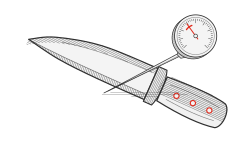
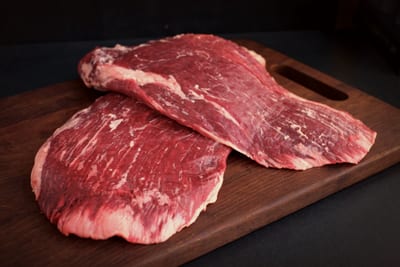 Cut · Flank, long-grainedFlank steakThe flat belly muscle of fajitas, London broil and phở: never past medium-rare, always cut across the grain.
 Buying guide · Diaphragm vs bellySkirt steak vs flank steakDiaphragm against belly wall: thickness, grain, fat, names by country, cooking times and how each is sliced.
- Buying guide · A method vs a muscleLondon broil vs flank steakA cooking method that became a label, against a belly muscle: what is in the package and how each is cooked.
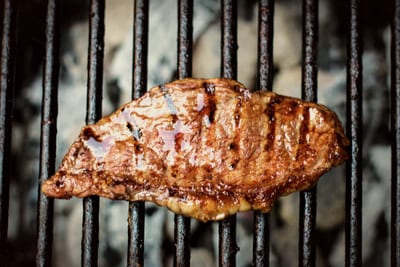 Sauce · Marinade for grill and panSteak marinadeOil, soy, lime, garlic and sugar: the basic marinade, how long each kind needs, and why it only reaches the surface.
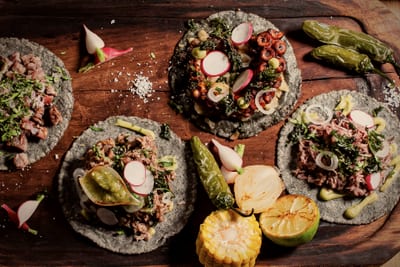 Main course · Mexico, mesquiteCarne asadaNorthern Mexico's grilled beef: skirt or flank, lime and orange, cooked fast over hot mesquite, in flour tortillas.
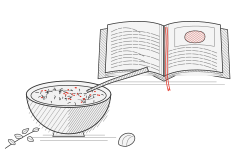 Main course · French bistro, hot and fastBavette steak recipeBavette à l'échalote: a thin, open-grained steak seared hard, sliced across the fibers and finished with a shallot and red-wine pan sauce; times, pull temperatures and which cut to buy.
Frequently asked questions
How long do you cook flank steak?
For a flank 2–3 cm / ¾–1¼ in thick, 3–5 minutes a side over high, direct heat or in a smoking cast-iron pan, until the thickest part reads 51–52 °C / 124–126 °F for medium-rare. Under a broiler, about 4–6 minutes a side for 2.5 cm / 1 in.
How long should you marinate flank steak?
2–12 hours in a soy-based marinade, 1–8 hours in a citrus or vinegar one, and no more than 2 hours if it contains fresh pineapple, papaya, kiwi or ginger. Always in the refrigerator.
What temperature should flank steak be cooked to?
Pull it at 51–52 °C / 124–126 °F and rest it into the medium-rare range, 52–56 °C / 126–133 °F; take it no further than medium-rare. The USDA safe minimum for whole cuts is 63 °C / 145 °F with a 3-minute rest.
How do you cut flank steak against the grain?
The fibers run the length of the steak, so cut across its width, the short way, with the knife at a low angle, in slices about 5 mm / ¼ in thick.
Is flank steak better grilled or pan-seared?
Both work as long as the heat is high. The grill gives more char and takes a whole flank easily; a cast-iron pan gives an even crust, though a large flank may have to be cut in two to fit.
Sources
3
- USDA Agricultural Marketing Service. Institutional Meat Purchase Specifications: Fresh Beef Series 100. Washington, DC, 2014. www.ams.usda.gov/sites/default/files/media/IMPS_100_Fresh_Beef%5B1%5D.pdf
- USDA Food Safety and Inspection Service. Safe Minimum Internal Temperature Chart. 2023. www.fsis.usda.gov/food-safety/safe-food-handling-and-preparation/food-safety-basics/safe-temperature-chart
- McGee, Harold. On Food and Cooking: The Science and Lore of the Kitchen, rev. ed. New York: Scribner, 2004.