
Main course · The American sirloin, pan or grill
Top sirloin steak
A top sirloin steak is the American sirloin: a boneless steak from the hip, lean and beefy, best cooked hot and fast to medium-rare. Salt it ahead, sear it in a smoking-hot pan or over direct fire, turning it often, and take it off at 52–54 °C / 126–129 °F; resting brings it to 54–57 °C / 129–135 °F. A steak 2.5 cm / 1 in thick takes 6–8 minutes in a pan or 6–10 minutes on a grill. Slice it across the grain: its fibers are coarser than a strip's. In Britain and Australia this steak is sold as rump; their "sirloin" is a different cut.
At a glance
- Cut
- Gluteus medius, top of the US sirloin (IMPS 1184); rump in the UK and Australia
- Size
- 2.5–4 cm / 1–1½ in thick; 600–700 g / 1.3–1.5 lb serves 2–3
- Pan
- 6–8 min in total at 2.5 cm / 1 in, turned often
- Medium-rare
- Off at 52–54 °C / 126–129 °F; 54–57 °C / 129–135 °F after resting
- Key
- Lean: never past medium; slice across the grain
Which sirloin? US vs UK and Australia
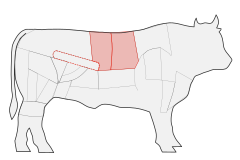
In the United States the sirloin is the section of the hindquarter over the hip, between the short loin and the round, and a top sirloin steak is cut from its upper part, the gluteus medius (IMPS 1184). In Britain, Ireland, Australia and New Zealand, "sirloin steak" means the boneless loin muscle Americans call striploin or New York strip; for that steak, follow the New York strip recipe. The muscle of the American top sirloin is sold there as rump steak, and this recipe works for it. All the names are in sirloin vs strip.
On an American label the word top matters: "top sirloin" or "center-cut top sirloin" means the gluteus medius, while a plain "sirloin steak" can include muscles of the bottom sirloin, which are less even. A "sirloin tip" is not sirloin at all but the knuckle, from the round, better roasted or braised. The top sirloin cap, the picanha or coulotte, is a separate muscle cooked on its own.
Why it needs high heat and a thermometer
Top sirloin is extra lean by the US definition: the lean meat carries about 4 g of fat per 100 g / 3.5 oz raw (USDA). With little marbling to protect it, it is juicy at medium-rare and firms up quickly past medium, 60 °C / 140 °F. It has more beef flavor per bite than the strip and costs less, but a coarser grain. The method follows from that: a dry, salted surface for a fast crust, high heat, frequent turning for an even center, an early pull and slices cut across the grain.
Ingredients
| Ingredient | Amount | Note |
|---|---|---|
| Top sirloin steak | 1–2 steaks, 2.5–4 cm / 1–1½ in thick (600–700 g / 1.3–1.5 lb in total) | serves 2–3 |
| Coarse salt | about 1 % of the weight (6–7 g / ¼ oz) | 40 minutes ahead, or the day before |
| Black pepper | to taste | freshly ground, at the end |
| Neutral oil | 1 tbsp / 15 ml | high smoke point |
| Butter | 30 g / 1 oz | optional, for basting |
| Garlic | 2 cloves | crushed in their skin |
| Thyme or rosemary | 2–3 sprigs | optional |
Method
- Pat the steak dry and salt it on all sides with about 1 % of its weight. Salted 40 minutes ahead, or the day before, and left uncovered on a rack in the refrigerator, the surface dries and browns faster. See salting steak.
- Heat a 25–30 cm / 10–12 in cast-iron or carbon-steel pan over medium-high heat for 5–10 minutes, until oil smokes faintly. Add the oil.
- Lay the steak in the pan; the times in the table below count from here. Turn it when it releases, after 45–60 seconds, then every 30–60 seconds, so the crust builds on both faces and the center heats evenly. If there is a strip of fat along one edge, hold the steak on that edge with tongs for a minute to brown it.
- When the center is 8–10 °C / 15–18 °F below the pull temperature, lower the heat to medium, add the butter, garlic and herbs and spoon the foaming butter over the steak for 1–2 minutes.
- Take it off at 52–54 °C / 126–129 °F for medium-rare, measured from the side into the thickest part. A steak 4 cm / 1½ in thick comes off at 50–51 °C / 122–124 °F, because it carries more heat inward while it rests.
- Rest it 5 minutes on a rack or a board; it finishes at 54–57 °C / 129–135 °F. Season with pepper.
- Slice across the grain, about 1 cm / ⅜ in thick, and pour the resting juices over.
Times by thickness
Totals for a steak straight from the refrigerator, turned often, cooked to medium-rare. Pans, burners and fires vary; the thermometer decides (steak temperatures).
| Thickness | Pan (total) | Grill (total) | Take off at |
|---|---|---|---|
| 2.5 cm / 1 in | 6–8 min | 6–10 min, direct heat | 52–54 °C / 129 °F 126–129 °F |
| 3.5–4 cm / 1¼–1½ in | 9–12 min | 10–14 min, finished indirect | 50–51 °C / 124 °F 122–124 °F |
| 5 cm / 2 in | reverse sear (below) | 14–18 min, finished indirect | 49–50 °C / 122 °F 120–122 °F (grill) |
Temperatures
| Doneness | Take off the heat | After resting |
|---|---|---|
| Rare | 47–48 °C / 118 °F 117–118 °F | 50–52 °C / 126 °F 122–126 °F |
| Medium-rare (recommended) | 52–54 °C / 129 °F 126–129 °F | 54–57 °C / 135 °F 129–135 °F |
| Medium (the limit for a lean steak) | 56–57 °C / 135 °F 133–135 °F | 59–61 °C / 142 °F 138–142 °F |
| USDA safe minimum (whole cuts) | — | 63 °C / 145 °F 145 °F with a 3-minute rest |
On the grill
Over charcoal, wood or gas, sear top sirloin over high direct heat, about 230–290 °C / 450–550 °F at the grate, with a cooler zone on the other side (grilling over fire). Up to 2.5 cm / 1 in it cooks entirely over direct heat, 6–10 minutes in total; from about 4 cm / 1½ in, brown both faces over the fire and finish on the cool side with the lid closed. Turn it often and take it off at the same temperatures as in the pan. Times by doneness: how long to grill steak.
Thick steaks: the reverse sear
A top sirloin 5 cm / 2 in thick cooks more evenly with the reverse sear: bake it on a rack at 120 °C / 250 °F until the center reads 43–46 °C / 110–115 °F, about 40–55 minutes, then sear it 45–90 seconds per side in a smoking-hot pan or over the hottest part of the fire, to a final 53–56 °C / 127–133 °F. It needs only 1–2 minutes of rest. A whole center-cut top sirloin roast is cooked the same way, by thermometer rather than by the clock.
Common mistakes
Cooking it past medium, which leaves this lean steak firm and dry. A pan that is not hot enough, so the steak turns gray before it browns. A wet surface, which steams. Slicing with the grain, which makes the coarse fibers chewy. Counting on a marinade to tenderize it: it adds flavor to the surface but does not reach the inside (steak marinade). Why steaks turn tough: tough steak.
Serving
In the USDA's cooking-yield study, grilled top sirloin kept about 80 % of its raw weight, so 600–700 g / 1.3–1.5 lb raw gives about 500 g / 1.1 lb on the plate, enough for two or three. Serve it sliced, with chimichurri, the peppercorn sauce of steak au poivre or béarnaise. How it compares with the fattier steaks: sirloin vs ribeye.
Keep reading
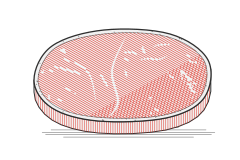
 Cut · Sirloin, the American meaningTop sirloinThe US sirloin: the rump's center muscle, lean and beefy, cooked fast. Not the British sirloin.
 Cut · Rump, a working muscleRumpThe muscle group over the hip: rump steak, top sirloin, cuadril, alcatra, and what each country cuts.
 Buying guide · One name, two cutsSirloin vs strip steakSame word, two cuts: the American sirloin against the strip, and why UK and Australian “sirloin” is the strip.
- Buying guide · Hip vs ribSirloin vs ribeyeThe lean hip steak against the marbled rib steak: muscles, fat in numbers, prices, names and cooking.
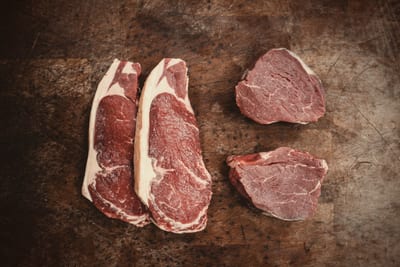 Main courseNew York strip steakFat edge first, then a hot pan or direct fire: 6–8 minutes for a 2.5 cm / 1 in strip, pulled at 50–51 °C / 122–124 °F.
 Cooking · TroubleshootingWhy is my steak tough?Overcooked, cut along the grain or the wrong cut for the method: eight causes of a chewy steak and the fix for each.
Frequently asked questions
How long do you cook sirloin steak?
For medium-rare, a top sirloin 2.5 cm / 1 in thick takes 6–8 minutes in total in a hot pan or 6–10 minutes over direct fire, turned often; 3.5–4 cm / 1¼–1½ in takes 9–12 minutes in the pan or 10–14 minutes on a two-zone grill. Thickness matters more than weight; check with a thermometer.
What temperature should top sirloin be cooked to?
Take it off the heat at 52–54 °C / 126–129 °F for medium-rare; it finishes at 54–57 °C / 129–135 °F after resting. Past 60 °C / 140 °F it firms up quickly. The USDA minimum for whole beef cuts is 63 °C / 145 °F with a 3-minute rest.
Is sirloin steak better in a pan or on the grill?
Both work. A heavy pan gives the most even crust and allows basting with butter; the grill adds smoke. From 4 cm / 1½ in, finish it on the cool side of the grill, and at 5 cm / 2 in use a reverse sear.
Is top sirloin the same as sirloin in the UK or Australia?
No. British and Australian sirloin is the striploin, the American New York strip. The US top sirloin is sold there as rump steak, and this recipe works for it.
How do you keep sirloin steak from being tough?
Salt it ahead, cook it hot and fast, take it off no later than medium, rest it and slice it across the grain. With little marbling, top sirloin dries out quickly past 60 °C / 140 °F.
Sources
5
- USDA Agricultural Marketing Service. Institutional Meat Purchase Specifications: Fresh Beef Series 100. Washington, DC, 2014. www.ams.usda.gov/sites/default/files/media/IMPS_100_Fresh_Beef%5B1%5D.pdf
- AUS-MEAT Limited. Handbook of Australian Meat, 7th ed. (International Red Meat Manual). Brisbane, 2005. www.ausmeat.com.au
- Agriculture and Horticulture Development Board (UK). Beef Meat Purchasing Guide. Kenilworth, 2016. ahdb.org.uk
- USDA Food Safety and Inspection Service. Safe Minimum Internal Temperature Chart. 2023. www.fsis.usda.gov/food-safety/safe-food-handling-and-preparation/food-safety-basics/safe-temperature-chart
- McGee, Harold. On Food and Cooking: The Science and Lore of the Kitchen, rev. ed. New York: Scribner, 2004.