
Main course · Simmered, peeled
Beef tongue
Beef tongue is simmered whole in aromatic water for 2½–3½ hours, until a skewer slides into the thickest part, then peeled while hot and sliced crosswise. A whole tongue (1–1.5 kg / 2.2–3.3 lb) gives about 600–700 g / 21–25 oz of peeled meat per 1 kg / 2.2 lb raw, enough for 6 people as tacos de lengua, lengua a la vinagreta or a cold sandwich. Rinse it well, keep the water at a bare simmer, and do not let the tongue cool before peeling.
At a glance
- Cut
- Whole beef tongue, 1–1.5 kg / 2.2–3.3 lb
- Yield
- 600–700 g / 21–25 oz peeled meat per 1 kg / 2.2 lb raw
- Simmer
- 2½–3½ h at a bare simmer; about 1 h in a pressure cooker
- Key
- Peel while hot; slice crosswise
- Serves
- 6
- Time
- 40 min active, about 4 h total
Choosing the tongue and how much to buy
A fresh tongue should be firm and pinkish-gray, with a clean smell and no slime. It is sold whole, fresh, frozen or brined, and some butchers sell it already cooked and peeled. Thaw a frozen tongue completely in the refrigerator before cooking. Where the cut comes from, what it is called in each country and how it is cooked in Japan and Korea is in the beef tongue cut guide.
The root, at the back, is the fattiest part and gives the softest slices; the tip is the leanest and firmest. Plan on 600–700 g / 21–25 oz of peeled, trimmed meat per 1 kg / 2.2 lb raw, about 150–175 g / 5–6 oz per person.
| Whole tongue, raw | Peeled meat | Serves |
|---|---|---|
| 1 kg / 2.2 lb | 600–700 g / 21–25 oz | 4 |
| 1.25 kg / 2.8 lb | 750–875 g / 26–31 oz | 5 |
| 1.5 kg / 3.3 lb | 900–1,050 g / 32–37 oz | 6 |
Ingredients
| Ingredient | Amount | Note |
|---|---|---|
| Beef tongue, whole | 1, about 1.5 kg / 3.3 lb | rinsed; serves 6 |
| Onion | 1 large, about 200 g / 7 oz | halved |
| Garlic | 1 head | halved crosswise |
| Bay leaves | 2 | |
| Black peppercorns | 1 tsp | |
| Coarse salt | a little | salt the water lightly |
| Water | about 4 L / 4 qt | enough to cover the tongue by 5 cm / 2 in |
| For tacos: corn tortillas | 18 small | warmed |
| White onion, cilantro, limes | 1 small (100 g / 3½ oz), 1 bunch, 3 | to serve |
| Salsa | to taste | red or green |
Method
- Rinse the tongue well under cold running water, scrubbing the skin. If it is frozen, thaw it completely in the refrigerator first.
- Put it in a pot just large enough to hold it, with the onion, garlic, bay leaves, peppercorns and salt. Cover with cold water by about 5 cm / 2 in.
- Bring to a boil, skim off the foam, then lower the heat until the liquid barely bubbles, at 85–95 °C / 185–203 °F. Set the lid slightly ajar.
- Simmer for 2½–3½ hours, topping up with hot water if the tongue is no longer covered. It is done when a skewer slides into the thickest part, near the root, with little resistance; inside it is typically above 90 °C / 194 °F.
- Lift the tongue onto a board and keep the broth. While the tongue is still hot, hold it with a towel, slit the skin along the underside from root to tip and peel it off in sheets.
- Trim off the gristle, the small bones and any fat or gland remnants at the root. If it is not sliced right away, return the peeled tongue to the hot broth to keep it warm.
- Slice crosswise, at right angles to the length of the tongue, about 5 mm / ¼ in thick for sandwiches and vinagreta, or chop into 1 cm / ½ in pieces for tacos. Serve warm. For a cold dish, cool it and refrigerate it within 2 hours (1 hour if the room is above 32 °C / 90 °F), the tongue and the broth in separate shallow containers so they cool quickly.
Times by method
| Method | Temperature | Time |
|---|---|---|
| Simmer, whole, covered with water | liquid at 85–95 °C / 203 °F 185–203 °F | 2½–3½ hours |
| Oven braise, covered pot | 140–160 °C / 320 °F 285–320 °F, liquid halfway up the tongue | 2½–3½ hours, turning it once or twice |
| Pressure cooker | high pressure | about 1 hour, plus the time to come up to pressure and to release it |
| Reheating (USDA, leftovers) | 74 °C / 165 °F 165 °F | until the broth simmers |
Peeling, trimming and slicing
The skin is a thick layer of papillae that is inedible once cooked, and it only comes off cleanly while the tongue is hot. Hold the tongue with a towel or rubber gloves, slit the skin from root to tip along the underside and pull it back in sheets; use the tip of a knife where it tears. If the tongue has cooled and the skin clings, return it to the hot broth until it is warm again and try once more.
Cut away the gristle and small bones at the root, then slice crosswise, at right angles to the length of the tongue, in thin, even slices. The fibers run in three directions, so the thickness of the slice matters more than its angle. Slices from the root are fattier and softer, those from the tip leaner and firmer; mix them for tacos so that every bite is even.
Four ways to serve it
Tacos de lengua. Chop the meat, crisp it in a little oil in a hot skillet or on a griddle, and serve it on warm corn tortillas with chopped white onion, cilantro, lime and a salsa, as in Mexico. For tacos from the grill instead, see carne asada.
Lengua a la vinagreta. In Argentina and Uruguay the slices are served cold, dressed with a sharp vinaigrette. Finely chop 1 small onion (100 g / 3½ oz), 1 red bell pepper (150 g / 5 oz), 2 tablespoons of parsley and 2 hard-boiled eggs, and stir them into 60 ml / ¼ cup red wine vinegar, 120 ml / ½ cup olive oil and salt. Pour it over the slices and refrigerate for at least 30 minutes. A raw, diced cousin of this dressing is salsa criolla.
Lengua en salsa. The Spanish way: warm the slices in tomato sauce, or in an almond sauce, until the sauce coats them. The tongue is already tender, so this only needs to heat it through.
Cold cuts and sandwiches. Sliced thin and cold, tongue is a classic delicatessen sandwich meat. Brined tongue (pickled or corned tongue) is cured like corned beef, and a brined and smoked one is closer to pastrami; the method is in curing.
What makes tongue tough or hard to peel
Peeling it cold: the skin sticks once the tongue cools; peel it hot, or rewarm it in the broth. Boiling hard: a rolling boil dries the fibers and clouds the broth; keep it at a bare simmer, 85–95 °C / 185–203 °F. Taking it out too soon: a tongue can look cooked and still be tough in the middle; test the thickest part with a skewer and check again every 30 minutes if it catches. Slicing it lengthwise: cut across the tongue, in even slices. Throwing out the broth: the tongue keeps best stored in it. Leaving the gristle: the root end has small bones and cartilage that are not pleasant to find in a taco.
Storing, reheating and freezing
Cooked tongue keeps 3–4 days in the refrigerator, best in its cooking liquid, and it freezes well. Simmered until tender, it ends far above the 63 °C / 145 °F that the USDA sets as the minimum for whole cuts of beef, so what matters afterward is handling: cool it and refrigerate it within 2 hours (1 hour if the room is above 32 °C / 90 °F), the tongue and the broth in separate shallow containers so they cool quickly; these are general USDA limits for perishable food, not a rule specific to tongue. Once cold, the tongue can go back into its broth for storage. Reheat the slices in the broth until it simmers and the meat reaches 74 °C / 165 °F. For sandwiches or vinagreta the slices are used cold and need no reheating.
Keep reading
 Cut · Tongue, a dense muscleBeef tongueA dense muscle under a rough skin: simmered and peeled for tacos and vinagreta, or grilled thin as gyūtan.
- Cut · Organs, the achurasOffalSweetbreads, intestines, kidney, liver, heart and tripe: what each organ is and the heat it needs.
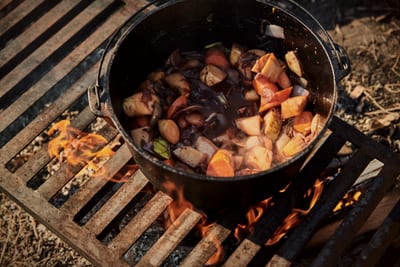 Cooking · Collagen to gelatinBraisingBrown, cover with a little liquid, simmer for hours: collagen turns to gelatin, fastest above 80 °C / 175 °F.
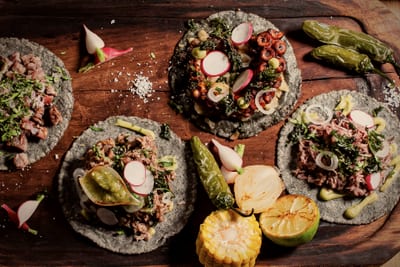 Main course · Mexico, mesquiteCarne asadaNorthern Mexico's grilled beef: skirt or flank, lime and orange, cooked fast over hot mesquite, in flour tortillas.
 Sauce · Raw, for the asadoSalsa criollaOnion, pepper and tomato in vinegar: the asado's second sauce, whose acid cuts the fat, and its Peruvian namesake.
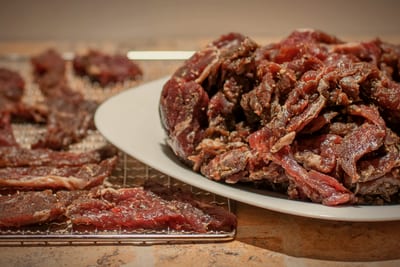 Main course · Brisket in brineCorned beefBrisket cured a week in salt and nitrite, then simmered: the Irish salt-beef trade and its Irish-American heir.
Frequently asked questions
How long does it take to boil a beef tongue?
A whole tongue of 1–1.5 kg / 2.2–3.3 lb takes 2½–3½ hours at a bare simmer, or about 1 hour in a pressure cooker. It is done when a skewer slides into the thickest part with little resistance.
How do you peel a beef tongue?
While it is still hot: slit the skin along the underside from root to tip and pull it off. Once cold the skin sticks; return the tongue to the hot broth to rewarm it and try again.
Should you boil or braise beef tongue?
Either works. Simmering covers the tongue with water; braising uses less liquid, halfway up the tongue, in a covered pot in the oven at 140–160 °C / 285–320 °F. Both take 2½–3½ hours, and the peeling is the same.
How much beef tongue per person?
About 150–175 g / 5–6 oz of peeled meat. Each 1 kg / 2.2 lb raw gives 600–700 g / 21–25 oz, so a 1–1.5 kg / 2.2–3.3 lb tongue serves 4–6 people.
Why is my beef tongue tough?
It needs more time: the center can be hot and still tough. Keep it at a bare simmer and test the thickest part with a skewer. If it is tender but dry and stringy, the water boiled.
Sources
3
- McGee, Harold. On Food and Cooking: The Science and Lore of the Kitchen, rev. ed. New York: Scribner, 2004.
- Larousse Gastronomique, rev. ed. London: Hamlyn, 2009.
- USDA Food Safety and Inspection Service. Safe Minimum Internal Temperature Chart. 2023. www.fsis.usda.gov/food-safety/safe-food-handling-and-preparation/food-safety-basics/safe-temperature-chart