
Starter · Marrow bones from a hot oven
Roasted bone marrow
Roasted bone marrow is the soft, fatty core of beef leg bones, baked cut side up at 220–230 °C / 425–450 °F for 15–20 minutes until it puffs, turns translucent and starts to pull away from the bone. It is scooped onto toast, seasoned with coarse salt and cut with a sharp salad of parsley, shallots and capers. Canoe-cut bones, split lengthwise, cook the most evenly and are the easiest to eat; cross-cut rounds of 5–8 cm / 2–3 in stand upright and also suit the grill. Allow 300–450 g / 11–16 oz of bone per person as a starter.
At a glance
- Bones
- Canoe-cut halves or cross-cut rounds of 5–8 cm / 2–3 in
- Oven
- 220–230 °C / 425–450 °F, 15–20 min, cut side up
- Done
- Puffed, translucent, wobbling, pulling from the bone
- Portion
- 300–450 g / 11–16 oz of bone per person
- Serve with
- Toast, flaky salt, parsley, shallot and caper salad
What you are cooking
Marrow bones are the long bones of the legs, mainly the femur and the tibia, and the bone marrow inside an adult animal's leg is yellow marrow: mostly fat, largely monounsaturated, with little protein or water. That fat softens at a lower temperature than beef suet, which is why roasted marrow turns spreadable instead of staying firm.
The risk is the opposite of a steak's. Undercooked marrow is waxy and opaque; overcooked, it melts and runs out of the bone into the tray, leaving a shrunken core and a pool of clear fat. The whole recipe is about taking the bones out in the few minutes between the two.
Canoe-cut or cross-cut
Butchers saw marrow bones in two ways. Canoe-cut (or long-cut) bones are split lengthwise into two halves, each a trough of exposed marrow: they heat evenly, show you when they are done and are easy to scoop. Cross-cut bones are sawn into rounds with marrow at both ends: they stand upright, hold their marrow better on a grill and are the usual cut for broth. Choose bones from the middle of the femur, where the canal is widest, with marrow that is pale and creamy rather than gray or dark red.
| Cut | What it is | Oven at 220–230 °C / 425–450 °F | Best for |
|---|---|---|---|
| Canoe-cut | Bone split lengthwise into halves | 15–20 min, cut side up | Roasting and scooping at the table |
| Cross-cut | Rounds of 5–8 cm / 2–3 in | 15–20 min, standing upright | Roasting, the grill, broth |
| Portion (starter) | 300–450 g / 11–16 oz of bone | 2 canoe halves or 3–4 rounds per person | — |
Ingredients
| Ingredient | Amount | Note |
|---|---|---|
| Beef marrow bones | 4 canoe halves (2 bones split) or 6–8 cross-cut rounds (600–900 g / 1.3–2 lb) | serves 2 as a starter |
| Coarse or flaky salt | to finish | on the marrow, after roasting |
| Coarse salt for the tray | a thin layer | optional, keeps the bones steady |
| Bread | 4–6 slices, about 1 cm / ⅜ in thick | toasted or grilled |
| Flat-leaf parsley | 1 large bunch, leaves only | picked, left whole or roughly torn |
| Shallots | 2 | sliced very thin |
| Capers | 1 tbsp | drained |
| Lemon | ½ | juice, for the salad |
| Extra-virgin olive oil | 2 tbsp | for the salad |
| Black pepper | to taste | coarsely ground |
Method
- Optional, several hours ahead: soak the bones in cold salted water in the refrigerator, changing the water once or twice. It draws out blood and makes the marrow paler; it is a matter of appearance, not safety. Pat the bones dry before roasting.
- Heat the oven to 220–230 °C / 425–450 °F. Line a tray and set the bones on it: canoe halves cut side up, rounds standing on their wider end. A thin bed of coarse salt or a few balls of crumpled foil keeps them from tipping over and spilling the marrow.
- Roast for 15–20 minutes. Look at canoe halves from 15 minutes; tall cross-cut rounds usually need the full 20.
- Take them out when the marrow has puffed, browned lightly on top, looks translucent and wobbles, and is beginning to come away from the bone. A skewer or thin knife should slide in without resistance and come out hot. Clear fat pooling under the bones means it has started to melt out: take them out at once.
- While the bones roast, toast the bread. At the last minute, toss the parsley, shallots and capers with the lemon juice, olive oil, salt and pepper; dressed early, the parsley wilts.
- Serve the bones straight from the oven on a board or warm plates, with small spoons or the handle of a teaspoon for scooping. Spread the marrow on the toast, season it with flaky salt and top it with a little of the salad.
How to tell when it is done
| Stage | What you see | What to do |
|---|---|---|
| Not yet | Opaque, firm, still stuck to the bone | Back into the oven, checking every few minutes |
| Ready | Puffed, translucent, wobbling, edges pulling from the bone | Serve at once |
| Too far | Shrunken into the bone, a pool of clear fat in the tray | Serve quickly; spoon the fat over the toast |
Common mistakes
Five things spoil roasted marrow. Leaving it in too long, so it melts away: the window is a few minutes, so look rather than trust the timer. Laying canoe halves cut side down, or letting rounds fall over, which spills the marrow. Buying thin bones from the ends of the leg, where the canal is narrow and there is little marrow. Dressing the salad early. And serving it lukewarm: marrow is mostly fat, and as it cools it sets again and turns waxy, so it goes to the table hot and is eaten right away.
On the grill: caracú
In Argentina and Uruguay the marrow bone is caracú. Cross-cut bones are roasted on the parrilla, standing upright beside the embers rather than over the strongest heat, until the marrow bubbles, and the marrow is spread on bread. Keep them upright and away from the hottest coals: the fat that bubbles over drips onto the fire and can flare. Caracú also goes into the puchero, the boiled dinner of beef, vegetables and corn, where the marrow is eaten on bread in the same way.
Safety and handling
Marrow is perishable once the bone is cut and the marrow exposed. Buy the bones fresh, keep them in the refrigerator and cook them within one to two days, or freeze them. Leg bones are not among the specified risk materials removed from food in connection with BSE: those controls apply to the brain, the spinal cord and, in older cattle, the vertebral column.
Roasted marrow is served hot, heated through, and eaten at once. Leftovers go into the refrigerator within 2 hours of cooking, as with any cooked meat (see reheating steak). The bones stay very hot for several minutes after they leave the oven, so serve them on a board or plate rather than passing them by hand. Marrow is mostly fat and very energy-dense: it is a starter or a garnish, eaten in small amounts.
Other ways to eat marrow
Every slice of shank cut for ossobuco has a ring of bone with marrow in the center, eaten at the table with a small spoon. French pot-au-feu includes marrow bones (os à moelle), wrapped so the marrow does not escape, and sliced, poached marrow finishes sauces such as the Bordelaise. Vietnamese phở broth is built on leg and knuckle bones (xương ống), and in Korea leg bones are simmered for hours for the milky soup seolleongtang.
Keep reading
 Cut · Leg bones, the fatty coreBone marrowThe fatty core of the leg bones: roasted until it pulls from the bone, spread on toast, simmered for broth.
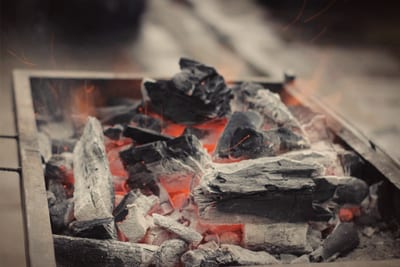 Main course · Milan, in biancoOssobucoVeal shank braised until it gives a sticky, glossy sauce, marrow in the bone, gremolata and saffron risotto.
- Cut · Shank, tendon and marrowShankThe lower leg, all muscle and tendon around a marrow bone: osso buco, chambarete and bắp bò.
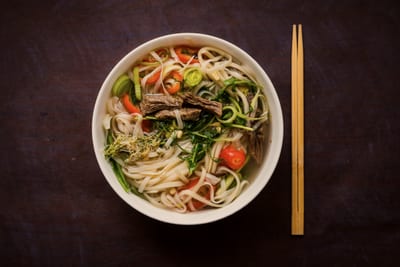 Soup · Vietnam, the brothPhở bòVietnam's beef noodle soup: bones simmered for hours, charred aromatics, and a boiling broth that cooks the raw tái.
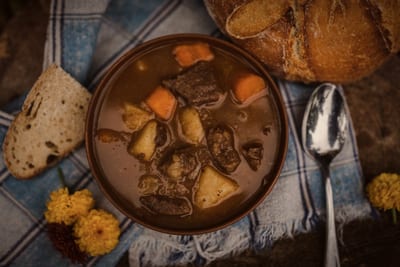 Stew · Córdoba, red wineOxtail stew (rabo de toro)Córdoba's oxtail, braised three hours in red wine until its collagen thickens the sauce and the meat leaves the bone.
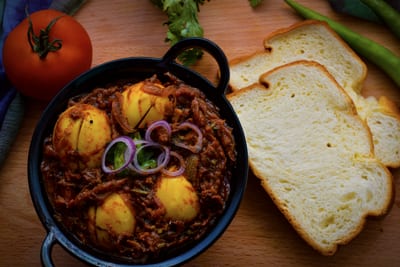 Stew · Cuba, shredded flankRopa viejaFlank steak pulled into threads and stewed in sofrito: Cuba's national dish, with roots in the Canary Islands.
Frequently asked questions
How long do you roast bone marrow?
About 15–20 minutes at 220–230 °C / 425–450 °F, cut side up, until the marrow is puffed, translucent and wobbling and starting to pull away from the bone, but before it melts out into the tray. Canoe halves are often ready at 15 minutes; tall cross-cut rounds take the full 20.
Canoe-cut or cross-cut: which is better for roasting?
Canoe-cut bones, split lengthwise, roast more evenly and are easier to eat, because the whole length of the marrow is exposed. Cross-cut rounds of 5–8 cm / 2–3 in work too, standing upright, and are better on a grill and for broth.
Do you have to soak marrow bones before roasting?
No. Soaking them for several hours in cold salted water in the refrigerator draws out blood and makes the marrow paler, but it changes the appearance, not the safety or the flavor much.
How do you know when roasted bone marrow is done?
It has puffed, browned lightly on top, turned translucent and wobbly, and begun to separate from the bone; a skewer slides in with no resistance and comes out hot. A pool of clear fat in the tray means it has gone too far.
Is bone marrow safe to eat?
Yes, when the bones are fresh, kept cold, cooked hot and eaten at once. Leg bones are not among the BSE specified risk materials, which are the brain, the spinal cord and, in older cattle, the vertebral column. Marrow is mostly fat, so it is eaten in small portions.
Sources
4
- McGee, Harold. On Food and Cooking: The Science and Lore of the Kitchen, rev. ed. New York: Scribner, 2004.
- Larousse Gastronomique, rev. ed. London: Hamlyn, 2009.
- Toldrá, Fidel (ed.). Lawrie's Meat Science, 8th ed. Duxford: Woodhead, 2017.
- USDA Food Safety and Inspection Service. Safe Minimum Internal Temperature Chart. 2023. www.fsis.usda.gov/food-safety/safe-food-handling-and-preparation/food-safety-basics/safe-temperature-chart