
Main course · Bone-in ribeye for two
Tomahawk steak
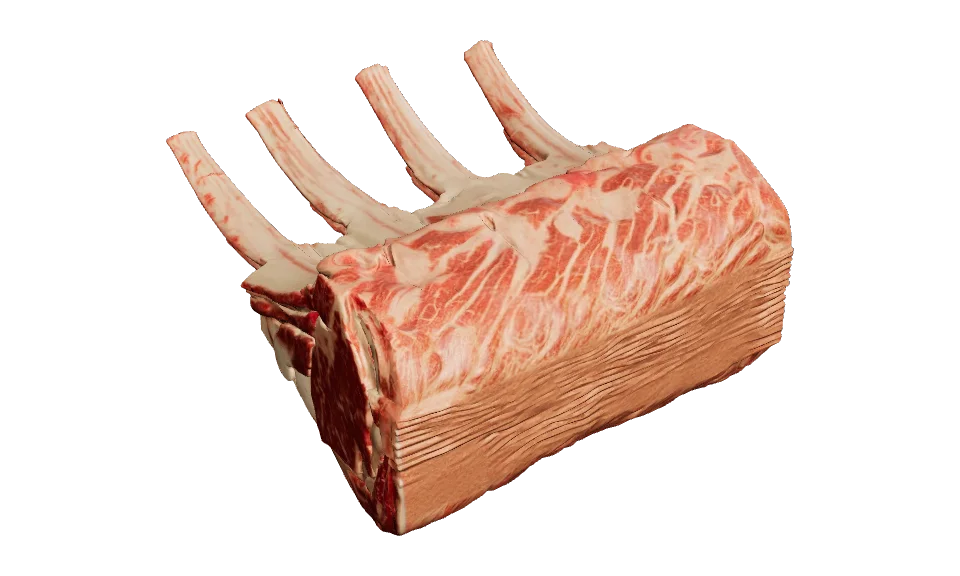
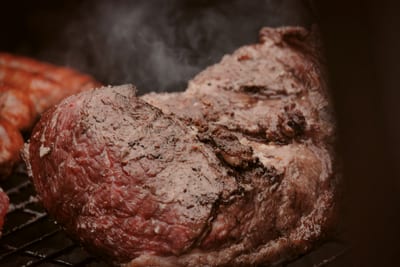
A tomahawk is a bone-in ribeye cut one rib thick, with 12–20 cm / 5–8 in of rib bone left on and scraped clean. It is usually 5–6 cm / 2–2½ in thick and weighs 1–1.5 kg / 2.2–3.3 lb, so it cannot be cooked like an ordinary steak: over high heat the outside burns before the center warms. The reliable method is the reverse sear. Salt it ahead, cook it slowly at 120 °C / 250 °F, in the oven or on the cool side of a grill, until the center reads 43–46 °C / 110–115 °F, then sear it hard. For medium-rare it should finish at 53–56 °C / 127–133 °F. A tomahawk of 1–1.2 kg / 2.2–2.6 lb feeds two, or three with sides.
At a glance
- Cut
- Bone-in ribeye, ribs 6–12, with 12–20 cm / 5–8 in of frenched bone
- Size
- 5–6 cm / 2–2½ in, 1–1.5 kg / 2.2–3.3 lb; serves 2–3
- Oven
- 120 °C / 250 °F for 40–75 min, then a hard sear
- Medium-rare
- Out of the oven at 43–46 °C / 110–115 °F; final 53–56 °C / 127–133 °F
- Key
- Probe at least 2 cm / ¾ in from the bone; wrap the bone over fire
A ribeye with a long bone
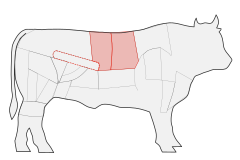
The tomahawk is not a separate muscle. It is a rib steak from ribs six to twelve, the bone-in version of the ribeye: the longissimus eye, the spinalis cap and the fat seam between them, with the full rib bone left on and frenched. A shorter frenched bone of about 5–10 cm / 2–4 in is usually sold in the United States as a cowboy steak; the meat and the method are the same. See tomahawk vs ribeye.
The bone adds weight and presentation, not flavor. What it changes is the cooking: bone conducts heat poorly and shields the meat beside it, so the eye next to the bone lags behind the outer edge, and the steak is thick enough that a plain sear leaves a gray band and a cold center. Cooking it slowly first and searing it last solves both. For a boneless ribeye in a pan, see the ribeye steak recipe; for a whole rib roasted on the bone, prime rib.
Ingredients
| Ingredient | Amount | Note |
|---|---|---|
| Tomahawk steak | 1 steak, 5–6 cm / 2–2½ in thick (1–1.5 kg / 2.2–3.3 lb) | serves 2–3 |
| Coarse salt | about 1 % of the weight (10–15 g) | ideally the day before |
| Black pepper | to taste | coarsely ground |
| Refined oil with a high smoke point | 1 tbsp | for the sear |
| Butter | 30–50 g / 1–2 oz | optional, the last minute |
| Garlic and thyme or rosemary | 2 cloves, a few sprigs | optional, with the butter |
| Aluminum foil | 1 sheet | to wrap the bone over a fire |
| Flaky salt | to finish | after slicing |
Method
- The day before, or at least 1 hour ahead, pat the steak dry and salt it on all sides with about 1 % of its weight. Leave it uncovered on a rack in the refrigerator so the surface dries and browns faster. See salting steak.
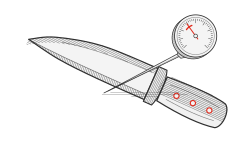
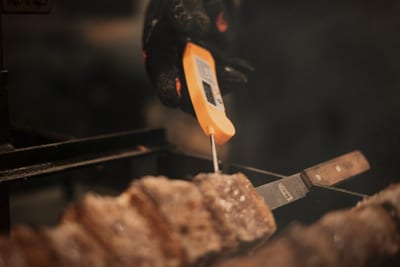
- Heat the oven to 120 °C / 250 °F. Set the steak on a rack over a tray and insert a probe thermometer into the center of the thickest part of the eye, at least 2 cm / ¾ in from the bone.
- Bake until the center reads 43–46 °C / 110–115 °F for medium-rare (see the table below): about 40–55 minutes for a 5 cm / 2 in steak and 55–75 minutes for 6–7 cm / 2½–2¾ in. The times are only a guide; the thermometer decides.
- Meanwhile heat a heavy cast-iron pan large enough for the meat, with the bone hanging over the rim if needed, until it smokes, or bring a grill to its hottest. The steak can wait 5–10 minutes uncovered at this point; do not wrap it in foil, which steams the dry surface.
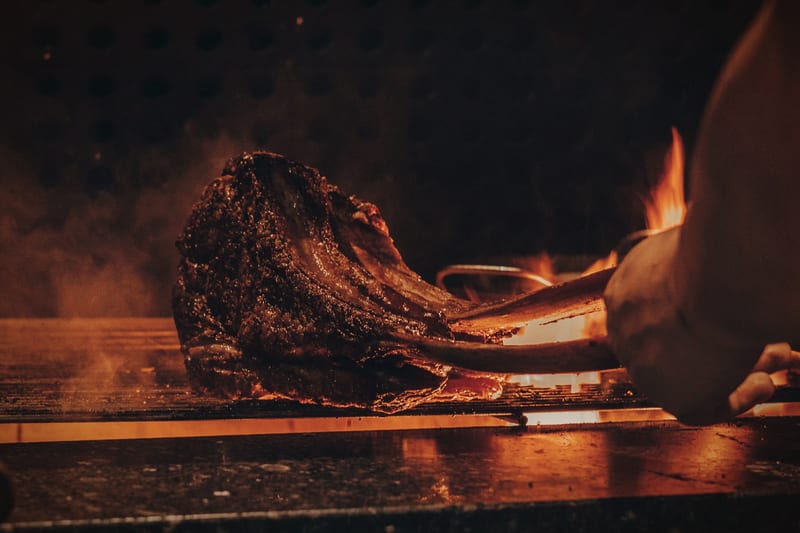
- Add the oil and sear the steak 45–90 seconds per side, until deep brown. Holding it by the bone, stand it on the fat edge and the cap to brown and render them. Add the butter, garlic and herbs in the last minute and spoon the foaming butter over the top.
- Check the center again: for medium-rare it should finish at 53–56 °C / 127–133 °F. A reverse-seared steak carries little stored heat, so a rest of 1–2 minutes is enough.
- Carve on a board: run the knife along the bone to lift the meat off in one piece, then slice it across the grain about 1 cm / ⅜ in thick, keeping some of the cap in each portion. Lay the slices back against the bone to serve and finish with flaky salt and pepper.
Temperatures
| Doneness | Take out of the oven (center) | Final, after the sear |
|---|---|---|
| Rare | 40–43 °C / 109 °F 104–109 °F | 49–52 °C / 126 °F 120–126 °F |
| Medium-rare | 43–46 °C / 115 °F 110–115 °F | 53–56 °C / 133 °F 127–133 °F |
| Medium | 49–52 °C / 126 °F 120–126 °F | 58–61 °C / 142 °F 136–142 °F |
| USDA safe minimum (whole cuts) | — | 63 °C / 145 °F 145 °F with a 3-minute rest |
Times by thickness
| Thickness | Oven at 120 °C / 250 °F, to the medium-rare stage | Sear |
|---|---|---|
| 4 cm / 1½ in (a thick cowboy steak) | 30–40 min | 45–90 s per side |
| 5 cm / 2 in | 40–55 min | 45–90 s per side |
| 6–7 cm / 2½–2¾ in | 55–75 min | 45–90 s per side, plus the edges |
On the grill
On a charcoal, wood or gas grill the order is the same: slow first, sear last. Build two zones, a hot side with the embers or lit burners and a cool side with few or none. Wrap the bone in foil so it does not char, set the steak on the cool side and close the lid. Cook it there until the center, at least 2 cm / ¾ in from the bone, reads 43–46 °C / 110–115 °F; the time depends on the fire, so start checking well before the oven times above. Then move it over the hottest embers and sear it until both faces and the fat edge are deep brown, unwrap the bone and serve once the center reaches 53–56 °C / 127–133 °F.
Searing first and finishing over indirect heat also works on steaks up to about 5 cm / 2 in, but on a thick, bone-in steak the slow-first order gives a more even interior and less carryover. Zones and fuels are in grilling over fire, times for thinner steaks in how long to grill steak, and the method in detail in reverse sear.
Common mistakes
Six mistakes ruin most tomahawks. Putting the probe next to the bone, or too near the surface, which gives a wrong reading. Taking the steak out of the oven at the final temperature: the sear adds several degrees, so it ends up one level of doneness past the target. Trusting the clock: two steaks of the same weight can differ by twenty minutes. Covering the steak with foil while it waits, which steams the dried surface. Searing in a pan that is too small or not hot enough, so the crust takes too long and the interior overcooks. And letting the bone burn over an open fire, when a sheet of foil prevents it.
Buying and serving
Judge the eye, not the bone: marbling, a well-formed cap and an even thickness across the steak. Ask for 5–6 cm / 2–2½ in. Because you pay by weight with the bone, a tomahawk costs more per gram of meat than a boneless ribeye of the same grade; a tomahawk of 1–1.2 kg / 2.2–2.6 lb is a main course for two, or for three with sides. If your pan or oven is small, a cowboy steak is the same meat on a shorter bone and cooks the same way (compare in cowboy steak vs ribeye). The Spanish chuletón is a thick bone-in rib steak with a short bone, grilled over embers. Doneness levels for every cut are in the steak temperature chart.
Keep reading
 Cut · Rib, the long boneTomahawkA thick bone-in ribeye with the long rib bone left on and cleaned — same meat, more bone.
 Cut · Rib, on the boneCowboy steakA thick bone-in ribeye with a short frenched bone: the tomahawk's shorter sibling; the name varies.
 Cooking · Low oven, sear lastReverse searLow oven first, sear last: one even pink edge to edge, a crust in under a minute, and when it is not worth it.
 Buying guide · Same rib, with or without the boneTomahawk vs ribeyeThe same ribeye meat with and without the long rib bone: weight, thickness, cooking and cost per gram.
 Cooking · Pull early, then restSteak temperature & doneness chartSix levels from blue to well done in °C and °F: when to pull, carryover by thickness, safety, and a printable chart.
 Main course · The American sirloin, pan or grillTop sirloin steakThe lean, beefy American sirloin: salted ahead, seared hard in a pan or over fire, off at 52–54 °C / 126–129 °F and sliced across the grain. Times by thickness and the UK/US name trap.
Frequently asked questions
How long do you cook a tomahawk steak?
With a reverse sear at 120 °C / 250 °F, about 40–55 minutes for a 5 cm / 2 in tomahawk and 55–75 minutes for 6–7 cm / 2½–2¾ in, until the center reads 43–46 °C / 110–115 °F, then 45–90 seconds of searing per side. Thickness matters more than weight; the thermometer decides.
What temperature should a tomahawk steak be cooked to?
For medium-rare, take it out of the low oven at 43–46 °C / 110–115 °F and sear it to a final 53–56 °C / 127–133 °F. Measure in the center of the thickest part, at least 2 cm / ¾ in from the bone. The USDA safe minimum for whole cuts is 63 °C / 145 °F with a 3-minute rest.
Can you cook a tomahawk steak on the grill?
Yes. Set up two zones, wrap the bone in foil, cook the steak on the cool side with the lid closed until the center reaches 43–46 °C / 110–115 °F, then sear it over the hottest embers to 53–56 °C / 127–133 °F for medium-rare.
How many people does a tomahawk steak feed?
A tomahawk of 1–1.2 kg / 2.2–2.6 lb feeds two, or three with sides, because a good part of its weight is bone. Larger ones of up to 1.5 kg / 3.3 lb feed three.
Do you cook a cowboy steak the same way as a tomahawk?
Yes. A cowboy steak is the same bone-in ribeye with a shorter bone of about 5–10 cm / 2–4 in. At 4 cm / 1½ in it needs about 30–40 minutes at 120 °C / 250 °F before the sear; the temperatures are the same.
Sources
3
- USDA Agricultural Marketing Service. Institutional Meat Purchase Specifications: Fresh Beef Series 100. Washington, DC, 2014. www.ams.usda.gov/sites/default/files/media/IMPS_100_Fresh_Beef%5B1%5D.pdf
- USDA Food Safety and Inspection Service. Safe Minimum Internal Temperature Chart. 2023. www.fsis.usda.gov/food-safety/safe-food-handling-and-preparation/food-safety-basics/safe-temperature-chart
- McGee, Harold. On Food and Cooking: The Science and Lore of the Kitchen, rev. ed. New York: Scribner, 2004.