Home›Cuts
Steak & beef cuts
Every steak cut and beef cut: where it sits on the animal, what it is called in each country, how much it weighs, how to cook it, and the steaks ranked by measured tenderness.
Beef cuts chart
tap a zone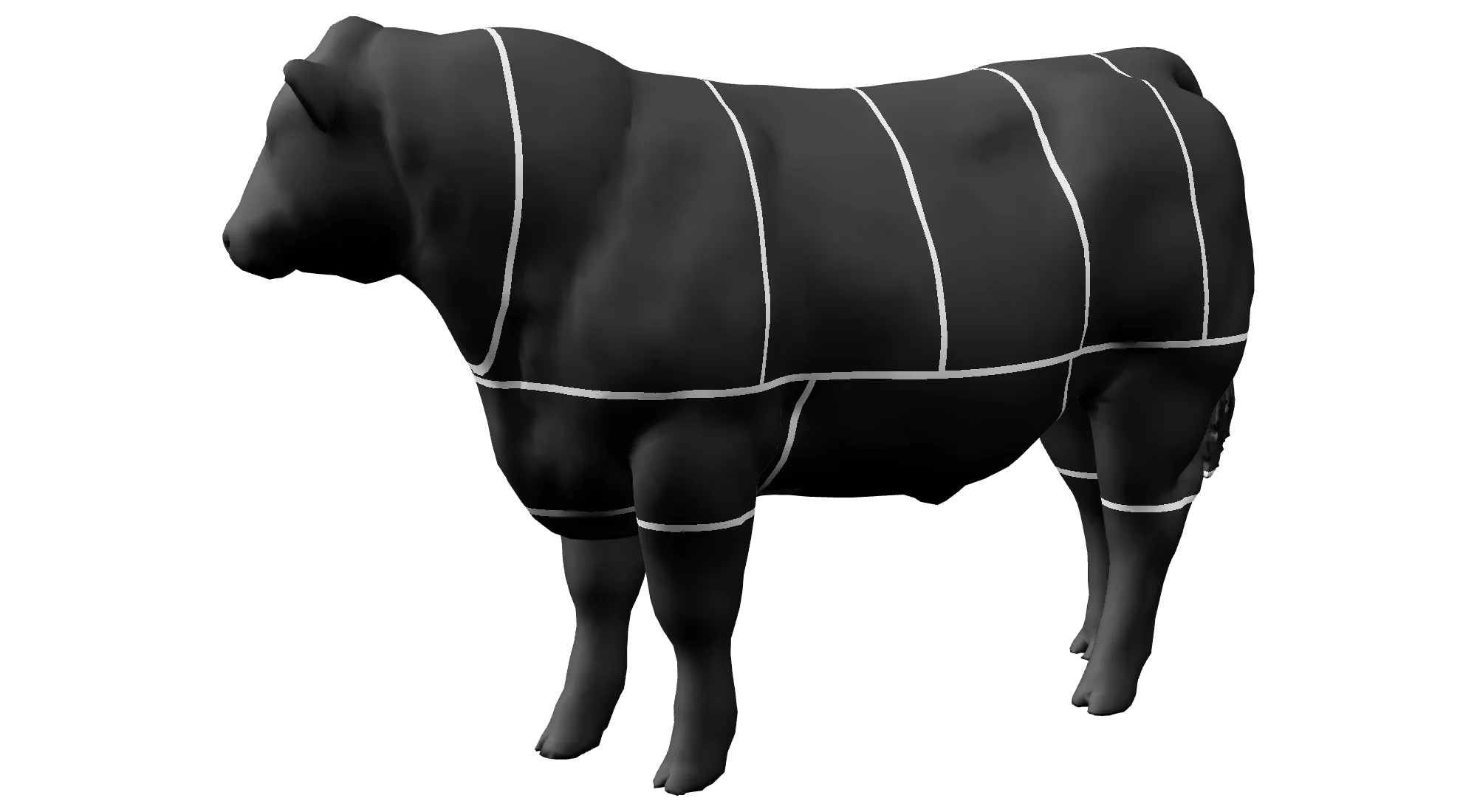
- 01Chuck & blade2276 · 2303 · 2310Chuck eye steakChuck roast & chuck steakDenver steakFlat iron steakOyster blade
- 02Rib2243 · 2249RibeyeTomahawkShort ribs
- 03Loin1552 · 2143 · 2150StriploinTenderloinT-bone
- 04Rump2090 · 2091 · 2131RumpTop sirloinPicanhaTri-tip
- 05Topside2000London broil (top round)Cube steak
- 06Brisket2332 · 2340Brisket
- 07Flank & plate2210 · 2204 · 2203VacíoFlank steakSkirt steakEntrañaHanger steakShort plateMatambre
- 08Silverside & knuckle2050 · 2040 · 2070Eye of round
- 09Shin2360ShankBone marrow
- 10HeadBeef tongueBeef cheek
Every cut, by how it is cooked
36 cutsFrom the quick steak to the eight-hour braise.
I want
No cut matches. Try fewer filters.
Tenderness, flavor and fat are scored 1 to 3 on our editorial scale; tenderness follows the measurements in the ranking below.
Steak cuts ranked by tenderness
measured, not votedWhich steak is the most tender? The 2015 US National Beef Tenderness Survey tested 641 retail steaks from 11 cities, cooked them to 70 °C / 158 °F and measured the force needed to shear a core of each one (Warner-Bratzler shear force: lower is more tender). Consumer panels also scored how much they liked each cut. The five most tender cuts are statistically tied; the two round steaks are clearly tougher.
| # | Steak | Best cooked | |||
|---|---|---|---|---|---|
| 1 | Striploin | 19.9 N | 96 % | 6.9 | Rare to medium-rare, 50–55 °C / 122–131 °F |
| 2 | Ribeye | 20.5 N | 92 % | 6.8 | Medium-rare to medium, 54–57 °C / 129–135 °F |
| 3 | Flat iron steak | 20.8 N | 97 % | 6.9 | Grilled or pan-seared to medium-rare |
| 4 | Top sirloin | 22.8 N | 86 % | 6.4 | Grilled or pan-seared, 2.5–4 cm / 1–1½ in thick; off the heat at 52–54 °C / 126–129 °F, 54–57 °C / 129–135 °F after resting |
| 5 | Porterhouse | 23.3 N | 97 % | 6.9 | — |
| 6 | T-bone | 29.1 N | 96 % | 6.6 | Pulled at 50–54 °C / 122–129 °F in the strip side |
| 7 | Bottom round | 36.4 N | 37 % | 5.4 | — |
| 8 | London broil (top round) | 40.2 N | 65 % | 5.5 | Marinated, broiled or grilled hot to 54 °C / 129 °F, sliced thin |
Shear force in newtons (N), mean of the retail steaks measured; "very tender" = share of steaks under 31.4 N; liking = consumers' overall liking on a 10-point scale. The tenderloin and the chuck roast were not part of the survey.
Source: Martinez, H. A. et al. "National Beef Tenderness Survey – 2015." Meat and Muscle Biology 1 (2017): 138–148.
How much each cut weighs
23Whole pieces and steaks, from each cut's page
| Cut | What is weighed | Weight |
|---|---|---|
| Beef cheek | Weight | About 250–450 g / 9–16 oz each, trimmed; two per animal |
| Beef tongue | Weight | Whole tongue about 1–1.5 kg / 2.2–3.3 lb |
| Brisket | Weight | Whole packer 5–8 kg / 11–18 lb |
| Denver steak | Steak size | Usually 170–280 g / 6–10 oz, 2–2.5 cm / ¾–1 in thick |
| Entraña | Weight | 600–900 g / 21–32 oz per piece, two per animal |
| Flank steak | Weight | 700 g / 25 oz–1.2 kg (1.5–2.6 lb) |
| Flat iron steak | Steak size | Usually 225–340 g / 8–12 oz, about 2 cm / ¾ in thick |
| Hanger steak | Weight | About 0.5–0.7 kg / 1.1–1.5 lb, one per animal |
| Kansas City strip | Steak size | Usually 2.5–4 cm / 1–1½ in thick, 350–500 g / 12–18 oz |
| Matambre | Weight | About 1.5–2.5 kg / 3.3–5.5 lb per side |
| Oxtail | Weight | Whole tail about 1–2 kg / 2–4.5 lb |
| Oyster blade | Weight | Whole muscle around 1–2 kg / 2–4 lb |
| Picanha | Weight | 1–1.5 kg (2.2–3.3 lb) trimmed |
| Ribeye | Steak weight | 250–400 g / 9–14 oz boneless · 500 g / 18 oz–1 kg / 2.2 lb bone-in |
| Rump | Weight | 5–7 kg (11–15 lb), whole Australian rump |
| Short plate | Weight | Bone-in 9–16+ kg / 20–35+ lb · boneless from 5.4 kg / 12 lb |
| Skirt steak | Weight | Outside 600–900 g / 21–32 oz · inside 900–1,300 g / 2–2.9 lb, one of each per side |
| Striploin | Weight | Whole 4–6 kg / 8.8–13 lb · steaks 250–500 g / 9–18 oz |
| T-bone | Weight | 500 g / 18 oz–1.5 kg / 3.3 lb, 2.5–5 cm / 1–2 in thick |
| Tenderloin | Weight | Whole 2–3.5 kg / 4.4–7.7 lb trimmed · steaks 150–250 g / 5.5–9 oz |
| Tomahawk | Weight | 1–1.5 kg (2.2–3.3 lb), 5–6 cm / 2–2¼ in thick |
| Tri-tip | Weight | 0.7–1.2 kg (1.5–2.6 lb) |
| Vacío | Weight | 2–4 kg (4.4–8.8 lb), whole |
Typical ranges: the size of the animal, the breed and the trim change them. Each figure is the one on the cut's own page, where it is sourced.