Sandwich · Philadelphia, ribeye
Philly cheesesteak
The Philly cheesesteak is a sandwich of thinly sliced beef, usually ribeye, cooked on a griddle with melted cheese and often fried onions in a long Italian roll, created in South Philadelphia in the 1930s. The slices cook in a minute or two; the ribeye's fat keeps them tender.
At a glance
- Origin
- Philadelphia, 1930s
- Cut
- Ribeye, sliced paper-thin
- Cheese
- Cheez Whiz, provolone or American
- Bread
- Long Italian roll, 20–25 cm / 8–10 in
- Time
- 25 min active, 70 min with chilling; serves 4
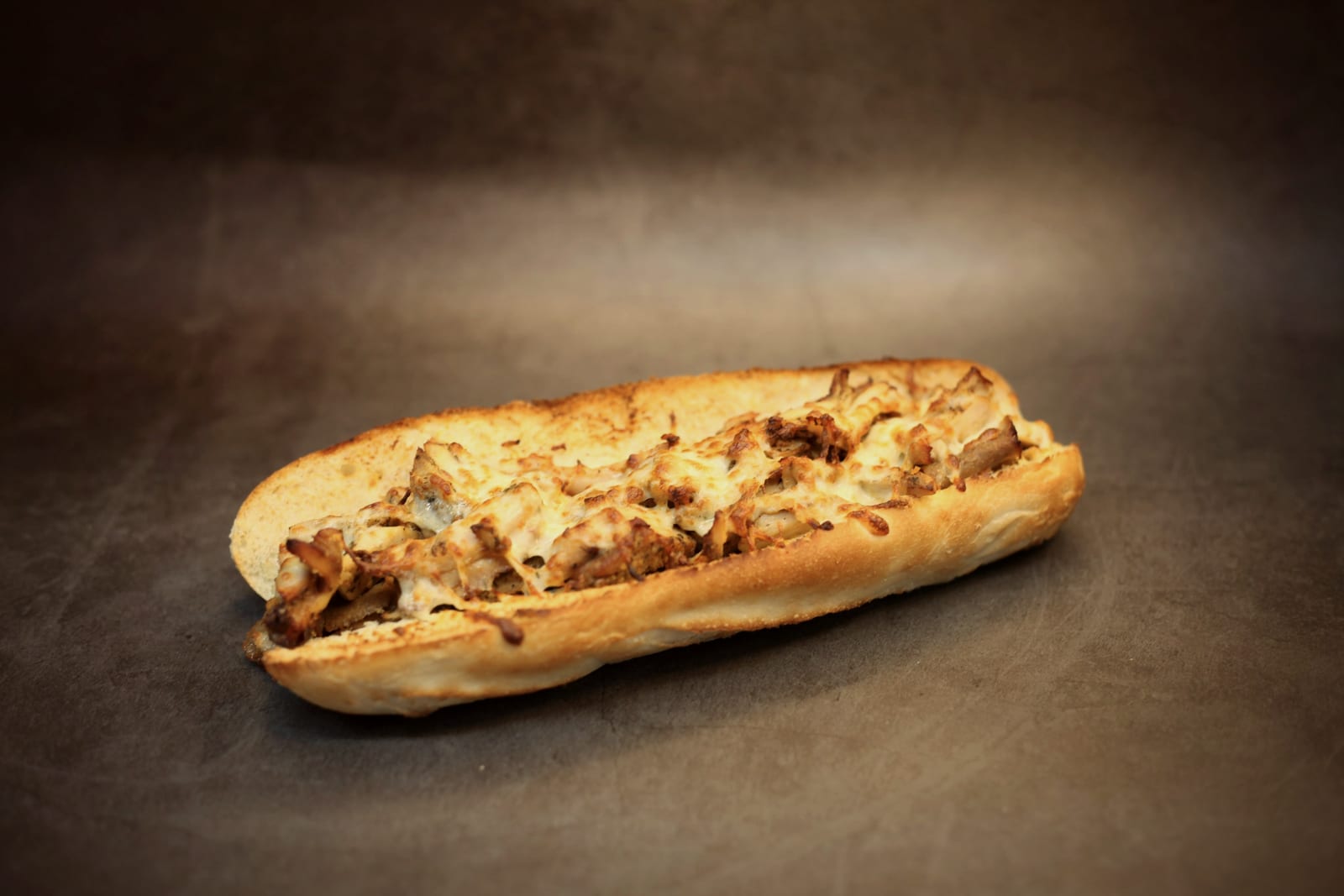
Thin beef, melting cheese, soft roll
A cheesesteak is built from three things: beef sliced so thin it cooks in a minute or two on a flat griddle, cheese that melts into it, and a long, soft Italian roll that holds the juices without falling apart. The meat is usually ribeye, whose fat keeps the thin slices tender; cheaper versions use top round or sirloin. On the griddle the slices are left whole or chopped with metal spatulas, depending on the shop.
The cheese is one of three: Cheez Whiz (a processed cheese sauce), mild provolone, or American cheese. Onions fried on the same griddle are the most common addition. In Philadelphia the sandwich is simply called a "steak", and the order is short: the cheese, then "wit" or "witout" onions, as in "one Whiz wit".
A hot dog stand, early 1930s
According to the Olivieri family, Pat Olivieri and his brother Harry ran a hot dog stand near South Philadelphia's Italian Market in the early 1930s. One day Pat grilled some thin-sliced beef with onions and put it on an Italian roll; a cab driver asked for one, and the steak sandwich became their main business. The family's shop, Pat's King of Steaks, still operates at the same corner. Like many food origin stories, it rests on family tradition rather than contemporary documents, but no serious rival claim exists.
The first sandwiches had no cheese. Family accounts credit a cook at Pat's, Joe Lorenzo, with adding provolone in the 1940s. Cheez Whiz, launched by Kraft in 1952, was adopted later and became so associated with the sandwich that many visitors consider it the default; many Philadelphians order provolone or American instead. The sandwich spread to delis and pizza shops across the region and, later, across the United States.
Ingredients
| Ingredient | Amount | Note |
|---|---|---|
| Boneless ribeye | 680 g / 1.5 lb | fat trimmed, partly frozen for slicing |
| Neutral oil | 30 ml / 2 tbsp | for the griddle |
| Yellow onion | 1 large, about 250 g / 9 oz | diced or thinly sliced |
| Cheese: Cheez Whiz | 240 g / about 1 cup | warmed; or the option below |
| Cheese: mild provolone or American | 8 slices, about 225 g / 8 oz | instead of Whiz |
| Italian rolls (hoagie rolls) | 4, 20–25 cm / 8–10 in | soft crust, split but hinged |
| Salt and black pepper | to taste | |
| Green peppers, mushrooms, hot cherry peppers | optional | fried on the griddle |
| Ketchup | optional | a common local addition |
Method
- Wrap the ribeye and freeze it for 30–45 minutes, until firm but not frozen through. Slice it across the grain as thinly as possible, about 2 mm / 1/16 in.
- Heat a griddle or a large cast-iron pan over medium-high heat with half the oil. Cook the onions, stirring, for 8–10 minutes until soft and lightly browned; push them to one side.
- Add the remaining oil and spread the beef in a thin layer. Season with salt and pepper. Cook 1–2 minutes, turning and chopping the slices with two spatulas until no longer pink. Thin slices cook through almost at once; overcooking dries them.
- Mix in the onions and divide the meat into four piles the length of the rolls.
- For provolone or American: lay two slices over each pile and let them melt for 30–60 seconds. Place an open roll face down on top, slide a spatula under the meat and turn the whole sandwich over.
- For Whiz: fill the rolls with the meat and onions and spoon the warm cheese sauce over the top. Serve at once, wrapped in paper.
Hoagie, pizza steak, chicken
The cheesesteak hoagie adds lettuce, tomato and mayonnaise; the pizza steak uses tomato sauce and mozzarella; the chicken cheesesteak replaces the beef with thin-sliced chicken. Mushrooms and green peppers, fried on the griddle, are common extras, and hot or sweet peppers are set out on many counters. Outside Philadelphia, sandwiches called "Philly cheesesteak" often use sliced Swiss cheese, peppers and pre-sliced frozen beef; locals consider them a different, looser interpretation. Related griddled sandwiches include the Italian roast pork sandwich with provolone and broccoli rabe, another Philadelphia specialty, and the hamburger, the other great American beef sandwich.
Cheese first, then onions
Cheesesteaks are eaten standing or at outdoor tables, wrapped in paper, often with French fries (sometimes with Whiz on top) and a soft drink. In the classic shops the line moves fast and the order is expected ready: cheese first, then onions, with no long explanations.
Common mistakes. Slicing the beef too thick, which makes it chewy; partial freezing is what allows thin slicing at home. Using a lean cut that turns dry. Cooking the meat in a crowded, cool pan, which boils it grey. Overcooking the thin slices. A crusty baguette-style roll that shatters and pushes out the filling, or a roll so soft it turns to mush. Adding the cheese at the end, off the heat, so it never melts into the meat.
Frequently asked questions
What meat is used in a Philly cheesesteak?
Traditionally ribeye, sliced very thin; some shops use top round or sirloin. The fat in ribeye keeps the thin slices tender.
What cheese goes on a Philly cheesesteak?
Cheez Whiz, mild provolone or American cheese. All three are considered authentic in Philadelphia.
What does 'wit' mean when ordering a cheesesteak?
'Wit' means with fried onions and 'witout' means without; the order names the cheese first, as in 'one Whiz wit'.
Who invented the cheesesteak?
By the family's account, Pat and Harry Olivieri at their South Philadelphia hot dog stand in the early 1930s; cheese was added in the 1940s.
Sources
3
- USDA Agricultural Marketing Service. Institutional Meat Purchase Specifications: Fresh Beef Series 100. Washington, DC, 2014. www.ams.usda.gov/sites/default/files/media/IMPS_100_Fresh_Beef%5B1%5D.pdf
- Smith, Andrew F. (ed.). The Oxford Companion to American Food and Drink. New York: Oxford University Press, 2007.
- Wyman, Carolyn. The Great Philly Cheesesteak Book. Philadelphia: Running Press, 2009.
Related