Main course · Vietnam, shaking beef
Bò lúc lắc (shaking beef)
Bò lúc lắc, or shaking beef, is a Vietnamese dish of cubed tender beef seared over very high heat with garlic and oyster sauce and tossed by shaking the pan. Each shake turns the cubes so they sear on every side without stewing; the hot juices wilt the watercress beneath.
At a glance
- Origin
- Southern Vietnam, French colonial era
- Cut
- Tenderloin or sirloin, in 2.5 cm / 1 in cubes
- Heat
- Very hot wok or pan, smoking oil
- Serves
- 4 with rice
- Time
- 20 min active, 30 min marinating
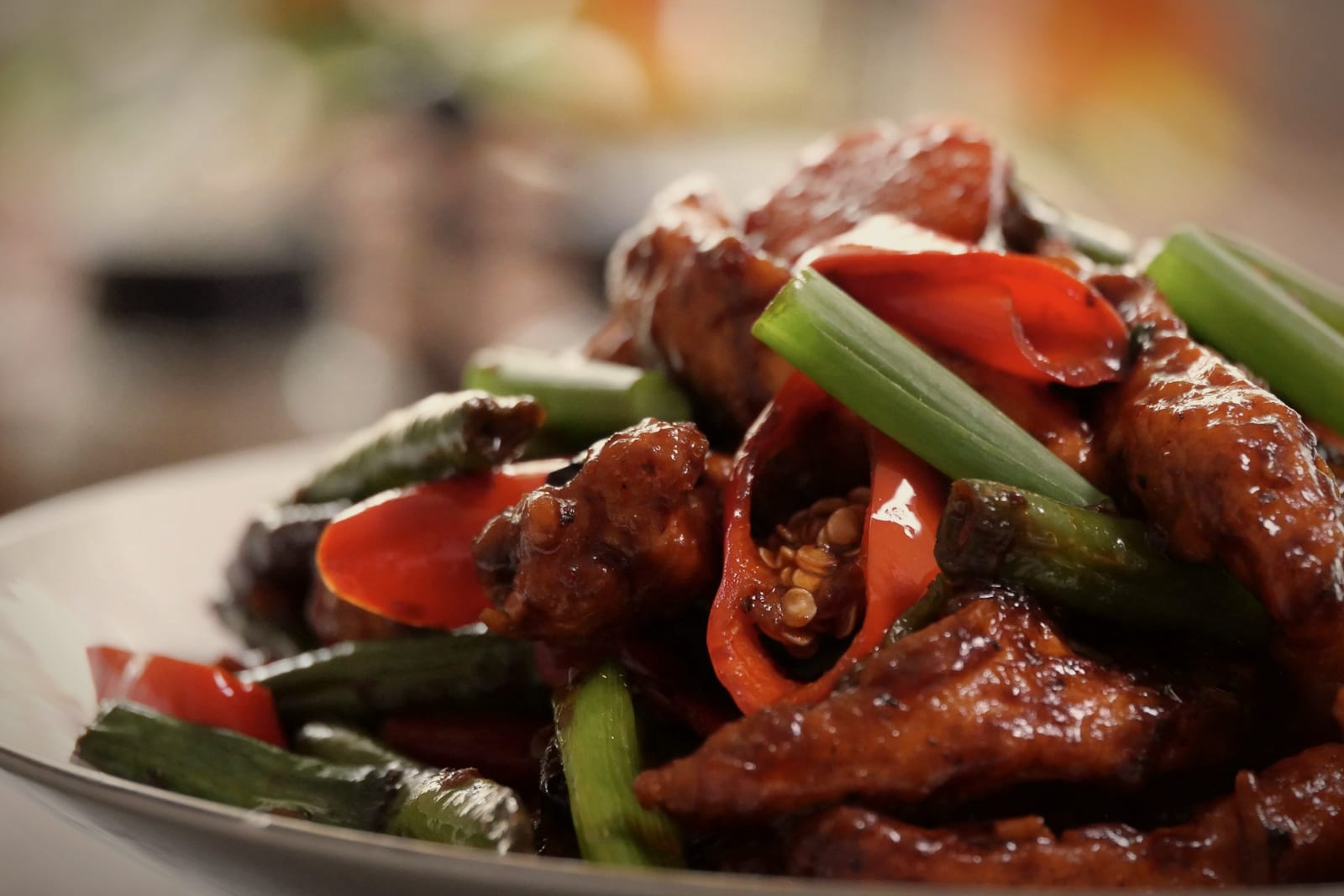
Lúc lắc: to shake the pan
Lúc lắc means to shake or rattle. The name describes the cooking: cubes of a tender cut are dropped into a smoking-hot wok or pan, left to brown, then tossed with a sharp shake of the pan so they turn and sear on every side without stewing. A short marinade of garlic, oyster sauce, soy sauce, fish sauce, a little sugar and black pepper glazes the meat; a knob of butter is often added at the end.
The beef is served on a bed of watercress (xà lách xoong) or lettuce with tomato and red onion dressed in vinegar, so the hot juices wilt the greens. A small dish of muối tiêu chanh — salt and pepper moistened with lime juice — is the essential dip. It is eaten with steamed rice, tomato rice (cơm đỏ), bread or fried potatoes.
French garnish, Chinese sauces, a wok
Shaking beef is associated with southern Vietnam and with the period of French rule, when beef, butter, potatoes, watercress and bread became part of urban Vietnamese cooking. Its combination of a French-style steak garnish with Chinese-derived seasonings such as oyster sauce and soy, cooked by wok technique, is typical of that mixed kitchen. No precise date or inventor is recorded, and the dish was long a celebration or restaurant dish because beef was expensive.
In Cambodia a close relative is called lok lak, a name clearly related to the Vietnamese one: stir-fried beef cubes, often with a fried egg and rice, and a lime and Kampot pepper dip (tuk meric). Which country used the dish first is not settled. In the United States shaking beef became widely known through Vietnamese-American restaurants and cookbooks, notably those of Charles Phan in San Francisco.
Ingredients
| Ingredient | Amount | Note |
|---|---|---|
| Beef tenderloin, sirloin or ribeye | 600 g / 1.3 lb | trimmed, in 2.5 cm / 1 in cubes |
| Garlic | 6 cloves, about 20 g / ¾ oz | minced; half for marinade, half for the pan |
| Oyster sauce | 2 tbsp / 30 ml | |
| Light soy sauce | 1 tbsp / 15 ml | |
| Fish sauce | 1 tsp / 5 ml | |
| Sugar | 2 tsp / 8 g | helps browning |
| Black pepper | 1 tsp | freshly ground |
| Neutral oil | 3 tbsp / 45 ml | high smoke point |
| Butter | 15 g / ½ oz | optional, at the end |
| Red onion | 1 small, about 100 g / 3½ oz | in wedges or rings |
| Watercress | 150 g / 5 oz | or lettuce |
| Tomatoes | 2, about 250 g / 9 oz | sliced |
| Rice vinegar, sugar | 2 tbsp / 30 ml, 1 tsp | to dress the onion and greens |
| Muối tiêu chanh: salt, pepper, lime | 1 tsp, 1 tsp, 1 lime | mixed in a small dish per person |
Method
- Dry the beef cubes well. Mix with half the garlic, the oyster sauce, soy sauce, fish sauce, sugar, pepper and 1 tbsp of oil. Marinate 30 minutes to 2 hours in the refrigerator.
- Dress the onion with vinegar, sugar and a pinch of salt. Arrange the watercress and tomato on a platter. Mix the salt, pepper and lime juice for the dip.
- Heat a wok or heavy pan over the highest heat until the oil smokes, about 230–250 °C / 450–480 °F at the surface. Add the beef in a single layer without crowding, in two batches if necessary.
- Leave the cubes untouched for 45–60 seconds to brown, then shake the pan to turn them. Repeat until browned on all sides, 2–3 minutes in total for medium-rare (inside about 55 °C / 131 °F).
- In the last 30 seconds add the remaining garlic, the onion and the butter, and toss once more. Turn out at once onto the greens with the pan juices.
Lok lak, peppers or wagyu
Some cooks add bell pepper and onion to the wok, closer to a stir-fry; others serve the beef on fried potatoes in the French way. Restaurant versions use ribeye or striploin for more fat, or even wagyu. The Cambodian lok lak typically adds a fried egg and a lime-pepper sauce; the Vietnamese-American version may include a splash of rice wine or a ketchup-based sauce.
Dark outside, pink inside
Each piece is dipped in muối tiêu chanh and eaten with a leaf of watercress, a slice of tomato and rice. The meat should be dark and glossy outside and pink inside.
Common mistakes: a pan that is not hot enough, or too much meat at once, so the beef releases water and boils instead of searing; wet meat, which delays the Maillard reaction; stirring constantly instead of letting each side brown; cubes cut too small, which overcook before they colour; and a sugary marinade left on a moderate heat, which burns instead of caramelizing.
Frequently asked questions
Why is it called shaking beef?
Lúc lắc means shaking: the cubes are turned by shaking the hot pan so they sear on all sides without being stirred.
What cut of beef is used for bò lúc lắc?
Tender, quick-cooking cuts: tenderloin is classic, and sirloin, striploin or ribeye are common alternatives.
What is the dipping sauce for shaking beef?
Muối tiêu chanh: salt and black pepper mixed with fresh lime juice.
Is bò lúc lắc the same as Cambodian lok lak?
They are closely related dishes of seared beef cubes with a lime-pepper dip; lok lak is often served with a fried egg.
Sources
4
- McGee, Harold. On Food and Cooking: The Science and Lore of the Kitchen, rev. ed. New York: Scribner, 2004.
- Nguyen, Andrea. Into the Vietnamese Kitchen: Treasured Foodways, Modern Flavors. Berkeley: Ten Speed Press, 2006.
- Phan, Charles. Vietnamese Home Cooking. Berkeley: Ten Speed Press, 2012.
- Vu Hong Lien. Rice and Baguette: A History of Food in Vietnam. London: Reaktion Books, 2016.
Related